Is 3D Printing Better Than CNC Machining for Your Projects?
When considering manufacturing methods, the debate between 3D printing and CNC machining often arises. Industries have leaned on technological advancements to enhance production. According to a recent report from Wohlers Associates, 3D printing is projected to grow from a $13 billion industry in 2020 to over $74 billion by 2028. This rapid growth has forced many manufacturers to rethink their approaches.
Expert James Koenig, an authority in additive manufacturing, states, "3D printing and CNC machining each have unique advantages, but the choice depends on the project requirements." This assertion highlights the nuances of both technologies. 3D printing is ideal for complex designs and rapid prototyping, while CNC machining excels in producing precise and durable parts.
Yet, neither method is without flaws. 3D printing often struggles with material limitations and surface finish issues. CNC machining, while reliable, can be slow and costly for complex geometries. Balancing these factors remains a challenge for engineers and designers in modern manufacturing. Understanding the strengths and weaknesses of 3D printing and CNC machining is essential for making informed project decisions.
Comparison of 3D Printing and CNC Machining Techniques
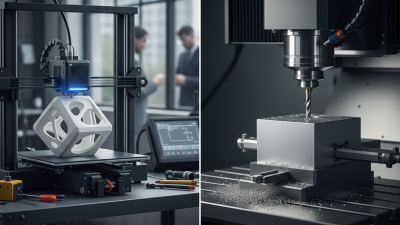
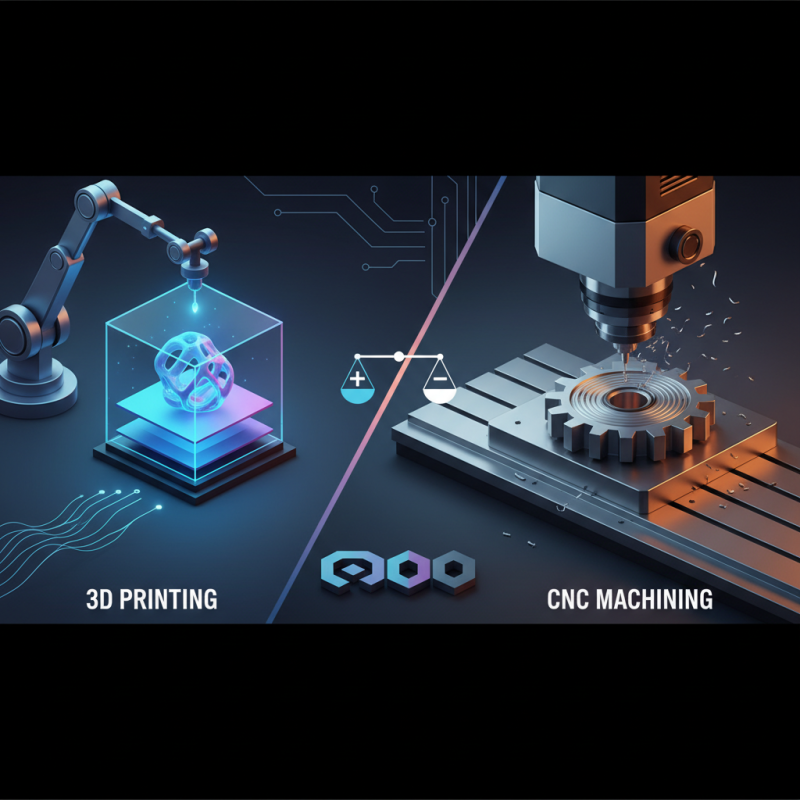
3D printing and CNC machining are both valuable techniques in manufacturing. Each method has unique strengths that cater to specific project needs. 3D printing excels in rapid prototyping. Its layer-by-layer approach allows for complex designs that traditional methods struggle to achieve. This flexibility opens new possibilities for designers. However, the surface finish may not meet high standards. Sometimes, extra post-processing is required, which can add time to the timeline.
On the other hand, CNC machining is known for precision and durability. It efficiently cuts materials to create parts with tight tolerances. This method works well for metal and hard materials. Yet, it comes with limitations. Complex shapes may require extensive programming and setup. Additionally, it often produces more waste from the cutting process. Balancing these factors is key when choosing between the two. Design and end-use should dictate the best approach. As technology evolves, staying updated is essential for making informed decisions.
Advantages of 3D Printing for Customized Prototyping
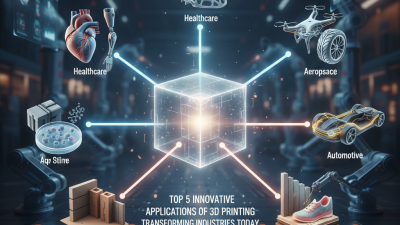
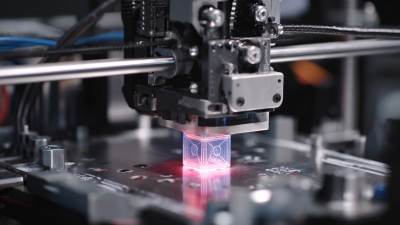
3D printing offers unique advantages for customized prototyping. It allows for high flexibility in design. Creators can easily modify designs without extensive setup costs. This technology enables rapid iteration, making it perfect for testing concepts in various fields like healthcare and automotive.
The detailed requirements of custom projects often demand bespoke solutions. 3D printing shines here. It can produce intricate designs that might be impossible with traditional methods. This precision ensures parts fit perfectly, reducing unexpected issues during assembly. However, creating a reliable prototype may require meticulous planning.
Despite its benefits, 3D printing has limitations. Some materials may not offer the same strength as those produced through CNC machining. This can lead to durability concerns in high-stress applications. It's essential to evaluate the specific needs of your project. Balancing creativity with functionality is key in choosing the right manufacturing approach.
Benefits of CNC Machining for High-Precision Parts
CNC machining is widely recognized for its remarkable ability to produce high-precision parts. This technique uses computer-controlled tools to carve materials like metal, plastic, and wood. The precision achieved through CNC machining is often measured in microns. This level of accuracy is essential for industries such as aerospace and medical devices, where even slight deviations can have significant consequences.
The benefits of CNC machining go beyond precision. It offers repeatability, ensuring that each part remains consistent across multiple batches. Detailed designs with complex geometries can be executed with ease, reducing the potential for human error. However, it’s important to acknowledge that CNC machining can be costly. Initial setup requires significant investment in time and resources. Adjusting designs based on feedback can be complicated.
While CNC machining excels in producing complex, high-precision components, it may not always be the best choice for every project. Some simpler designs can be made more economically through alternative manufacturing methods. Balancing cost, time, and precision is vital. Understanding the specific needs of your project will be key to making an informed decision.
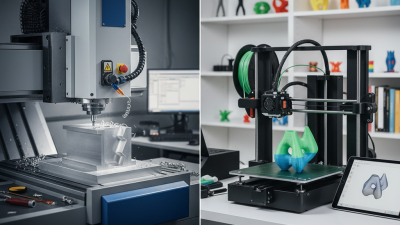
Comparison of 3D Printing vs. CNC Machining for High-Precision Parts
Cost-Effectiveness in 3D Printing vs CNC Machining
When evaluating cost-effectiveness, 3D printing often presents an appealing option, especially for small batch production. According to recent industry data, 3D printing can reduce material costs by up to 70% compared to traditional CNC machining. This is largely due to the additive nature of 3D printing, which uses only the necessary material, minimizing waste.
In terms of setup costs, CNC machining typically requires more initial investment for tooling and setup. Some reports indicate that CNC machining setup can consume up to 30% of the total production cost. This can be burdensome for smaller projects with limited budgets. However, it's important to reflect on production times and complexity. While 3D printing is generally faster for prototyping, CNC machining may provide higher precision for complex parts.
Quality control is another critical factor to consider. While 3D printing allows for creative freedom, it can introduce variability in the finished product. For instance, issues like layer adhesion may impact the final outcome. CNC machining offers greater reliability in terms of tolerances. This can matter significantly in industries demanding stringent specifications. Each method has unique strengths and weaknesses, and understanding these factors is vital for informed decision-making.
Industry Applications and Suitability of Each Method
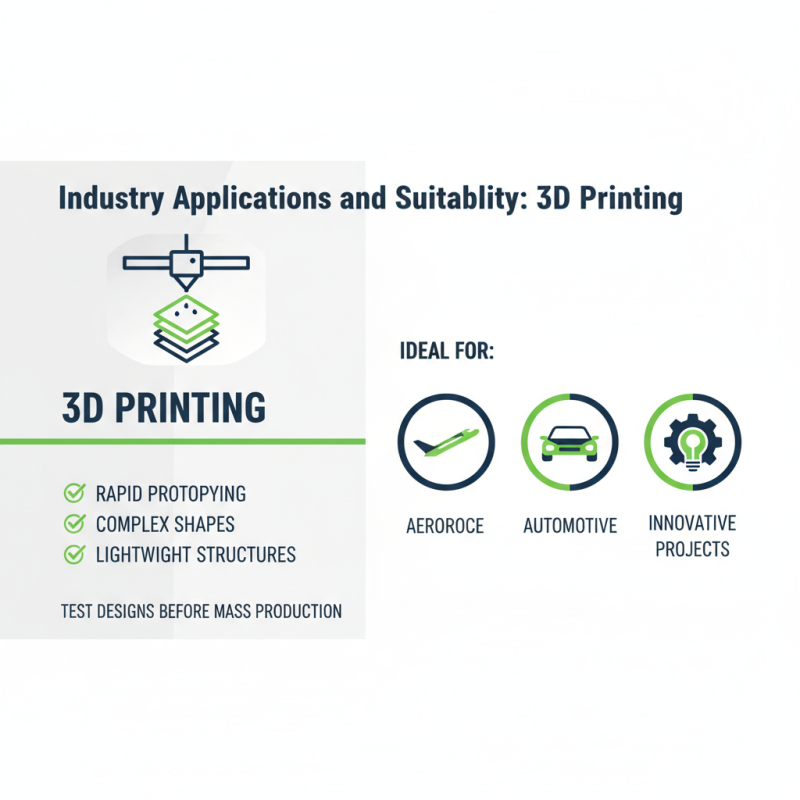
When comparing 3D printing and CNC machining, it’s essential to consider their applications in various industries. 3D printing excels in rapid prototyping. It allows designers to create complex shapes quickly. Industries like aerospace and automotive use this method to test designs before mass production. The ability to produce lightweight structures makes it ideal for innovative projects.
In contrast, CNC machining offers precision and durability. This method works well for parts requiring tight tolerances. Medical device manufacturing often relies on CNC for its reliability and quality. However, it may involve longer lead times and higher costs for setups. 3D printing can be more cost-effective for small batches or unique designs, but the material properties may not match those produced by CNC.
Both methods have their strengths and weaknesses. Selecting the right one depends on specific project needs. Factors like material requirements, production volume, and time constraints will influence your decision. It’s not always a clear-cut choice, and sometimes a hybrid approach may be beneficial. Exploring these methods carefully can lead to better outcomes.