
Choosing a reliable Porcelain saddle manufacturer requires more than comparing catalog prices. Global buyers need stable dimensions, clean glazing, dependable insulation, and repeatable production. These details matter when a saddle supports electrical conductors, cable systems, or other demanding installations. Small defects can become expensive problems.
Quality comes from the process.
W. Edwards Deming, a respected quality-management authority, said, “Quality comes not from inspection, but from the improvement of the production process.” That principle guides this review. The seven manufacturers featured here are assessed through practical buyer criteria, including raw-material control, forming accuracy, firing consistency, mechanical strength, dielectric performance, testing records, and export packaging. Their ability to provide drawings, samples, private labeling, and technical support also matters. So does communication. A technically strong supplier may still disappoint if lead times remain unclear.
No ranking is perfect. Product performance can vary between batches, markets, and installation conditions. A polished website proves little. Buyers should request current test reports, dimensional tolerances, material specifications, and reference projects before placing large orders. That extra step may feel slow. It is usually cheaper than replacing damaged components.
This guide is designed for distributors, contractors, OEM purchasers, and infrastructure buyers seeking dependable porcelain products across borders. It does not treat the lowest quotation as the best value. Instead, it considers manufacturing discipline, documented capability, customization, logistics, and long-term service. The result is a practical starting point for identifying the Porcelain saddle suppliers most likely to meet demanding global requirements.
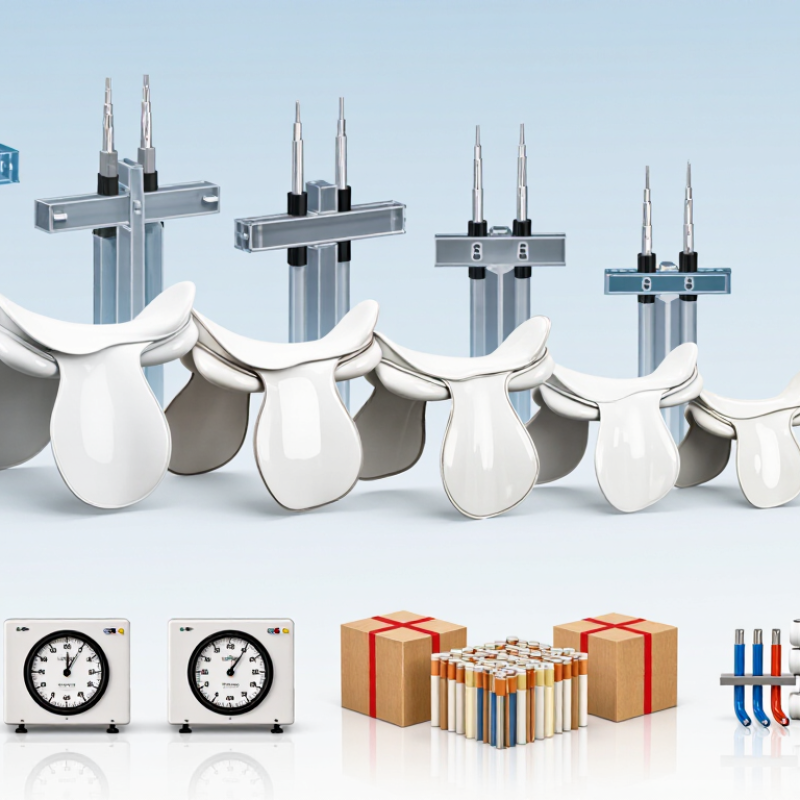
A leading porcelain saddle manufacturer starts with controlled raw materials, not attractive catalog photos. High-purity clay, alumina, and carefully measured additives support stable electrical and mechanical performance. Experienced engineers adjust the formulation for firing temperature, humidity, and product geometry. Small changes matter. A saddle with uneven density may crack during installation or thermal cycling.
Reliable production depends on repeatable forming and firing. Manufacturers should monitor pressing pressure, kiln temperature, shrinkage, and glaze coverage for every production batch. Visual inspection can reveal pinholes, rough edges, warping, or incomplete glazing. More importantly, laboratories should test dielectric strength, dimensional tolerance, mechanical load, and resistance to moisture. Test records must identify the batch, operator, equipment, and inspection date.
Documentation separates a capable supplier from a dependable one. Global buyers need clear drawings, material data, inspection reports, packing details, and traceable certificates. Packaging also deserves attention; padded dividers and dry inner wrapping can prevent chipped edges during long transport. A responsive technical team should explain tolerances instead of promising that every piece is identical. No factory gets every batch perfect. The stronger manufacturer admits variation, measures it honestly, and improves the process. Factory audits, sample approvals, and independent testing can expose weaknesses before a large order is shipped. That practical transparency builds confidence far better than polished claims.

The chart presents a practical 100-point procurement evaluation framework for porcelain saddle suppliers. Product quality and electrical performance receive the highest weighting, followed by standards compliance, manufacturing consistency, customization capability, delivery reliability, and after-sales support. Actual requirements should be verified against the applicable product specification, test reports, and destination-market regulations.
For global buyers, the seven leading porcelain saddle manufacturers differ less in catalog language than in measurable control. One focuses on low-voltage saddles. Another supplies high-voltage supports, bushings, and custom profiles. A third keeps standard sizes in stock for faster delivery. The strongest product range includes glazed and unglazed bodies, drilled holes, threaded fittings, and matched hardware. This matters when replacement work meets older dimensions. It often does.
Quality starts with the ceramic body, not the glossy finish. ASTM C373 measures water absorption, while lower absorption usually indicates tighter firing and fewer moisture pathways. IEC 60672-3 provides relevant guidance for ceramic insulating materials. Buyers should request batch certificates, dimensional tolerances, dielectric test results, and firing records. In practical supplier audits, stronger factories document shrinkage before shipment. They also inspect hole edges under magnification. Weaker suppliers may provide attractive samples only. That gap is easy to miss.
Mordor Intelligence’s 2025 electrical ceramics assessment projects roughly 6% annual market growth through 2030. The report also highlights demand for application-specific components. That trend separates the seven manufacturers by engineering support. Two offer CAD drawings and dedicated tooling. Three provide moderate customization. Two mainly sell fixed catalog products. Production scale is not proof of quality. Neither is a perfect sample. Moisture, packing damage, and inconsistent glaze still require independent checks, especially for mixed-container orders.
For global buyers comparing seven porcelain saddle manufacturers, durability begins with material control, not polished packaging. Manufacturers should document clay, feldspar, and alumina proportions for every production batch. ISO 10545-3 uses 0.5% water absorption as the benchmark for porcelain ceramic products. ASTM C373 also measures absorption, density, and open porosity. These tests help reveal whether a saddle can resist moisture, frost, and repeated loading.
Firing discipline matters just as much. A controlled kiln curve reduces warpage, hidden cracks, and uneven vitrification. Buyers should request firing records, dimensional tolerances, and batch-level inspection reports. Electrical applications may also require testing aligned with IEC 60672-3, which evaluates ceramic insulating materials through mechanical and electrical properties.
A saddle with a smooth glaze can still fail internally. Small cracks spread.
Experienced quality teams inspect corners, mounting holes, and contact surfaces under magnification. They also compare sample results with production results, rather than trusting one excellent sample. ISO 9001 certification supports traceability, but certification alone cannot prove product performance. Ask for independent test reports, not only factory declarations.
A practical weakness remains: international standards may not fully reflect each saddle’s installation load, temperature cycle, or chemical exposure. Buyers should therefore define those conditions before approving a manufacturer.
Density matters. Test the batch.
For a shortlist of seven porcelain saddle manufacturers, global buyers should verify more than catalog dimensions.
Ask for ISO 9001 certification, recent audit dates, and batch-level inspection records. The 2023 ISO Survey reported more than 1.26 million valid ISO 9001 certificates worldwide, but certification alone does not prove ceramic performance.
Request crushing-strength results, water absorption, chemical resistance, and dimensional tolerances. Independent laboratory testing is stronger evidence.
Pricing needs careful comparison.
A cheaper quotation may hide weaker packing density, higher breakage, or expensive export handling. Compare prices using the same quantity, packaging, Incoterm, currency, and delivery port.
Include mold charges and replacement rates. Porcelain saddles are fragile. One damaged pallet can erase a small unit-price advantage.
UNCTAD’s Review of Maritime Transport 2024 recorded continuing volatility in shipping routes and freight costs. Delivery estimates should therefore include a realistic buffer.
Tips:
Request three recent production samples. Photograph pallet corners before shipment. Confirm export packaging, moisture protection, and insurance responsibility in writing.
Check the proposed HS classification with a customs broker; technical ceramic products can be classified differently by application and country. Also ask whether the supplier can provide a certificate of origin and material test report.
My practical concern is simple: buyers often compare factory prices, then overlook unloading labor and local taxes. That decision can look efficient on paper, but not at the warehouse.
Selecting the right porcelain saddle supplier requires more than comparing quoted prices. In field procurement, packing failure often begins with inconsistent firing, not installation. Request test data for bulk density, water absorption, crushing strength, void fraction, and pressure drop. ASTM C20 and ASTM C373 methods can support porosity and absorption checks. Ask whether results cover the exact production batch.
Production control matters. The ISO Survey 2023 recorded more than 1.2 million ISO 9001 certificates worldwide, yet certification alone does not prove packing quality. Review kiln temperature records, dimensional tolerances, inspection frequency, and corrective-action reports. A capable supplier should provide samples from multiple lots, not only polished showroom pieces. Small details matter.
Match the porcelain saddle to your process conditions. Check acid concentration, operating temperature, liquid distribution, tower diameter, and loading method. The U.S. Department of Energy’s Industrial Decarbonization Roadmap identifies industry as responsible for about 24% of U.S. greenhouse-gas emissions. Efficient packing can support lower pressure drop, but claims need measured evidence. Compare independent laboratory results when possible. Freight protection also deserves attention; chipped edges can increase dust and reduce contact area. I would not approve a supplier without a loading trial. That may seem cautious. It is.
| Rank | Manufacturer Profile | Recommended Application | Material and Production Evidence to Request | Quality and Testing Benchmarks | Customization Capability | Typical Commercial Range to Verify | Best Selection Advantage |
|---|---|---|---|---|---|---|---|
| 1 | High-Volume OEM Ceramic Manufacturer | Standard porcelain saddles for recurring utility, electrical, and industrial orders. | High-alumina or electrical-grade porcelain specification, documented forming process, controlled glazing, and batch traceability. | Dimensional inspection, visual inspection, dielectric testing where applicable, and documented inspection records for each production batch. | Suitable for standard drawings, repeat tooling, private-label packaging, and controlled design revisions. | Indicative production lead time: 25–45 days after drawing and deposit approval. Confirm MOQ, tooling, and packing requirements. | Strongest option for stable repeat orders and cost control. |
| 2 | Electrical-Insulation Specialist | Applications requiring reliable insulation performance, surface integrity, and electrical consistency. | Porcelain body formulation, firing-temperature control, glaze compatibility, and electrical-performance documentation. | Request test methods and results for insulation resistance, dielectric strength, thermal shock, and surface defects, as relevant to the design. | Can usually adapt wall thickness, mounting geometry, creepage distance, and connection details to an approved technical drawing. | Indicative qualification cycle: 2–6 weeks. Testing costs may be separate from production pricing. | Best fit when electrical performance is more important than the lowest unit price. |
| 3 | Precision-Machined Ceramic Component Supplier | Small or medium porcelain saddles with tight dimensional tolerances and complex mounting features. | Green-machining or diamond-finishing capability, calibrated measuring equipment, and a dimensional control plan. | Request first-article inspection reports, CMM or gauge records where appropriate, and tolerance capability data for critical dimensions. | Suitable for holes, slots, stepped profiles, close-fitting interfaces, and engineering prototypes. | Prototype lead time commonly ranges from 10–30 days; production timing depends on tooling and finishing complexity. | Best choice for assemblies where fit, alignment, and interchangeability are critical. |
| 4 | Custom-Design and Prototyping Manufacturer | New projects, replacement parts, low-volume orders, and products without a finalized porcelain saddle design. | Engineering drawing support, material-selection guidance, sample approval process, and documented design-change control. | Confirm prototype inspection, functional testing, sample retention, and approval procedures before mass production. | Strong for reverse engineering, 2D/3D drawing conversion, prototype iterations, and design-for-manufacture recommendations. | Typical prototype quantity: 5–50 pieces. Production MOQ and tooling charges should be agreed before sample development. | Most suitable for buyers who need technical cooperation before committing to volume. |
| 5 | International Compliance-Focused Supplier | Projects requiring formal supplier qualification, traceability, and consistent export documentation. | Quality-management certification scope, material declarations, lot identification, inspection procedures, and controlled document revisions. | Request certificates of conformity, inspection reports, packaging specifications, and product-specific test evidence rather than generic certificates only. | Can support customer quality agreements, inspection checkpoints, labeling requirements, and documentation packages. | Supplier approval may require 2–8 weeks, depending on customer audits, samples, and regulatory documentation. | Best option for regulated projects and procurement teams with formal compliance procedures. |
| 6 | Export-Ready Contract Manufacturer | Global buyers that need reliable packing, shipping coordination, and repeat international deliveries. | Export packing specification, moisture and impact protection, carton marking, palletization plan, and traceable commercial documentation. | Request pre-shipment inspection, packing photos, carton drop-test criteria where needed, and a clear nonconformance process. | Suitable for customer-specific labels, multilingual packaging, mixed-SKU shipments, and scheduled releases. | Common shipment planning window: 2–6 weeks after production completion. Freight terms, port, and customs responsibilities must be defined. | Best for buyers prioritizing delivery coordination and reduced transit damage. |
| 7 | Small-Batch and Replacement-Part Supplier | Maintenance, repair, aftermarket replacement, and projects with irregular demand. | Ability to reproduce approved samples or drawings, maintain archived specifications, and control mixed-batch production. | Request sample-to-drawing comparison, batch identification, visual acceptance criteria, and replacement-part dimensional records. | Often flexible for legacy designs, discontinued components, modest quantities, and packaging by maintenance kit. | Indicative MOQ may range from 20–200 pieces, but varies significantly by tooling, glaze, and finishing requirements. | Best for low-volume purchasing and difficult-to-source replacement components. |

© Copyrights Levil Technology Corp 2022