Top 5 Benefits of Industrial 3D Printers for Businesses?
In today's rapidly evolving manufacturing landscape, businesses are increasingly turning to innovative solutions. Industrial 3D printers are at the forefront of this transformation. According to Dr. Emma Carter, a leading expert in additive manufacturing, "3D printer industrial technology is revolutionizing prototyping and production." This statement highlights the immense potential of these machines in enhancing operational efficiency.
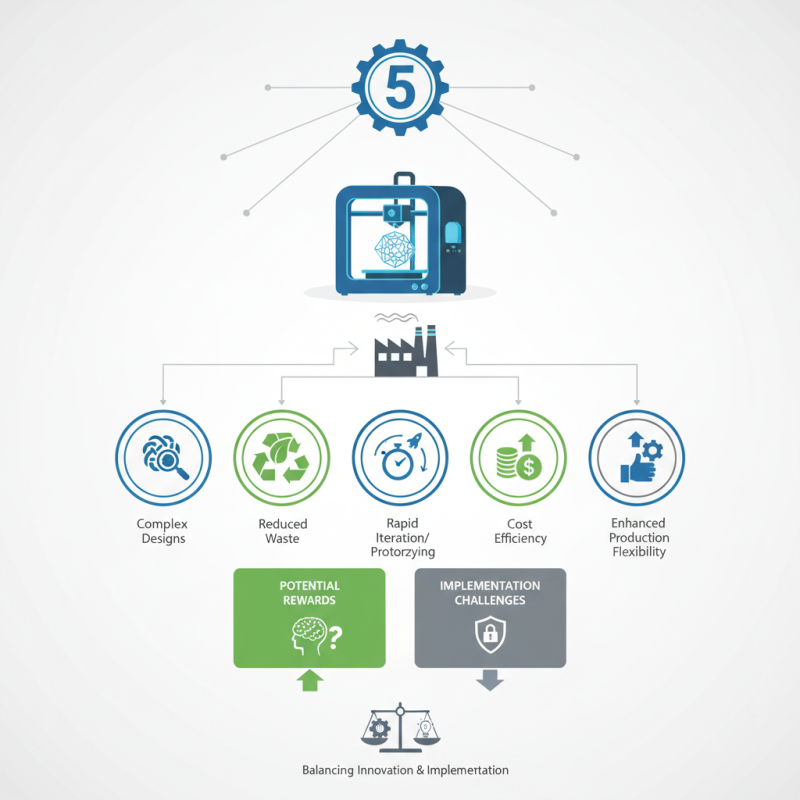
The benefits of adopting industrial 3D printing are significant. Companies can produce complex designs that traditional methods struggle to achieve. This technology reduces waste by utilizing only the necessary materials. Moreover, it allows for rapid iteration, enabling businesses to refine products swiftly. However, integrating 3D printing into existing workflows can present challenges. Companies may face initial costs and the need for employee training.
Business leaders should consider these factors carefully. While the rewards are considerable, navigating the transition to a more digitized production approach requires thoughtful planning. Adopting industrial 3D printers can be a game-changer, but success lies in understanding their capabilities and limitations. Balancing innovation with practical implementation is key to maximizing benefits.
Introduction to Industrial 3D Printing and Its Business Relevance
Industrial 3D printing is transforming business operations across various sectors. It enables rapid prototyping, allowing companies to validate designs quickly. A report from Wohlers Associates indicates that the global additive manufacturing market could reach $21 billion by 2025. This rapid growth highlights its rising importance in industries like aerospace, automotive, and healthcare.
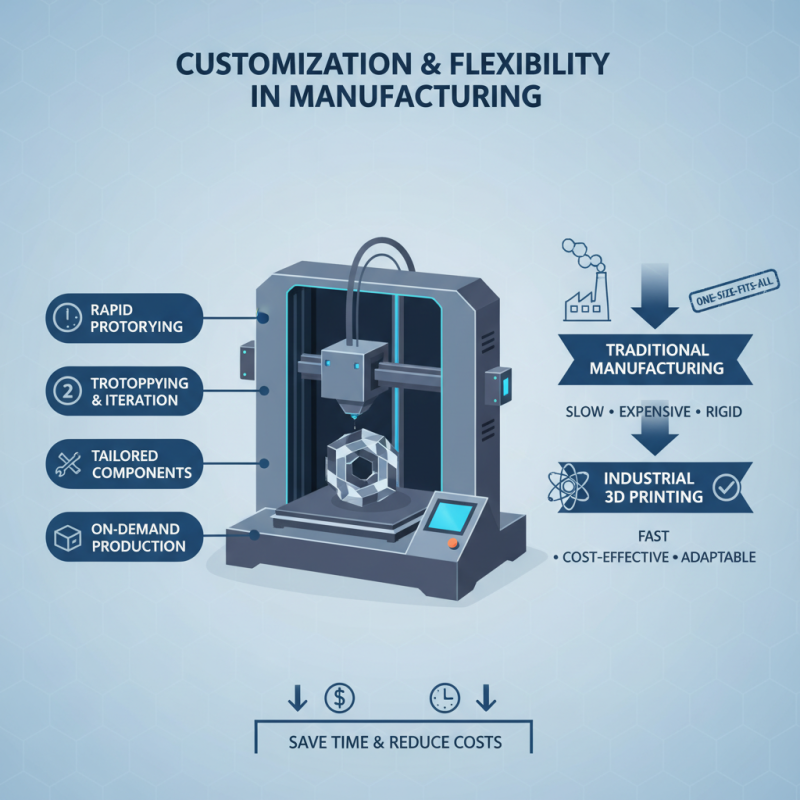
The flexibility of 3D printing plays a pivotal role in custom manufacturing. Companies can easily alter designs without incurring high retooling costs. Yet, organizations need to think critically about material selection and process parameters. A poorly chosen material can lead to failures that undermine production integrity. Many businesses face hurdles in evaluating these options, illustrating the need for enhanced decision-making frameworks.
Additionally, the technology aids in reducing waste, aligning with sustainable practices. A McKinsey report reveals that additive manufacturing can lower material waste by up to 90%. However, businesses must navigate the complexities of integrating 3D printers into existing workflows. Not all firms possess the technical know-how to fully leverage these devices. This gap in expertise can lead to suboptimal results, warranting careful assessment and continuous learning.
Top 5 Benefits of Industrial 3D Printers for Businesses
| Benefit |
Description |
Impact on Business |
| Cost Reduction |
Lower production costs by reducing material waste and manufacturing time. |
Increased profit margins from lower operational costs. |
| Customization |
Ability to produce tailored products to meet customer specifications. |
Enhanced customer satisfaction and loyalty. |
| Rapid Prototyping |
Quickly develop prototypes for testing and design validation. |
Shortened time-to-market for new products. |
| Complex Geometries |
Ability to manufacture intricate designs that are difficult with traditional methods. |
Innovative product offerings that can lead to market differentiation. |
| Supply Chain Simplification |
Reduce reliance on suppliers by enabling on-site production. |
Decreased lead times and potential cost savings. |
Enhanced Prototyping Capabilities through Industrial 3D Printing
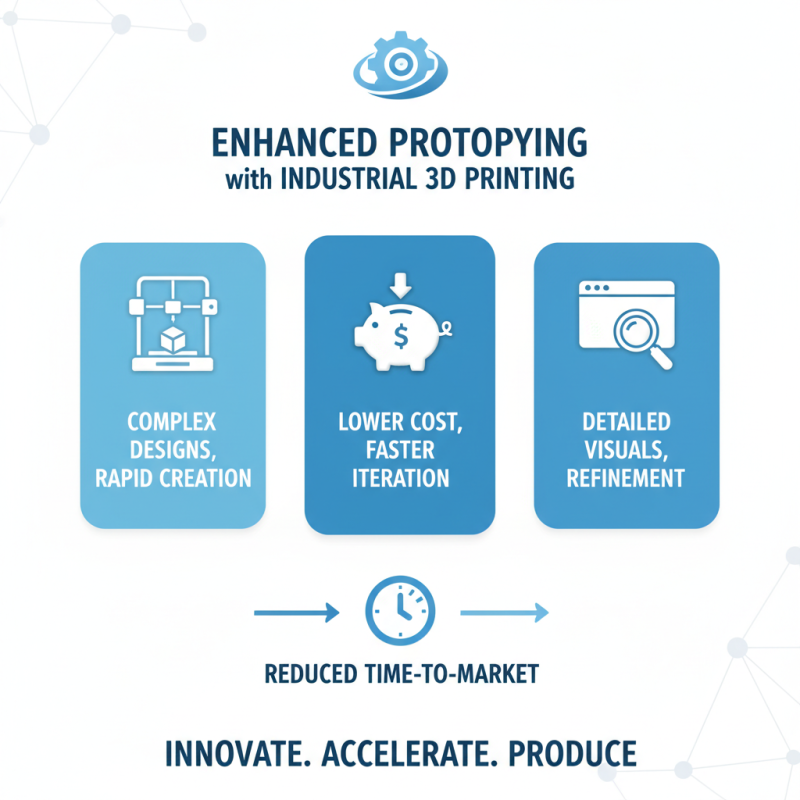
Industrial 3D printing offers remarkable enhancements in prototyping capabilities for businesses. It allows companies to create complex designs quickly and at a lower cost. With advanced technology, detailed prototypes can be produced, helping teams visualize and refine concepts. The speed of production reduces the time-to-market for new products significantly.
Prototyping can sometimes lead to unexpected challenges. Designs that work on screen may not function well in reality. This gap necessitates iterations, which 3D printing facilitates. Businesses can test and modify their prototypes without incurring hefty costs. Feedback from these prototypes provides valuable insights but may also highlight design flaws that require reevaluation.
Moreover, industrial 3D printing fosters creativity in design processes. Designers can experiment with unique materials and shapes, pushing the boundaries of innovation. Yet, the reliance on technology may lead some to overlook traditional manufacturing techniques, which still hold value. Balancing both approaches can create the most effective outcomes.
Cost Efficiency and Waste Reduction with 3D Printing Technology
Industrial 3D printers are transforming cost efficiency and waste management in businesses. According to a study by the Wohlers Associates, 3D printing can reduce manufacturing waste by up to 90%. Traditional subtractive methods often lead to significant excess material. In contrast, additive manufacturing uses only the needed material. This shift not only cuts costs but also minimizes environmental impact.
A report by Gartner highlights that companies adopting 3D printing save an average of 30% on production costs. This is largely due to the reduction of materials and the ability to produce just-in-time parts. Companies can avoid overproduction and stockpiling, eliminating storage costs. Yet, companies should reflect on their current capabilities. Transitioning to 3D printing requires a skilled workforce.
**Tip:** Invest in training for your team to maximize the potential of your 3D printers. Regular assessments of your production process can reveal areas where waste could further decrease. Embrace this technology mindfully and with a strategy in place for ongoing improvements.
Top 5 Benefits of Industrial 3D Printers for Businesses
Speeding Up Production Time with Industrial 3D Printers
Industrial 3D printers are revolutionizing the manufacturing landscape. Business leaders are increasingly adopting these technologies for one significant reason: speed. According to a report by Wohlers Associates, 3D printing can reduce production time by up to 90%. This rapid prototyping can vastly improve project timelines, allowing businesses to bring products to market faster.
The capability to produce complex designs on-demand further enhances speed. Traditional manufacturing may require months for tooling and setups. In contrast, 3D printing enables immediate production. A case study showed that a manufacturer cut their lead times from weeks to days, drastically improving their competitive edge. However, businesses must embrace the accompanying changes in workflows and processes for optimal results.
Tip: Regular maintenance of 3D printers ensures consistent quality. Downtime can negate speed gains, so check equipment regularly.
Though the technology is promising, companies may face challenges. The learning curve can be steep for staff unfamiliar with 3D printing processes. Additionally, material limitations sometimes restrict design freedom. Businesses should invest in training and workshops to mitigate these issues.
Tip: Pilot projects can help teams get accustomed to the technology. Start small before scaling up production.