
Choosing the right Metal Scaffolding Planks is a safety decision, not merely a price comparison. Global buyers must examine load capacity, dimensions, surface grip, corrosion resistance, and manufacturing traceability. A plank may look strong in a warehouse, yet perform poorly after repeated handling, rain exposure, or uneven support.
Scaffolding safety consultant Alan Price says, “A reliable plank should remain predictable when the jobsite becomes unpredictable.” That principle matters. Buyers should request test reports, material certificates, inspection records, and clear guidance for compatible scaffold systems. Galvanized steel planks often suit demanding construction environments, while aluminum options may reduce lifting strain. Perforated surfaces can improve drainage and traction, but their design still requires careful inspection.
Small details matter.
Check the end hooks.
Measure the working width.
Confirm the stated load class.
This guide compares leading Metal Scaffolding Planks for international procurement teams. It considers practical factors, including packaging, corrosion protection, replacement availability, and supplier communication. Regional standards may differ, so one certificate should not be treated as universal approval. Buyers should verify requirements with qualified local professionals before ordering large quantities.
There is no perfect plank for every project. A lightweight model may simplify installation but offer less resistance to harsh treatment. A heavier plank may feel more robust but increase transport and handling costs. That trade-off deserves honest review. Reliable purchasing comes from matching product evidence with real site conditions, not trusting polished specifications alone.
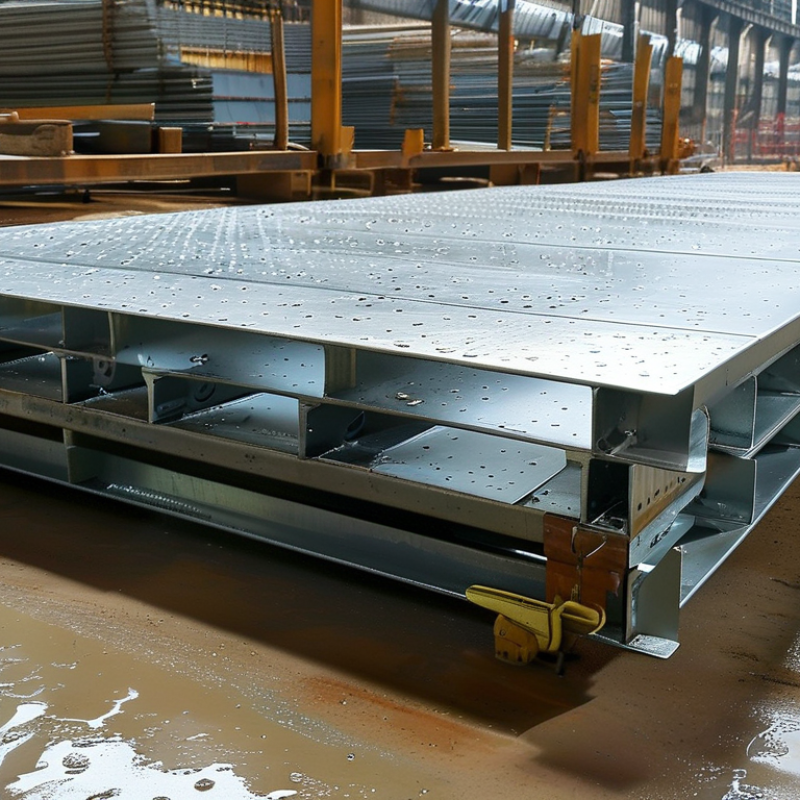
Metal scaffolding planks are temporary platform components made from steel or aluminum. They create a stable surface for workers, tools, and light materials on elevated structures. Steel planks are strong and rigid, while aluminum versions are lighter and easier to carry. Many designs include punched holes for drainage and improved grip. Some have reinforced edges or locking hooks.
On a working site, planks rest across scaffold frames and transfer weight to the supporting members. Their width, length, thickness, and rated capacity must match the scaffold system. Never judge safety by appearance alone. A clean-looking plank may still have hidden bends, cracks, or weakened welds. Site inspections should check for corrosion, damaged hooks, sharp edges, and excessive deflection. They are not interchangeable.
Global buyers should request clear product drawings, material details, load data, and inspection records. Independent testing can provide useful evidence, especially when suppliers use different measurement systems. Planks should arrive clean, securely packed, and free from oil that could reduce traction. Storage also matters; standing water can accelerate corrosion around joints and punched openings. In practice, handling mistakes are easy to overlook. Workers may drag planks across rough ground or stack them unevenly. That is why purchasing decisions should consider training, transport, maintenance, and replacement availability, not only the quoted price. Local regulations and a qualified scaffold professional should guide final selection.

Metal scaffolding planks are prefabricated steel or aluminum platform units designed to support workers, tools, and construction materials on scaffold frames. The chart presents the six uniformly distributed load classes defined in EN 12811-1, ranging from light-duty access platforms to heavy-duty construction platforms. Actual plank capacity depends on span, material, width, locking system, support spacing, and the applicable local standard. Buyers should verify certified load ratings before use.
Top Metal Scaffolding Planks for Global Buyers?
Key Types of Metal Scaffolding Planks for Global Projects
Galvanized steel planks remain a practical choice for demanding construction sites. Their zinc coating helps resist rain, humidity, and surface corrosion. They suit heavy-duty platforms and repeated installation. Serrated surfaces improve grip when boots or gloves are wet. Perforated planks also allow water, dust, and small debris to pass through. Check the opening size carefully. Small tools can still become hazards.
Aluminum planks offer easier handling and lower transport weight. They work well for maintenance, interior construction, and projects requiring frequent repositioning. However, aluminum may not match steel for every heavy-load application. Reinforced steel planks provide greater stiffness but increase lifting effort. Some designs include end hooks, while others use fixed supports or locking connectors. Compatibility matters more than appearance. Measure the scaffold frame before purchasing.
Global buyers should review load ratings, plank dimensions, weld quality, edge protection, and slip resistance. Ask for material records and independent inspection documents. Local requirements may differ, even between neighboring markets. A lower price can hide thinner surfaces or weaker end sections. That mistake becomes expensive. I have seen product comparisons focus too much on coating and ignore deflection under load. The better approach is simple: match material, surface design, and connection method to the actual site conditions. No single plank type wins every project.
Load capacity must be compared before price. EN 12811-1 defines scaffold working-load classes from 0.75 to 6.0 kN/m². A 3.0 kN/m² plank may suit workers and hand tools, but masonry materials can require a higher class.
OSHA 1926.451 requires supported scaffolds to withstand their own weight plus four times the maximum intended load. Buyers should request tested capacity, not rely on thickness alone.
Dimensions affect both safety and productivity. Measure plank length against the scaffold bay, allowing secure bearing at both ends. Width matters too.
A narrow plank leaves little room for materials, while an oversized plank can create awkward gaps or unstable overlaps. Check the manufacturer’s declared span, edge profile, and allowable deflection.
Small dimensional differences matter.
Surface design deserves equal attention. Perforated or raised patterns can improve drainage and grip when rain, dust, or mortar is present. However, deep patterns may trap debris and slow cleaning.
Galvanized steel usually offers durable corrosion protection, but coating damage around cut edges deserves inspection. The ILO’s safety guidance repeatedly emphasizes housekeeping and fall prevention, yet buyers sometimes treat surface texture as decoration.
That is a mistake. On site, wet boots expose weak traction quickly.
I would also challenge one assumption: heavier planks are not automatically safer. Weight, handling strain, corrosion, and verified test results must be judged together.
Top Metal Scaffolding Planks for Global Buyers?
Which Standards and Safety Features Should Buyers Verify?
Global buyers should verify the governing standard before comparing prices. Depending on the market, references may include EN 12811-1, AS/NZS 1577, or national scaffold requirements. Never assume one certificate works everywhere. Request the exact standard edition, test scope, rated load, and issuing laboratory. Documents should match the plank’s dimensions, material, and intended span. A generic compliance logo proves very little.
Examine the plank, not only the paperwork. Useful features include punched or textured anti-slip surfaces, secure end hooks, positive locking points, and clearly marked load ratings. Check deflection data under the stated span. Inspect welds, edges, coatings, and drainage holes for damage or sharp projections. For aluminum planks, verify alloy, joint strength, and corrosion behavior near saltwater. Small details matter.
Ask for batch traceability, installation instructions, inspection records, and a clear replacement process. At delivery, measure length and width, then compare markings with the purchase order. Look underneath. Missing hooks or bent edges should stop installation. Storage also matters; standing water, impact damage, and mixed components can weaken a sound plank. A certificate alone is not enough. Field conditions are messy, and no checklist catches every mistake. Buyers should combine independent testing with hands-on inspection and properly trained users.
| Verification Dimension | Relevant Standard, Requirement or Data | What Buyers Should Verify | Why It Matters |
|---|---|---|---|
| Applicable market standard | EN 12811-1 is widely used for temporary works equipment and scaffold performance requirements. Other markets may require OSHA 29 CFR 1926 Subpart L, CSA requirements, AS/NZS requirements or local regulations. | Confirm the destination-country standard, conformity route, test method and required documentation before ordering. | A product suitable for one jurisdiction may not automatically satisfy another jurisdiction’s legal or project requirements. |
| Scaffold load class | EN 12811-1 service load classes range from 1 to 6, with uniformly distributed loads of approximately 0.75, 1.50, 2.00, 3.00, 4.50 and 6.00 kN/m² respectively. | Request the declared load class, allowable span, support spacing and any restrictions on point loads or impact loads. | Load capacity depends on span, support conditions, plank orientation, connections and the actual type of loading. |
| Material and grade | Common metal options include galvanized steel and aluminum alloys. The exact alloy or steel grade, temper, coating and material properties should be declared by the supplier. | Check material certificates, nominal thickness, alloy or steel grade, weldability and compatibility with the intended environment. | Material selection affects strength, weight, corrosion resistance, durability and repairability. |
| Dimensions and tolerances | Important data includes overall length, width, height, working surface width, end-hook dimensions, profile geometry and dimensional tolerances. | Compare certified drawings with the scaffold system’s bay width, ledger spacing, transom arrangement and storage limitations. | Even small dimensional differences can cause unstable seating, excessive gaps or incompatibility with existing scaffold components. |
| Slip resistance | The walking surface should use an engineered anti-slip pattern, such as perforation, embossing or raised ribs, suitable for the expected wet and dirty conditions. | Request wet-condition slip testing or documented surface-performance data where required by the project. | Construction dust, water, mud and oil can reduce traction and increase fall risk. |
| End hooks and retention | Planks should have secure end hooks, stops or retention features designed for the compatible scaffold transoms and intended direction of loading. | Verify hook engagement depth, throat opening, anti-lift design, lateral restraint and compatibility with the support members. | Inadequate retention can allow movement, uplift or accidental dislodgement during use. |
| Structural testing | Testing should address bending strength, deflection, local failure, connection performance and, where applicable, repeated or impact loading. | Obtain test reports identifying the exact plank model, span, support arrangement, loading method, test date and acceptance criteria. | A generic material test or unrelated product report does not prove the performance of the complete plank assembly. |
| Deflection control | The supplier should state the maximum service deflection under the declared load and span conditions. The applicable project standard may define limiting criteria. | Check deflection calculations for the actual support spacing rather than relying only on ultimate breaking-load values. | Excessive deflection may create trip hazards, instability or loss of confidence even when the plank has not fractured. |
| Corrosion protection | Typical protection includes hot-dip galvanizing, electro-galvanizing, protective coatings or corrosion-resistant aluminum alloys. Performance depends on exposure and handling. | Verify coating type, coating thickness or mass where specified, salt-spray or corrosion data, drainage design and repair procedures. | Corrosion can reduce section thickness, weaken hooks and create sharp or unstable damaged areas. |
| Edges and surface finish | Planks should have rounded, folded or otherwise protected edges, with no exposed burrs, sharp weld spatter or dangerous protrusions. | Inspect samples and production parts for burr removal, weld quality, edge continuity and safe handling points. | Poor finishing can cause hand injuries, damaged protective equipment and snagging hazards. |
| Drainage and contamination control | Perforated or ribbed surfaces should allow water and debris to clear without creating openings that introduce unacceptable foot or tool hazards. | Review opening size, drainage behavior, cleaning requirements and suitability for tools, footwear and the work environment. | Standing water and accumulated debris reduce traction and may increase corrosion or trip hazards. |
| Inspection and rejection criteria | A documented inspection system should identify unacceptable bending, cracks, damaged hooks, severe corrosion, holes, distortion and unauthorized modifications. | Request inspection instructions, user manuals, repair limits, quarantine procedures and traceability markings. | Reusable scaffold planks can be damaged during transport, assembly, dismantling and overloaded use. |
| Identification and traceability | Permanent or durable markings should identify the product type, length or model, manufacturer lot or batch, rated capacity and relevant compliance information where required. | Confirm that markings remain legible after outdoor exposure and correspond to the supplied drawings and test documents. | Traceability helps prevent mixing of different capacities and supports recalls, inspections and incident investigations. |
| Weight and handling | The declared unit weight should include the complete plank with hooks, end fittings and permanent components. | Check manual-handling limits, lifting points, packaging weight, stacking method and whether mechanical handling is required. | Lower weight can improve installation efficiency, but it must not be used as a substitute for verified structural capacity. |
| Documentation package | A complete package may include technical drawings, declarations, calculations, material certificates, test reports, installation instructions and inspection guidance. | Require documents in the project language and verify that every document references the exact supplied configuration. | Clear documentation supports regulatory approval, safe assembly and consistent quality control across international supply chains. |
Note: Final suitability must be confirmed against the project design, scaffold system, support spacing, loading conditions and regulations applicable at the installation location.
Reliable metal scaffolding planks begin with evidence, not attractive quotations. Ask suppliers for load tables, steel grade certificates, welding procedures, and corrosion-test records. OSHA 29 CFR 1926.451 requires scaffold components to support at least four times their maximum intended load. European projects commonly reference EN 12811-1 for strength, serviceability, and design performance. These standards do not replace inspection. Request batch numbers and independent test reports. Then compare plank deflection, surface grip, end hooks, and drainage holes. Small details matter on a wet construction deck.
International purchasing adds another risk: logistics can weaken a good product decision. UNCTAD’s Review of Maritime Transport 2023 states that ships carry over 80% of global merchandise trade by volume. Confirm Incoterms, export packaging, moisture protection, pallet dimensions, and replacement-part availability before ordering. A supplier should provide clear production lead times and answer technical questions without vague promises. Check factory quality systems, including calibration records and nonconformity handling. ISO 9001 certification helps, but it is not proof of every plank’s quality.
I once treated a low quote as efficiency. It was not. A cheaper plank may require thicker packaging, extra inspections, or costly port corrections. Use a sample order before committing to containers. Measure actual weight, dimensions, weld consistency, and slip resistance. Keep signed inspection photos and retain samples. No process is perfect. Suppliers can pass audits and still miss a batch, so purchasing teams need an incoming inspection plan.

© Copyrights Levil Technology Corp 2022