
Choosing among the 10 Best Prefab Steel Buildings Manufacturers Worldwide requires more than comparing prices or glossy catalogues. A reliable manufacturer should combine structural engineering, controlled factory production, clear documentation, and practical support after delivery. Look for certified steel grades, accurate load calculations, corrosion-resistant coatings, and connection details that suit the local climate. A warehouse near a coastal site faces different risks from a workshop in a snowy region.
Professor Lawrence Sass, an MIT researcher known for digital fabrication and industrialized construction, has emphasized this direction: “The future of construction will be digitally fabricated.” His observation fits Prefab Steel Buildings, where repeated components can improve consistency, reduce site waste, and shorten installation time. Still, factory precision cannot solve every project problem.
Experience matters.
A serious comparison should examine manufacturing capacity, customization, shipping arrangements, installation guidance, warranty terms, and documented international projects. Some suppliers excel at agricultural buildings, while others focus on commercial halls, warehouses, offices, or emergency facilities. The strongest companies explain their limitations instead of promising everything.
No ranking is perfect. Supplier data can change, and regional performance may differ. A manufacturer with an impressive factory may offer weak local service. Another may cost more but provide better drawings, packaging, and technical communication. Therefore, this guide evaluates global manufacturers through practical evidence, engineering capability, customer experience, and long-term reliability. The goal is not to promote the cheapest option. It is to identify partners capable of delivering safe, adaptable, and genuinely useful Prefab Steel Buildings.
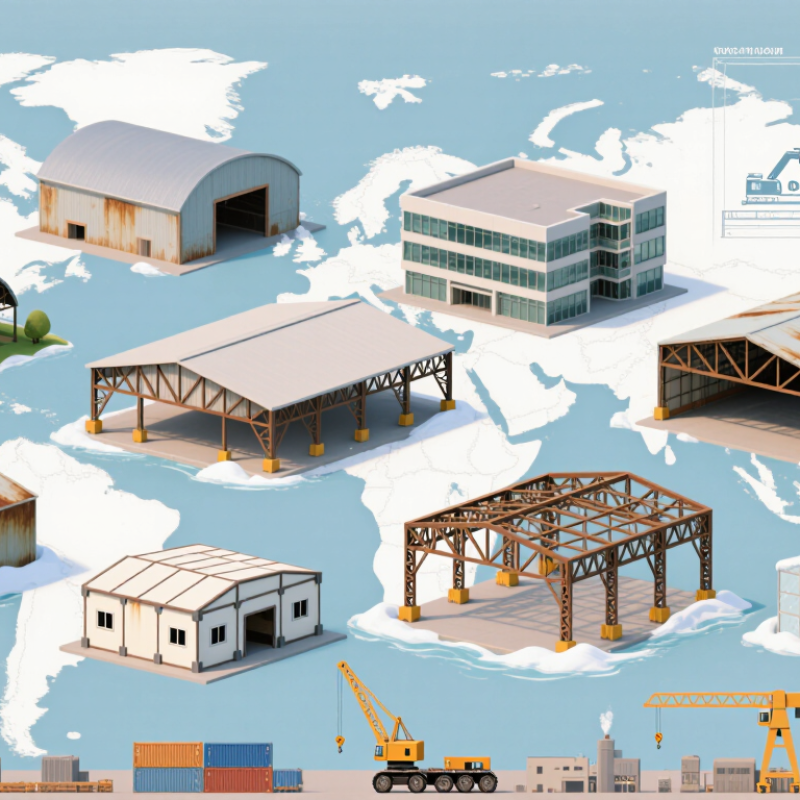
Choosing among the 10 best prefab steel building manufacturers requires more than comparing prices or project photos. ISO 9001 is a useful starting point because it evaluates the manufacturer’s quality management system. The ISO Survey 2022 recorded 1,265,216 ISO 9001 certificates across 178 countries and economies. That scale shows its global relevance, but certification alone does not guarantee excellent fabrication. Verify the certificate scope, issuing body, expiry date, and audited production site.
CE marking deserves careful review in European projects. For structural steel components, EN 1090-1 connects factory production control with declared performance and execution class requirements. A supplier should provide traceable material certificates, welding procedures, inspection records, and a valid declaration of performance. AISC certification offers another practical benchmark for documented fabrication procedures and independent assessment. It is valuable, but buyers should confirm whether the certificate covers the exact building type and fabrication category.
The market is enormous. World Steel Association data reports about 1.89 billion tonnes of crude steel production in 2023. That volume creates many suppliers, including capable and inconsistent ones. I would request sample inspection files, weld maps, coating reports, and recent audit findings before ranking a manufacturer. Small omissions matter. A polished website cannot replace traceability. Even a certified factory may struggle with engineering changes, subcontractor control, or delivery pressure, so independent inspection remains a sensible safeguard.

When comparing prefab steel building manufacturers worldwide, structural grade deserves more attention than catalog photos. S275 and S355 steel commonly offer nominal yield strengths of 275 and 355 MPa. However, the actual value can vary with thickness and regional standards.
In practical projects, S275 often suits warehouses, workshops, and moderate-span frames. It is generally easier to specify and may provide sufficient capacity without unnecessary material upgrades. S355 can support higher loads or longer spans with smaller sections. That may reduce steel weight, transport effort, and foundation demands. The saving is not automatic. Connection design, fabrication costs, and local availability can change the result.
Details matter. Ask for material certificates, heat numbers, impact-toughness data, and welding procedures. A reliable manufacturer should explain whether the quoted grade matches the project’s governing standard. Coating quality also matters near coastal sites, where salt can attack cut edges and bolt connections. I have seen attractive frames lose value because drainage was overlooked. That mistake is easy to repeat. Engineers should check fire protection, corrosion allowances, deflection limits, and site assembly tolerances before comparing prices. Higher yield strength does not replace sound detailing. A thinner member may be stronger, yet less forgiving during transport or erection.
| Structural Grade | Governing Standard | Minimum Yield Strength* | Typical Tensile Strength | Impact-Toughness Designation | Common Prefab Building Application | Welding and Fabrication Notes | Typical Compliance Documentation |
|---|---|---|---|---|---|---|---|
| S275JR | EN 10025-2 | 275 MPa | 410–560 MPa | 27 J at +20°C | Light industrial buildings, warehouses, portal-frame components and secondary steelwork | Good weldability when appropriate welding procedures and consumables are used | Mill test certificate, CE/UKCA documentation where applicable, EN 10204 inspection certificate |
| S275J0 | EN 10025-2 | 275 MPa | 410–560 MPa | 27 J at 0°C | Prefab frames and connections exposed to moderately cold service conditions | Suitable for welded construction with controlled heat input and qualified procedures | Grade certificate, chemical analysis, mechanical-test results and traceability records |
| S275J2 | EN 10025-2 | 275 MPa | 410–560 MPa | 27 J at −20°C | Structural frames in colder climates and enclosed industrial facilities | Good general weldability; low-temperature toughness should be confirmed for the design temperature | EN 10204 certificate, impact-test results and welding procedure documentation |
| S355JR | EN 10025-2 | 355 MPa | 470–630 MPa | 27 J at +20°C | Long-span portal frames, heavy-duty warehouses and columns carrying higher loads | Higher strength permits reduced member weight, subject to buckling and connection design | Mill certificate, dimensional inspection, weld procedure qualification and coating records |
| S355J0 | EN 10025-2 | 355 MPa | 470–630 MPa | 27 J at 0°C | Prefab buildings requiring higher load capacity and moderate cold-weather performance | Suitable for welded frames when preheating, heat input and joint details are properly controlled | EN 10204 certificate, impact-test report and documented welding-quality controls |
| S355J2 | EN 10025-2 | 355 MPa | 470–630 MPa | 27 J at −20°C | Cold-climate industrial buildings, logistics halls and high-load modular structures | Good weldability with qualified procedures; low-temperature toughness is a key advantage | Grade certificate, Charpy impact results, weld traceability and surface-treatment records |
| Q355B | GB/T 1591 | 355 MPa | 470–630 MPa | 27 J at +20°C | Prefabricated steel workshops, warehouses, frames and general load-bearing members | Commonly used for welded structural fabrication; actual weldability depends on thickness and carbon equivalent | Chinese standard mill certificate, chemical composition, tensile test and impact-test records |
| Q355D | GB/T 1591 | 355 MPa | 470–630 MPa | 27 J at −20°C | Heavy prefab frames and buildings operating in colder environmental conditions | Higher low-temperature toughness than Q355B; welding procedure control remains necessary | Mill certificate, Charpy impact report, chemical analysis and production traceability |
| ASTM A572 Grade 50 | ASTM A572/A572M | 345 MPa | 450 MPa minimum | Not generally assigned a mandatory Charpy class in the basic grade specification | North American-style pre-engineered buildings, columns, beams and bracing systems | High-strength low-alloy steel; welding requirements depend on thickness, joint design and project specification | ASTM material test report, heat-number traceability and supplementary toughness testing when specified |
| SM490A | JIS G 3106 | 325 MPa | 490–610 MPa | Impact requirements depend on the selected JIS grade and project specification | Japanese-standard prefab frames, industrial buildings, equipment platforms and structural assemblies | Weldability is generally suitable for structural fabrication, subject to carbon-equivalent and thickness checks | JIS inspection certificate, chemical analysis, tensile test results and welding-quality documentation |
Note: Yield-strength values shown are nominal minimum values for common thickness ranges and can decrease as product thickness increases. Final material selection should be verified against the applicable standard, design code, service temperature, connection design, corrosion environment and project-specific certification requirements.
The ten best prefab steel building manufacturers should be judged beyond catalog size. This ranking weighs annual production capacity, verified lead times, engineering depth, and international delivery experience. Public factory data, project records, certification details, and shipping infrastructure shaped the assessment. Capacity matters, but unused capacity does not shorten a real project.
The highest-ranked manufacturer combines large fabrication halls, automated cutting lines, and regional engineering teams. The next two offer strong output and reliable export logistics, although their lead times vary during peak seasons. Manufacturers ranked four through six provide balanced capacity, faster quotations, and practical customization for warehouses, workshops, and agricultural buildings. Positions seven through ten remain competitive for smaller projects, especially where local installation support reduces transport complexity. Some publish eight-week lead times, but site approvals and foundation readiness can add several weeks.
Experience shows that a fast factory schedule is only one part of delivery. A container may leave on time, yet customs checks, port congestion, or missing drawings can delay assembly. Buyers should request a production schedule, material traceability, connection details, and recent delivery references. I would also compare engineering response times, not just steel tonnage. That measure is less impressive, but often more useful. The ranking has limits because manufacturers report capacity differently, and seasonal data can be incomplete. Fresh project evidence should therefore influence the final decision.
Prefab steel buildings are gaining attention because a 50-year design life can support long-term planning. That figure is an engineering target, not a guarantee. It depends on structural calculations, steel quality, protective coatings, drainage, and local weather exposure. Experienced manufacturers test connections, review load paths, and provide documentation for inspection. A building beside salty air needs different protection than one in a dry inland area.
Assembly can be about 30% faster than traditional construction when drawings, foundations, and components arrive correctly coordinated. Factory-cut columns and pre-drilled bolt holes reduce site delays. Crews may raise wall frames in the morning and install roof panels by afternoon. However, speed is not automatic. Poor foundation accuracy can stop the process completely. I have seen small measurement errors create expensive rework. That practical risk deserves more attention.
Tips: Ask for the design-life assumptions, coating specifications, maintenance schedule, and independent engineering review. Check whether the quoted assembly time includes foundation work, weather delays, and interior fitting. Keep a photo record of bolt tightening and coating repairs. It creates useful evidence later. A realistic maintenance plan may include roof inspections, drainage cleaning, and touch-up work every few years. Performance comes from disciplined details, not steel alone.
China remains a major center for prefab steel building production, supported by extensive manufacturing capacity and experienced engineering teams. Regional manufacturers often provide modular workshops, warehouses, and agricultural buildings at competitive prices. However, buyers should verify steel grades, welding records, coating systems, and export experience. Low prices can hide coordination problems.
European manufacturers commonly emphasize energy efficiency, precise fabrication, and strict documentation. Their designs often address snow loads, insulation performance, fire safety, and demanding local standards. North American suppliers typically focus on large-span structures, quick installation, and practical building codes. They often serve logistics, industrial, commercial, and rural projects. Regional weather matters. Hurricane zones and heavy snow areas require different engineering choices.
Emerging markets are developing capable manufacturers in Southeast Asia, the Middle East, Latin America, and Africa. These producers may offer strong local knowledge, shorter delivery routes, and better adaptation to climate conditions. Yet quality systems can vary between factories. Buyers should request certified drawings, material traceability, installation guidance, and references from completed projects. Factory visits help, but they do not replace independent inspections. A reliable manufacturer communicates clearly about tolerances, lead times, transport limits, and after-sales support. This process takes patience. Steel buildings look simple, but small design omissions can create expensive site delays. Regional leadership should be judged by verified performance, not marketing language alone.

© Copyrights Levil Technology Corp 2022