China Best Inverter Wire Harness Supplier?
Choosing the China Best Inverter Wire Harness Supplier? The answer depends on your design, not a sales slogan. An Inverter Wire Harness must carry the required current, fit the inverter’s connectors, and withstand the temperatures and vibration expected in service. A neat sample is useful. It is not proof of consistent production.
W. Edwards Deming, a quality-management expert, said, “Quality is everyone’s responsibility.” That principle applies here: ask how a supplier controls wire selection, crimping, assembly, and final inspection. Request drawings, material specifications, sample test results, and clear answers about production traceability. Check that the proposed cable lengths and connector keying match your equipment. Small details matter. A connector that looks right may still be incompatible.
Compare suppliers using the same requirements. Discuss order quantities, sample lead times, change control, and how defects are handled. If your application has demanding electrical or environmental conditions, have qualified engineers review the design and test plan before approval. Do not treat a certificate or a low quotation as a substitute for evidence tied to your product. Fit is unforgiving.
This guide outlines practical ways to assess Chinese suppliers, from technical communication to sample validation and ongoing quality checks. No supplier is best for every buyer. A weak point in this comparison is that public claims rarely reveal how reliably a factory performs across repeated batches. Verify what you can, document what remains uncertain, and reassess after production begins.
What an Inverter Wire Harness Is and How It Works
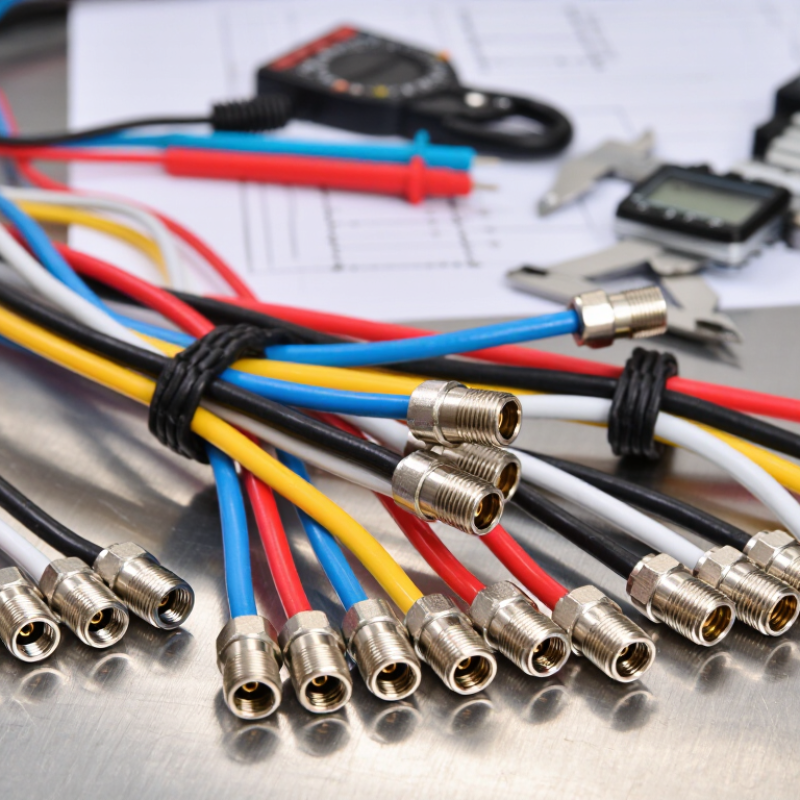
An inverter wire harness is an organized group of wires and connectors that links an inverter with its power source, controls, and electrical load. It carries power and, in some designs, control signals. Protective sleeves, labels, and sealed connectors help keep connections orderly and reduce exposure to heat, vibration, dust, or moisture. The exact construction depends on the inverter’s voltage, current, installation space, and operating conditions. Small details matter.
When the inverter runs, current travels through conductors sized for the expected load. Connector pins provide defined contact points, while insulation helps prevent accidental contact between circuits. A harness may also include grounding wires, shielding, or temperature-resistant coverings where the application requires them. During installation, technicians check pin locations, wire routing, and connector fit against the approved drawing. A drawing can still miss a real-world obstacle, so careful fit checks are useful before production.
Tips: Confirm voltage, current, wire length, and connector pinout before selecting a harness. Ask for continuity and insulation checks, plus clear labeling. Keep bends gentle near connectors; tight turns can strain wires. One detail is easy to overlook: leave enough slack for servicing, but not enough to snag or rub against sharp edges.
The Role of Chinese Suppliers in the Inverter Harness Market
Inverter-harness suppliers in China often coordinate wire cutting, terminal crimping, connector assembly, and inspection under one production plan. This can shorten communication between design teams and factories when an inverter layout changes. Suppliers may tailor conductor size, insulation, branch length, and sealing to the equipment’s current, temperature, and installation conditions. Small details matter. A poorly placed branch can complicate installation, even when the electrical drawing looks correct.
Their role extends beyond manufacturing. Experienced suppliers can review drawings, flag tight bend radii, and recommend tests for pull strength, continuity, and insulation resistance. Buyers should still verify samples against approved specifications and request clear records for materials, crimp settings, and inspection results. A low quotation alone says little about long-term consistency. Production lots can vary, and a neat sample does not guarantee every harness will match it. That is an uncomfortable but useful reminder. Strong supplier relationships depend on measurable checks, open communication, and the willingness to correct a process when field feedback reveals a weakness.
Key Criteria for Evaluating an Inverter Wire Harness Supplier
China Best Inverter Wire Harness Supplier?
Key Criteria for Evaluating an Inverter Wire Harness Supplier
Choosing an inverter wire harness supplier takes more than comparing unit prices. Start with the application: operating current, voltage, temperature range, vibration exposure, and available space. Ask for drawings that show wire gauge, connector specifications, insulation materials, and routing details. A harness that fits the prototype may still rub against an enclosure after installation. Small details matter.
Evaluate quality controls with specific evidence. Ask how wire lots are traced, how crimp connections are checked, and whether continuity and pull-force results are recorded. Request a sample built to your drawing, then inspect connector locking, cable length, and strain relief. Discuss how the supplier handles design changes and production delays. Clear answers are reassuring; vague promises are not. Even a good checklist can miss something, so review actual samples with your engineering team.
Tips: Share expected volumes and environmental conditions early. Confirm tolerances in writing, and agree on how sample approval works. A low quote can hide extra testing or packaging costs. Look beyond the first delivery.
Key Criteria for Evaluating an Inverter Wire Harness Supplier
Suggested evaluation weights for comparing suppliers (illustrative framework, not measured market data).
Prioritize electrical performance, safety compliance, and environmental durability. Verify each criterion using specifications, test reports, quality records, and sample validation; adapt the weights to your application and requirements.
Manufacturing, Testing, and Quality Standards
For an inverter wire harness supplier in China, quality begins with controlled materials and repeatable crimping. The IEA PVPS Trends 2024 report estimates global solar capacity reached about 1,624 GW by the end of 2023. That scale makes consistent cable assemblies essential. A qualified factory should trace copper, insulation, terminals, and production lots. Operators should verify conductor strip length and crimp height, then inspect sample cross-sections. Small defects matter.
Testing should follow the application and agreed specifications. Useful checks include pin-to-pin continuity, insulation resistance, dielectric withstand, and terminal pull force. For outdoor photovoltaic use, cable and connector selection should align with relevant IEC requirements, including IEC 62930 and IEC 62852 where applicable. These tests do not replace environmental validation. Thermal cycling, damp heat, and vibration testing can reveal weaknesses that a bench check misses. Records matter, too. Keep calibration dates, test results, nonconformance reports, and corrective actions tied to each production lot. A supplier may pass a sample inspection yet still vary between shifts. That risk deserves attention. Ask how failed crimps are isolated, how retests are documented, and whether engineering changes trigger renewed validation before shipment.
How to Select a Supplier for Your Application
China Best Inverter Wire Harness Supplier?
How to Select a Supplier for Your Application
Choosing an inverter wire harness supplier starts with your operating conditions, not a catalogue photo. Define rated voltage, continuous current, peak load, ambient temperature, vibration, and moisture exposure.
The International Energy Agency’s Renewables 2023 report projects 2,400 GW of renewable capacity growth from 2022 to 2027, over 85% more than the previous five years. That figure is not a harness-market estimate, but it signals why dependable power connections matter. Small details matter.
Request drawings, material specifications, and test records for the exact harness configuration. Check conductor size, insulation temperature rating, connector fit, crimp quality, and strain relief. Ask for evidence: continuity and insulation-resistance results, plus pull-test data where applicable. Review how the supplier handles lot traceability and design changes. A sample can look excellent and still fail after repeated thermal cycling. I would not treat a low quote as proof of value; compare it with documented testing, lead times, and realistic production capacity. Ask whether the supplier can build a pilot batch and report any deviations clearly. One overlooked point is service access: a harness that is difficult to route or replace can slow maintenance. Verify the fit in your enclosure before approving production.