
Bulk buyers searching for the China Best Blue Cut Lens Manufacturer need more than an attractive unit price. They need consistent optical performance, dependable delivery, and clear production specifications. The evidence behind blue-light filtering also deserves careful attention.
A 2023 Cochrane Database of Systematic Reviews review assessed 17 randomized trials involving 619 adults. It found that blue-light-filtering spectacle lenses may not reduce short-term computer-related eye strain. That finding matters. It does not make every Blue-Cut Lens unsuitable; it does mean buyers should avoid unsupported health promises. Some uncertainty remains, and product claims should reflect it.
For sourcing, compare measurable details: lens material, refractive index, coating options, UV-transmission data, tolerances, and inspection procedures. Ask for samples from the intended production line, not just polished showroom pieces. Check whether coating durability and color appearance remain consistent across batches. A faint residual tint may look different under a warehouse’s cool lighting than beside a customer’s window.
Request written specifications, test records, sample approval terms, minimum order quantities, and realistic lead times. Then compare how the supplier handles defects and corrective action. A low quotation can hide costly variation. A large factory is not automatically the best partner, either. The right manufacturer is the one that can document what it produces, explain its limits, and repeat the approved result at scale. Cochrane evidence is not a factory audit, of course, but it helps buyers assess product claims with a more reliable standard.
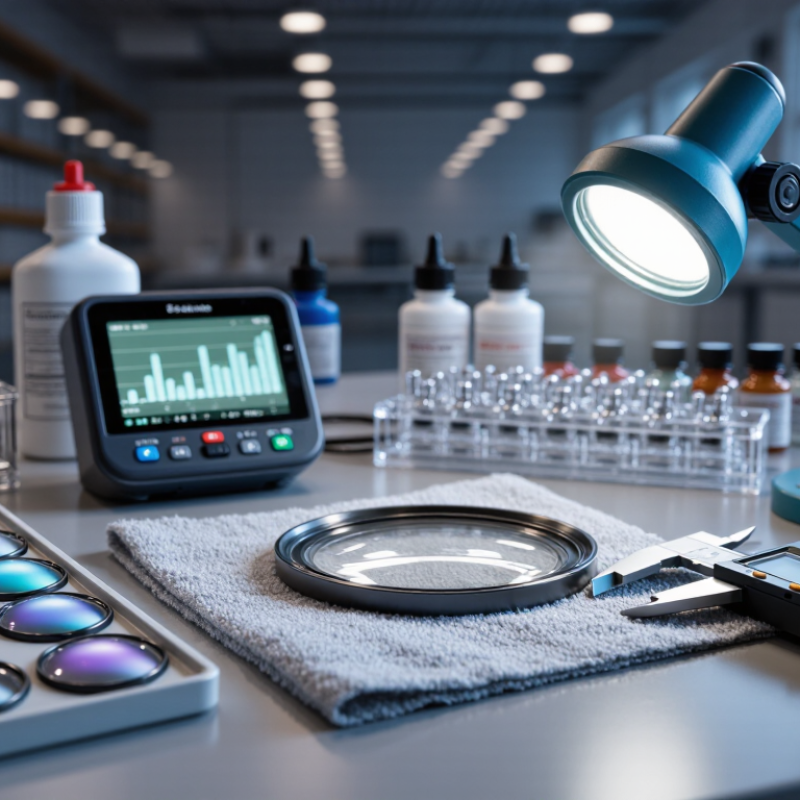
Blue-cut lenses are made to reduce some light in the blue-violet part of the visible spectrum. They do not simply block all blue light. Depending on the lens, filtering may come from an absorbing material, a surface coating, or both. The exact wavelength range and amount filtered vary by product, so “blue cut” alone does not describe performance.
Look closely at the lens. A coated lens may show a faint blue or purple reflection as light bounces off its surface. Other designs absorb selected wavelengths within the lens material and may look clearer from the front. A transmission curve gives more useful detail than a broad label: it shows how much light passes through at different wavelengths. Color appearance can also shift slightly. That matters when users need accurate screen colors, and comfort is personal; filtering does not guarantee relief for every wearer.
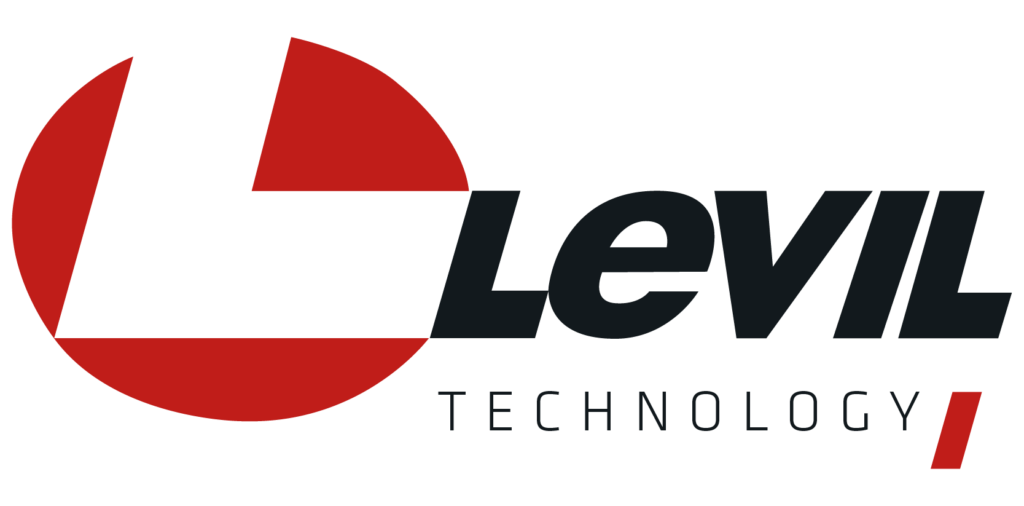
Blue-cut lenses are made through two main routes: light-absorbing additives within the lens material, or thin-film coatings applied to its surface. A factory typically begins by selecting the lens blank, then generates the prescription, polishes the surface, and applies any required coating. Small details matter. Dust, uneven coating thickness, or imperfect curing can affect appearance and performance.
For bulk orders, buyers should ask how each production lot is checked. A spectrophotometer can measure transmission across specified wavelengths, while inspection can identify haze, scratches, and coating defects. ISO 8980-3:2022 covers transmittance specifications and test methods for uncut finished spectacle lenses; buyers should agree on the test range and acceptance limits before production. Some variation is unavoidable, so request batch records and sample lenses, not just a factory specification sheet.
Performance claims also need restraint. A 2023 Cochrane review examined 17 randomized trials involving 619 adults and found that blue-light filtering lenses may make little or no difference to short-term visual performance; evidence on sleep effects remained uncertain. That finding does not settle every product question, but it is a reason to avoid medical guarantees. For large orders, confirm tint consistency, prescription accuracy, coating durability, and packaging details with a pilot batch. The paperwork can look perfect. The lenses still need checking.
Bulk buyers need more than a competitive quotation. Check whether the manufacturer can hold consistent lens specifications across repeat orders. Ask for written details on material, prescription range, refractive index, coating options, and blue-light measurement methods. Numbers matter. A coating description alone does not show how a lens performs.
Request production samples and inspect them under the same lighting conditions. Look for uneven tint, visible coating marks, edge chips, and differences between lenses. Ask how the factory checks transmission and coating adhesion, and whether test records can be matched to each batch. One sample is not enough. A polished sample may not reflect routine production, so compare samples from separate runs when possible.
Capacity and communication deserve equal attention. Ask about monthly output, lead times, packaging, and how defects are handled before placing a large order. Confirm that carton labels and product specifications match the purchase documents. A slow response to a small technical question can become a bigger issue later. I would not judge a supplier on price alone; a low quote can hide unclear tolerances or inconsistent inspection. Reliable details beat confident promises.
Bulk buyers comparing blue cut lenses should start with measurable quality, not a coating name. Ask for the lens material, refractive index, power tolerance, and a spectral transmission report. Check the report’s wavelength range and how much blue-violet light is filtered; “blue cut” can describe different performance. Request samples matching the prescription and tint planned for the order. Inspect them in daylight and under office LEDs. Look for color shift, haze, edge defects, and uneven reflections. Small differences matter.
Coatings affect clarity, cleaning, and durability. Compare anti-reflective performance, scratch resistance, and water or oil repellency using consistent tests. Ask how each coating is applied and what inspection criteria are used. Customization may include lens index, tint, diameter, prescription range, packaging, or logo-free labeling. Confirm available options, production tolerances, and sample approval steps in writing. A single sample is not proof of a consistent bulk run; I would want checks from more than one production batch.
Tips: Compare identical prescriptions and lighting. Request clear test records. Check samples before approving the full order. If color appearance matters, specify an acceptable range; this part can be harder to judge than expected.
A low unit price can hide costly gaps. Compare quotations on the same lens material, blue-light test method, coating, packaging, and order quantity. Ask whether sample, tooling, and inspection fees are included. Grand View Research valued the global eyewear market at USD 183.36 billion in 2023 and forecast 8.3% annual growth from 2024 to 2030. That broad market figure signals scale, not guaranteed demand for blue-cut lenses. Treat it as context, not a sales promise.
Capacity needs evidence. Request monthly output for the exact lens type, current lead time, and a recent production schedule. Ask how rejected lenses are counted and what happens when a batch misses agreed specifications. A detailed answer matters more than a large factory photo. Some buyers overlook this. I would, too, if rushed. For export support, check whether the supplier can prepare consistent invoices, packing lists, test reports, and shipment updates. UNCTAD’s Review of Maritime Transport 2024 notes that over 80% of world trade by volume moves by sea, so packaging and dispatch coordination affect delivery risk. Confirm shipment terms, destination experience, and who handles document corrections before paying a deposit. One uncomfortable question remains: can the supplier prove its stated capacity during peak season?
Use this comparison framework to screen suppliers. Numeric ranges below are suggested RFQ planning targets, not verified market averages or guarantees; confirm specifications, capacity, and commercial terms directly with each supplier.
| Evaluation Area | Dimension | Suggested Buyer Benchmark or Data to Request | How to Verify |
|---|---|---|---|
| Pricing | Comparable quotation | Request itemized pricing for the same lens design, material, index, coating, tint, prescription range, order quantity, and packaging. | Compare like-for-like quotations and ask suppliers to identify every included and optional charge. |
| Pricing | Volume price breaks | Ask for written price tiers at 500, 1,000, 3,000, and 5,000 pairs, or at quantities relevant to your forecast. | Confirm whether each tier applies per order, per prescription, per SKU, or across a mixed order. |
| Pricing | Total landed cost | Separate lens price, setup or tooling fees, custom packaging, inspection, freight, insurance, duties, and destination charges. | Request an Incoterms® 2020 quotation, such as FOB or DAP, with named port or destination and quotation validity. |
| Pricing | Sample and development costs | Request sample pricing, sample lead time, customization charges, and any conditions for crediting sample costs against a bulk order. | Confirm whether samples represent the final production material, coating, and packaging specification. |
| Product Quality | Blue-light performance | Specify the wavelength range and measurement method used for any blue-light transmission or filtering claim; request spectral transmission data for the exact product. | Check that the test report identifies the lens material, coating, test method, and sample tested. Avoid comparing percentages measured over different wavelength bands. |
| Product Quality | Optical and coating specifications | Define material and refractive index, power range, UV specification, coating stack, surface quality, and applicable tolerances in the purchase specification. | Request current technical datasheets and inspection criteria, and approve a production sample before placing a large order. |
| Production | Monthly capacity | Request stated output in pairs per month for the specific lens type and process, plus current utilization and capacity allocated to your order. | Ask for a capacity plan and evidence such as recent production records or a third-party factory audit; distinguish total factory capacity from available capacity. |
| Production | Lead time | For planning, ask suppliers to quote separate sample, first-order, and repeat-order lead times; obtain a committed schedule against your quantity and SKU mix. | Confirm when the clock starts, how holidays affect the schedule, and how delays or partial shipments are handled. |
| Production | Quality control and traceability | Request documented incoming, in-process, and final inspection steps, defect definitions, batch identification, and a written corrective-action process. | Review a sample inspection report and agree on acceptance criteria before production, including the sampling plan if applicable. |
| Export Support | Export documentation | Confirm the supplier can provide the documents required for the destination market, such as a commercial invoice, packing list, and certificate of origin where applicable. | Have your customs broker verify the required documents, product classification, and import rules for the destination before shipment. |
| Export Support | Packaging and labeling | Specify carton dimensions, protective packaging, SKU and batch labels, language requirements, and any destination-market labeling needs. | Approve label artwork and a packing sample; verify that carton marks match the purchase order and shipping documents. |
| Export Support | Shipping coordination | Ask for available shipping methods, estimated transit times, shipment milestones, and the party responsible for booking and export clearance under the selected Incoterm. | Confirm the named place or port, insurance responsibility, tracking arrangements, and procedures for damaged or missing cartons. |
| Commercial Terms | Payment and order protection | Request written payment terms, currency, deposit and balance conditions, cancellation terms, and remedies for specification or delivery failures. | Use a signed specification and purchase order; consider an independent pre-shipment inspection for high-value or first-time orders. |
| Supplier Review | Due diligence | Collect the legal entity name, business license details, factory or trading-company status, export experience, references, and quality-system documentation. | Check documents independently, verify the contracting and payment entities match, and arrange a remote or on-site audit when warranted. |

© Copyrights Levil Technology Corp 2022