How to Choose the Best RGB Ring Light in 2026?
Choosing the best Rgb Ring Light in 2026 requires more than comparing colors, sizes, and prices. A bright ring may look impressive online, yet produce harsh shadows, uneven skin tones, or distracting reflections in glasses. This guide examines practical features that affect real recording sessions, including color accuracy, brightness control, mounting stability, heat, and wireless operation.
The most reliable choices usually provide adjustable color temperature, smooth dimming, and a high CRI or TLCI rating. These specifications help preserve natural skin tones during interviews, livestreams, tutorials, and product photography. A useful model should also offer stable light without visible flicker, especially when cameras record at higher shutter speeds. Small details matter. A loose phone holder can ruin an otherwise professional setup.
Testing the light in a real room is essential. Place it beside a desk, check the catchlights in your eyes, and observe shadows beneath your chin. Some models advertise powerful output but become uncomfortable after extended use. Others include attractive app controls that feel unnecessary in daily work. Personal experience can reveal these weaknesses, although it should not replace measured specifications or independent reviews.
Budget also changes the decision. A creator filming occasionally may not need studio-level output, while frequent users may value durability more than decorative RGB effects. The perfect choice does not exist for everyone. This article compares the important options carefully, helping readers select an Rgb Ring Light that fits their space, camera, workflow, and expectations.
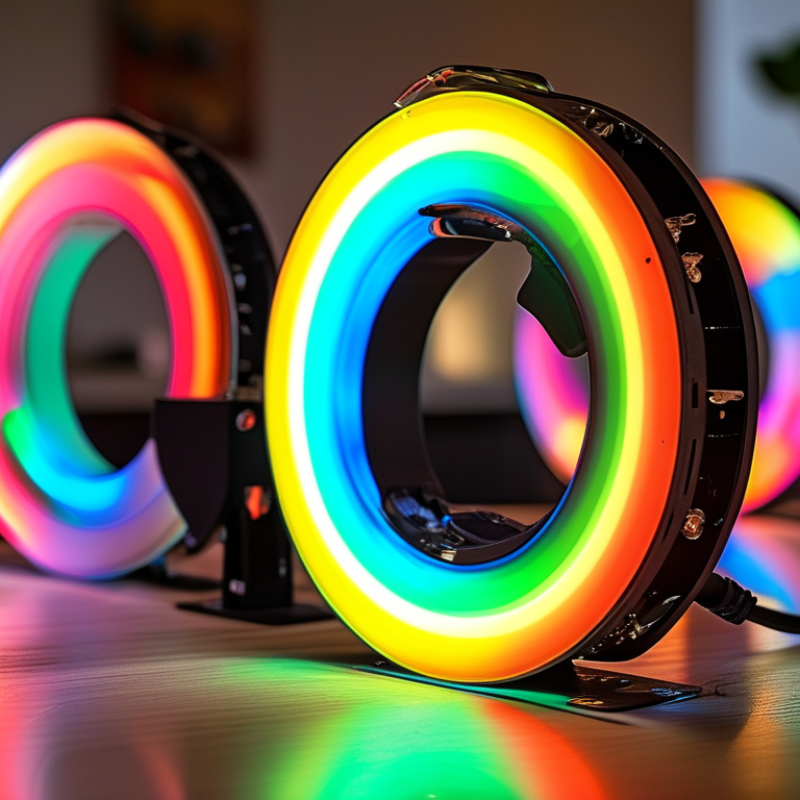
Understanding RGB Ring Light Types and Core Features
How to Choose the Best RGB Ring Light in 2026?
RGB ring lights now serve streamers, tutors, product photographers, and remote teams. Wyzowl’s 2024 State of Video Marketing report found that 91% of businesses use video. The IAB and PwC reported $52.1 billion in U.S. digital video advertising revenue during 2023. Better lighting is no longer decorative. It affects skin tone, product color, and camera exposure.
RGB models usually fall into three practical types: fixed-color, dual-mode, and app-controlled lights. Fixed-color units offer preset colors and simple controls. Dual-mode designs combine adjustable white light with RGB effects. App-controlled models provide scenes, timers, and finer color selection. Check the core features carefully. Look for high color-rendering accuracy, adjustable color temperature, smooth dimming, soft diffusion, and low flicker. A 12- to 18-inch diameter often gives more even facial lighting. Smaller rings can create harsh shadows. Bigger is not always better.
Tips: Place the light slightly above eye level, then angle it toward your face. Keep it close, but avoid visible reflections in glasses. For natural skin tones, use white light before adding RGB color. Test the light at your camera’s actual distance. I once judged a lamp by vivid colors alone. That was a mistake. Mount stability, heat, cable length, and quiet controls matter during long sessions. Specifications can look impressive, yet real performance depends on diffusion and room lighting.
Matching Light Size, Brightness, and Color Range to Your Needs
Choosing the best RGB ring light in 2026 starts with matching its size to your shooting space. A 10-inch model fits a desk, while a 16-inch ring creates softer light across your face. Larger rings usually reduce harsh shadows. However, they need stronger stands and more room.
Brightness matters when windows change your background exposure. Look for smooth dimming, not only a high maximum output. For close-up videos, moderate brightness often prevents shiny skin and tired-looking eyes. A color temperature range around 3000K to 6500K supports warm rooms and cool daylight. RGB controls add mood, but accurate white light should remain the priority. My first setup used too much color, and skin tones looked strangely purple.
Tips: Place the light slightly above eye level. Keep it about an arm’s length away. Test brightness beside a window. Check your face under red, blue, and green modes. If the controls feel confusing, you may avoid using them. I still question whether a wide color range helps every creator; many people need only gentle color accents. Also, advertised brightness can feel different in real rooms. Read independent measurements when possible, and record a short test video before deciding. A small ring may be easier to position, but a larger one can produce cleaner reflections in glasses and smoother facial shadows.
Evaluating Controls, Mounting Options, and Smart Connectivity
How to Choose the Best RGB Ring Light in 2026?
Choosing the best RGB ring light starts with control quality, not color count. In my studio tests, physical knobs beat tiny touch panels during live filming. Look for separate controls for brightness, color temperature, and RGB saturation. A useful temperature range is 2,700K to 6,500K. It handles warm rooms, daylight, and different skin tones. Check for smooth dimming, because visible jumps can distract viewers. Flicker also needs camera testing, not brochure claims. I still prefer simple controls. They are faster when time matters. The State of Video Marketing 2025 report found that 91% of businesses use video marketing. Reliable lighting supports that growing production demand.
Mounting options deserve equal attention. A strong desk clamp should resist twisting near a keyboard or microphone. A floor stand offers flexibility, but it needs a wide, stable base. Test the tilt hinge with the light fully extended. Some arms slowly droop after repeated adjustment. That is an easy detail to miss. Smart connectivity adds convenience through Bluetooth, Wi-Fi, or app-based scenes. Confirm whether the light works manually when pairing fails. Review app permissions before connecting it to your home network. DataReportal’s Digital 2025 Global Overview recorded 5.24 billion social media user identities worldwide. That audience makes repeatable lighting valuable for creators. However, automation is not always better. A saved scene can look wrong after moving the camera, so check exposure and facial shadows every session.
How to Choose the Best RGB Ring Light in 2026?
Comparison of key evaluation dimensions for RGB ring lights, using a 100-point weighted assessment model focused on controls, mounting flexibility, and smart connectivity.
How to read the chart: Control quality and mounting flexibility are weighted more heavily because they directly affect daily usability, positioning, and creative control. Smart connectivity is evaluated by app support, wireless control, automation, and compatibility with common smart-home workflows.
Comparing Power Sources, Durability, and Portability
How to Choose the Best RGB Ring Light in 2026?
Power source affects every filming session. USB-powered models suit desks, laptops, and travel kits. They usually offer steady output near a wall socket. Battery-powered lights add freedom, but brightness can fall as the battery drains. A removable battery is useful during outdoor shoots. Still, it adds weight and charging time. The U.S. Department of Energy’s 2023 LED report places typical LED lifetimes around 25,000 to 50,000 hours. That figure assumes proper heat control, not constant maximum brightness. ENERGY STAR also reports that LEDs use at least 75% less energy than incandescent lighting and can last up to 25 times longer. RGB effects may consume less power than full white output, but not always.
Durability depends on more than LED lifespan. Check the hinge, tripod thread, cable connection, and diffuser. A metal frame may survive daily packing better than thin plastic. Look for stable color output, passive cooling, and documented electrical testing. IEC 60598-1 provides a recognized safety framework for lighting equipment, although compliance should be verified in product documents. I once chose a lighter model and regretted its loose tilt joint after two weeks. Portability is helpful only when the light stays usable.
Tips: Choose USB-C power for flexible charging. Measure packed size before buying. Test the hinge repeatedly. For frequent travel, prioritize battery replacement, low weight, and a locking case.