
Choosing the right Furniture Suction Cup starts with the surface it must grip, not the cup’s appearance. Glass, sealed tile, and smooth laminate usually provide better contact than porous wood or textured finishes. Small details matter. A tiny ridge, dusty patch, or curved tabletop can weaken the seal and let an object shift. Before buying, check the cup diameter, attachment style, and the manufacturer’s stated load capacity. Do not assume a larger cup will solve every problem; poor surface contact can defeat a larger design.
Furniture hardware specialist Alex Morgan sums up the decision this way: “A suction cup is only as dependable as the surface and seal it meets.” Choose a model suited to the furniture’s finish and the item it will support. A cup for a smooth cabinet panel may not hold securely on a grainy desk. Check whether the product is intended for temporary positioning, vibration control, or another specific use. Then clean and dry the contact area, press the cup firmly into place, and test it gently before relying on it. Recheck the seal after moving furniture or changing room conditions. That step is easy to skip. It can matter.
This guide explores the details worth comparing, including materials, dimensions, surface compatibility, and installation. Product descriptions do not always show how a cup will behave on a particular finish. Treat their claims as a starting point, and inspect the actual surface carefully. A cautious test is useful. No suction cup is right for every piece of furniture.
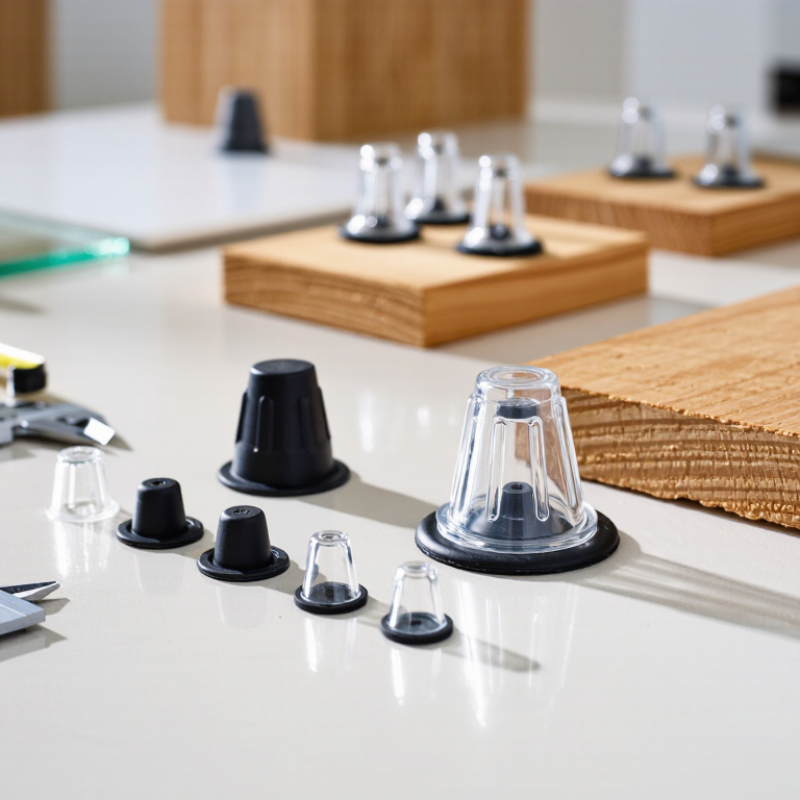
A furniture suction cup needs a surface it can seal against. Smooth glass, glazed tile, and polished metal usually work better than unfinished wood, fabric, or textured paint. Even a small groove can let air seep in and weaken the hold. Check the whole contact area, not just the center. Looks simple.
Next, consider what the cup must support and how the force will act. A cup holding a light cable guide faces less strain than one resisting a chair’s repeated sliding. Check the stated working-load limit, and do not treat a test rating as a guarantee for everyday use. Sideways pulling can loosen a cup sooner than a steady, straight load. Leave a safety margin.
Clean the surface with a suitable cleaner, then let it dry fully; dust, oil, and moisture can interfere with the seal. Press the cup firmly and inspect its edges for gaps. Test it gently before placing furniture into regular use, then check it again after movement or temperature changes. I have learned this the annoying way: a cup that seems secure at first can slowly shift. For valuable or heavy furniture, suction alone may not provide dependable support.

Furniture suction cups differ in material, shape, and grip. Silicone is flexible and often seals well against smooth, clean surfaces. Rubber can provide a firm hold, though its grip may weaken as it ages or collects dust. PVC is commonly more rigid and economical, but may not conform as readily to slight surface irregularities. Material names alone do not guarantee performance; thickness and manufacturing quality matter too. A cup that looks sturdy may still slip on a textured cabinet panel.
Design affects both contact and load. A flat cup suits an even surface, while a bellows-style cup can adapt to small gaps and movement. Larger diameters spread the load across more area, but only if the whole rim makes contact. Check the stem or screw fitting as well, since it must match the furniture hardware. No design is universal. It is easy to overlook how much a small curve or seam can disrupt the seal.
Tips: Clean and dry the surface before fitting. Press around the rim and check for trapped air. Test the hold gently before placing anything valuable on the furniture. If the cup loosens, inspect the surface and material rather than simply pressing harder.
| Option | Typical Characteristics | Best-Suited Furniture Use | Limitations to Consider | Practical Selection Tip |
|---|---|---|---|---|
| PVC (polyvinyl chloride) | Commonly available in flexible formulations; can provide a firm, economical cup. Flexibility and durability vary by formulation. | General-purpose placement on clean, smooth, nonporous surfaces, such as glass or glazed tile. | Performance can vary with temperature, formulation, and aging. A cup may lose its hold on textured, porous, dusty, or oily surfaces. | Check that the cup is flexible enough to form a continuous seal on the intended surface. |
| Silicone | Flexible material that generally retains flexibility across a broad range of temperatures; specific properties depend on grade and design. | Furniture accessories or supports where flexibility and temperature tolerance are priorities. | May cost more than basic materials. Like other suction cups, it still needs a clean, smooth, nonporous surface to seal reliably. | Choose a cup with a suitable diameter and a smooth sealing lip; confirm compatibility with the furniture finish. |
| Natural rubber | Typically elastic and able to conform to smooth surfaces; resistance to sunlight, ozone, oils, and aging varies by compound. | Indoor applications where the cup is protected from harsh environmental exposure. | Some compounds can age or become less flexible with prolonged exposure to heat, sunlight, or ozone. | For long-term use, check the product’s material details and inspect the cup periodically for hardening or cracks. |
| TPE (thermoplastic elastomer) | Combines rubber-like flexibility with thermoplastic processing; properties vary considerably among formulations. | Reusable furniture accessories where a flexible cup and straightforward manufacturing are desired. | Grip, temperature tolerance, and wear resistance are formulation-dependent; the material name alone does not guarantee performance. | Compare the stated operating conditions and intended surface rather than selecting by material name alone. |
| Flat-rim design | Broad, relatively shallow sealing lip with a low profile. | Light-duty positioning on very smooth surfaces, such as glass or polished, nonporous panels. | Offers limited conformity to uneven surfaces and may be easier to peel away from an edge. | Use on a clean, flat surface and keep the cup fully supported rather than close to an edge. |
| Bellows or accordion design | Folded body compresses and expands, providing extra movement compared with a shallow, flat cup. | Applications that need some adjustment or cushioning between a furniture component and a smooth surface. | Its added height can allow more movement; it is not a substitute for a mechanical fastener where loads or safety risks are significant. | Check stability under the expected direction of force, especially when the furniture may be bumped or shifted. |
| Stem, stud, or threaded attachment | A suction cup joined to a projecting connector for mounting a compatible accessory or component. | Furniture fittings designed to attach to a suction cup without drilling into a smooth surface. | Connector dimensions and load direction matter. Pulling or twisting can break the seal or stress the attachment. | Match the connector to the fitting and use only for the load and orientation specified by the supplier. |
| Cup with a pull tab | Includes a small tab or lifting point to make intentional release easier. | Removable organizers, protectors, or accessories that need to be repositioned regularly. | The tab can be caught accidentally if it is exposed or placed where it may be snagged. | Position the tab where it remains accessible for removal but is protected from accidental pulling. |
Use note: Suction cups generally hold best on clean, dry, smooth, nonporous surfaces. Wood grain, fabric, textured finishes, dust, grease, and surface coatings can prevent a reliable seal. Always follow the supplier’s load guidance, test the fit before use, and do not rely on a suction cup as the sole support for heavy or safety-critical furniture.
A furniture suction cup should match both the load and the surface beneath it. Check the cup’s rated capacity, not just its diameter. Vacuum-handling engineering uses the relation F = pressure difference × effective cup area. At a hypothetical 60 kPa vacuum, a 50 mm cup produces about 118 N of theoretical force; a 75 mm cup produces about 265 N. The larger cup has 2.25 times the area, but these figures are not safe working loads. ISO 4414:2010 provides a safety framework for pneumatic systems, while real holding performance also depends on the cup and contact surface.
Look closely at the furniture finish. A smooth, clean glass panel can seal well; textured wood grain, dust, seams, or a curved edge can let air leak. That matters. For a heavy cabinet door, use the rated capacity for the actual mounting orientation and allow a margin below it. A cup may hold briefly during fitting, then slip as the surface warms or the seal shifts. I would recheck it after installation. It is easy to overestimate a neat-looking seal.
A suction cup needs a smooth, clean, airtight surface. Glass and glossy laminate usually provide a better seal than unfinished wood, fabric, or textured paint. Even tiny grooves can let air seep underneath and weaken the grip. Dust, oil, and moisture can also interfere. Check the surface where the cup will sit, not just the furniture’s overall finish.
The pressure difference creates holding force. NIST’s Special Publication 811 gives standard atmospheric pressure as 101.325 kPa; this is a theoretical upper limit, not a real-world cup rating. Leaks and surface irregularities reduce usable force, so never assume a cup’s size alone predicts its hold. Cold, damp, or changing conditions may also affect the seal. I still test the exact surface before trusting a new setup.
Tips: Wipe the spot with a clean, dry cloth, then press the cup firmly into place. Try a gentle pull after a few minutes. If the edge lifts or the cup slides, choose a smoother location or another attachment method. Recheck it after moving the furniture. Short tests help, though they do not guarantee a lasting hold.
Before regular use, test the suction cup on the exact furniture surface and in the position you plan to use. A cup that grips smooth glass may slip on textured laminate, painted wood, or a curved panel. Check the cup diameter against the available flat area; its rim should sit fully flat without crossing an edge. Clean dust and oily residue, then dry the surface. Small details matter.
Press the cup firmly into place and engage its locking lever, if present. Pull gently in several directions, then attach a light object and leave it for several hours. Increase the load in small steps, staying within the product’s stated capacity. Watch for a lifted rim, slow movement, or a faint hiss. Stop if anything shifts.
A single successful test can be misleading. Temperature changes, vibration, and repeated opening of drawers may weaken the hold over time. Recheck after the first day and periodically afterward, especially on glossy finishes that collect fingerprints. Do not rely on a suction cup for heavy or breakable items unless the furniture and attachment are rated for that use. If grip seems inconsistent, try a wider, smoother patch rather than pressing harder.
Compare cup diameter with theoretical holding force
The bars show ideal theoretical force, calculated from cup area × an assumed pressure difference of 20 kPa. Real holding strength can be much lower and varies with the cup, surface, seal, and loading direction. Check that the cup fits a smooth, nonporous area, then test it with a gradual load and confirm it stays secure before regular use.

© Copyrights Levil Technology Corp 2022