How to Choose the Right PCB Board for Your Project?
Selecting the right Pcb Board for your project can significantly impact its success. The global PCB market is projected to reach $90 billion by 2026. This growth underscores the importance of understanding PCB specifications. Choosing the wrong PCB board could lead to performance issues. A study shows that 45% of failed projects cite poor PCB selection as a key factor.
It’s crucial to consider factors like material, thickness, and layer count. For instance, FR-4 is the most common material used due to its balance of cost and performance. However, high-frequency applications may require more specialized materials. Many designers overlook the importance of thermal management and signal integrity.
Practical experience in PCB design can reveal challenges that reports often overlook. Designers should test different boards to understand their limitations. This hands-on approach helps to identify potential pitfalls. High reliability is essential, yet even experienced designers can make mistakes. Understanding the nuances of PCB selection can lead to better project outcomes.
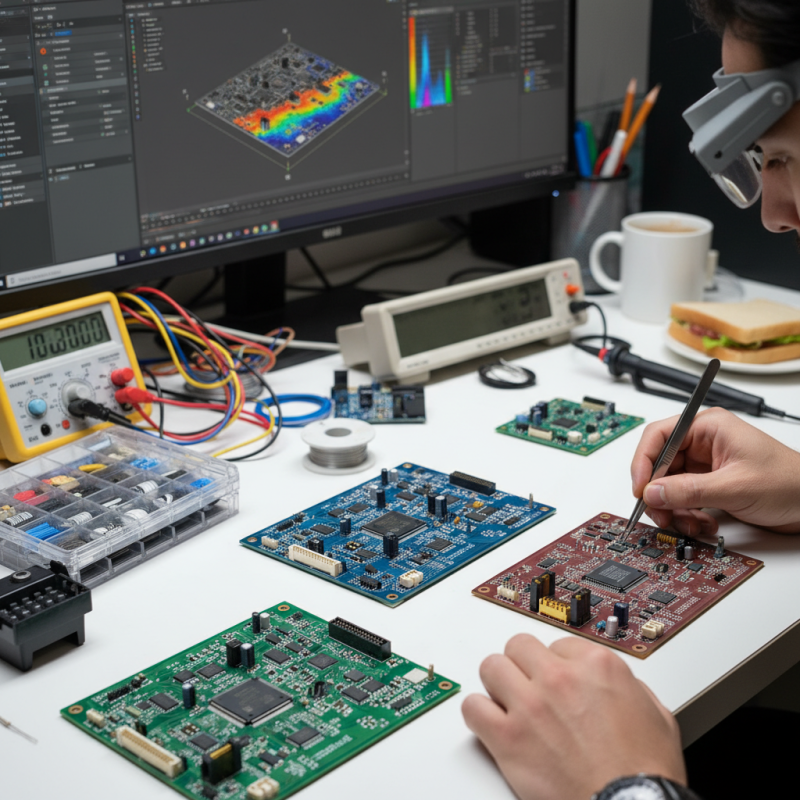
Understanding the Basics of PCB Types and Their Applications
When selecting a PCB board for your project, understanding the various types is crucial. PCB types can vary significantly in construction and application. There are single-sided, double-sided, and multilayer boards, offering different capabilities. For simple projects, single-sided boards may suffice. However, multilayer boards are often required for more complex designs, providing better performance and compactness.
**Tips:** Consider the complexity of your circuit when choosing a type. Single-sided boards are easier to work with but limited in functionality.
Different PCBs serve distinct purposes. For example, a rigid PCB is commonly used in consumer electronics, while flexible PCBs find their place in wearable technology. The choice of material also matters. FR-4 is popular for its reliability and cost-effectiveness, yet specialized applications might demand materials like Rogers or polyimide.
**Tips:** Think about the environmental conditions the board will face. Will it be exposed to high temperatures? If so, that could influence your material choice significantly.
Realizing some choices may not yield the expected results is part of the process. A seemingly minor oversight in selecting the board type can lead to performance issues. Always review your requirements and be prepared to adjust your approach based on the feedback you receive during testing.
Identifying Your Project's Specific Requirements for PCB Design
When selecting a PCB board for your project, understanding specific requirements is crucial. Different applications necessitate varying designs, materials, and sizes. Consider the purpose of your board. Is it for high-frequency signals or low-power applications? Knowing this can greatly influence your decision.
Thermal management plays a significant role as well. Some projects may generate heat that requires specialized materials. Not every PCB can handle high temperatures. Think about the environment where the board will operate. Will it face vibrations or moisture? These factors can determine the PCB’s durability and longevity.
Budget constraints are another aspect to consider. High-quality boards often come with a higher price tag. Balancing cost with performance might lead to compromises. Ensure you prioritize essential features over aesthetics. Mistakes can happen if you overlook project specifications. Taking the time to evaluate all these details will help mitigate potential issues.
How to Choose the Right PCB Board for Your Project?
| PCB Type | Layer Count | Material | Thickness (mm) | Finish Type | Common Applications |
| Single-Sided | 1 | FR-4 | 1.6 | HASL | Consumer Electronics |
| Double-Sided | 2 | FR-4 | 1.6 | ENIG | Industrial Applications |
| Multi-Layer | 4 | FR-4 | 1.6 | Immersion Gold | Computer Hardware |
| High-Frequency | 1 | PTFE | 0.8 | Oven-Cured | Telecommunications |
| Rigid-Flex | 4 | FR-4 | 0.5 | ENIG | Wearable Technology |
Evaluating Material Options for Enhanced PCB Performance
Choosing the right PCB material is crucial for enhancing performance. Various options exist, such as FR-4, Polyimide, and Ceramic. Each material has unique properties that can significantly impact the final product. For instance, FR-4 is popular due to its favorable cost-to-performance ratio. However, it may not withstand extreme temperatures.
Polyimide is ideal for flexible PCBs. It offers excellent thermal stability and flexibility, but it can be costly. Ceramic materials, on the other hand, provide superior heat management and are suitable for high-frequency applications. Designers need to weigh performance against budget constraints when selecting materials.
Understanding the project's specific needs is essential. Will it be used in a high-frequency environment? Or will it face extreme environmental conditions? These questions should guide material choice. Experimenting with different combinations can yield surprising results. Don't hesitate to revisit your decisions if performance does not meet expectations. Reflection is part of the design process.
Choosing the Right PCB Size and Layer Count for Your Project
When selecting a PCB size for your project, consider the form factor and the available space in the enclosure. A tight fit can limit airflow and affect performance. For example, an overly compact design may result in overheating, which can lead to component failure. A recent industry study shows that nearly 30% of PCB failures are linked to thermal issues. Additionally, balancing size with functionality is crucial.
Layer count is another key aspect. More layers allow for greater complexity in circuit design, but they also increase costs and manufacturing time. Many engineers recommend starting with a two-layer board for simple applications. In fact, about 45% of all PCBs produced are single or double-sided, according to a 2022 market report. For advanced projects needing high-density interconnects, consider moving to four or more layers. This decision should be guided by the specific demands of your project.
Reflect on the trade-offs between size, layer count, and intended functionality. This process can be challenging. Often, engineers face constraints that force them to compromise. Seek feedback from peers and review case studies in your field. These discussions can provide valuable insights into making the right choices for your specific situation.
PCB Board Size and Layer Count Analysis
This chart illustrates the relationship between the size of PCB boards and their corresponding layer counts. As the size of the PCB increases, more layers can be accommodated, catering to complex circuit designs and functionalities.
Assessing Cost Factors and Manufacturer Options for PCB Production
When assessing cost factors for PCB production, start by understanding your budget. Different materials and technologies will significantly impact overall costs. For example, the choice between FR-4 and specialty substrates can alter the price. Additionally, while cheaper is tempting, cutting corners might compromise quality.
Consider the manufacturing options available. Local manufacturers may offer faster turnaround times but often at a higher price. Overseas manufacturers might be more affordable, but factor in shipping and potential delays. The level of expertise in the manufacturing facility can also reflect in the final product's reliability. Take time to research their reputation and past projects.
Reflect on your specific project needs. Sometimes, complex designs require more careful production methods. This can increase costs but ensure better performance. Balancing budget constraints with the necessity for quality can be tricky. Always weigh the risks of low-cut costs against potential project failure. Prioritize what truly matters for your project's success.