
Choosing Rubber Wheels for a business is more than matching a color or diameter to a cart. The right choice affects handling, noise, floor wear, and how often equipment needs attention. Start with the actual load, including the cart and its heaviest contents. A wheel rated too close to the expected load may wear faster, especially over rough floors or frequent thresholds. Check the manufacturer’s load rating and consider how the weight is distributed across the wheels.
Know your floor. Hard, smooth concrete and uneven outdoor paving call for different tread designs and wheel sizes. Softer rubber may help reduce vibration and noise, while firmer compounds can roll more easily under heavier loads. Neither is best for every workplace. Temperature, exposure to oils or cleaning products, and time spent stationary can also affect performance. Measure the available mounting space, then verify the axle, bearing, and brake requirements before ordering. Small details matter.
Real use can still surprise you. A wheel that performs well in a quiet showroom may struggle on a damp loading bay, and specifications cannot predict every floor condition. If possible, test a sample under a representative load before committing to a large purchase. Ask suppliers for clear test data and written specifications, and keep a record of wear or handling issues after installation. That feedback helps refine future choices. The decision is rarely perfect on paper. But a careful match between load, surface, environment, and maintenance needs can make daily work safer, smoother, and more predictable.
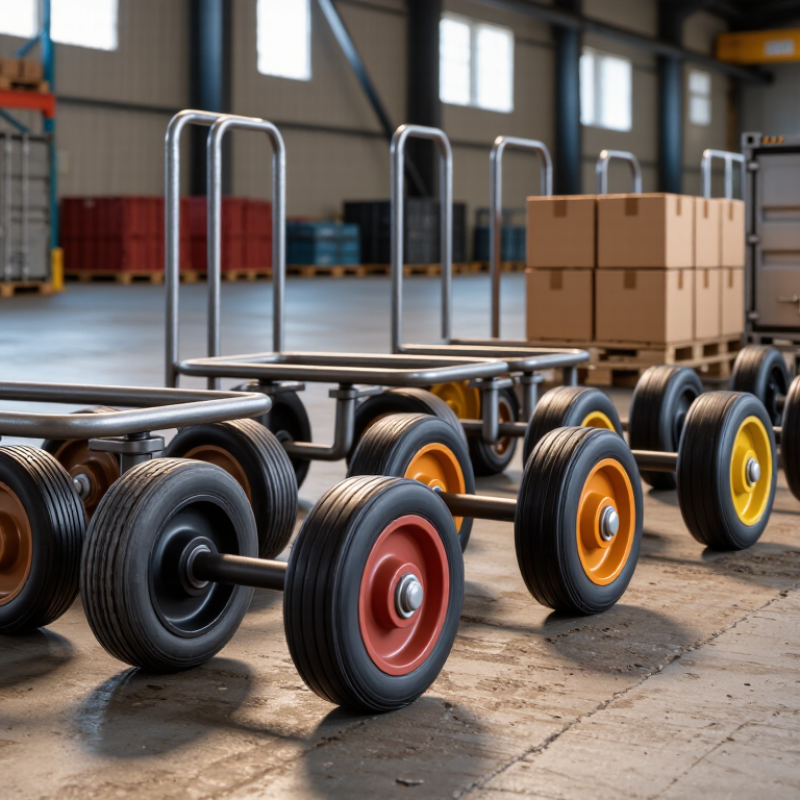
Rubber wheels differ by compound, hardness, and tread design. Solid natural or synthetic rubber usually cushions vibration and grips smooth floors, but softer treads can increase rolling resistance and wear faster under heavy loads. Harder rubber often rolls more easily, though it may transmit more shock across floor joints.
Small detail matters.
Check the operating surface, load, travel speed, and exposure to oil or cleaning chemicals before choosing. ISO 22883:2004 covers castors and wheels for applications up to 1.1 m/s and loads up to 4,000 N, providing a useful performance benchmark—not a guarantee that every rubber wheel suits those conditions. ASTM D2240 describes durometer hardness testing; hardness alone cannot predict traction, lifespan, or floor marking. In a warehouse, test the actual wheel on the floor, with a representative load. A softer tread may feel quieter on concrete, yet resist turning on a tight aisle. There is no perfect compound, and hardness charts rarely tell the whole story.

Choosing rubber wheels starts with the total moving load, not the cart’s empty weight. Include the frame, heaviest payload, and any unevenly placed items. A 400-pound load may not divide evenly across four wheels, especially during turns or when crossing a threshold. Check each wheel’s rated capacity and leave a margin for impacts and long shifts. Capacity can vary with wheel size, bearing type, and speed, so verify the rating for your actual setup.
Look closely at the floor and working environment. Smooth concrete, rough outdoor paving, and tiled floors place different demands on a wheel. Softer rubber may cushion bumps and improve grip, but can require more effort to push. Also consider water, oil, temperature changes, and cleaning chemicals; not every rubber compound handles them equally. A quick floor inspection can miss problems, so test a loaded cart along its usual route, including corners and ramps.
Tips: Record the load, floor type, and daily operating hours before comparing wheels. Check for surface marks after a short trial, too; that detail is easy to overlook.
Choosing rubber wheels begins with the floor, the load, and how often equipment moves. Softer rubber can roll quietly and cushion vibration on smooth indoor floors. Harder compounds may resist wear better on rough routes, but can feel less forgiving. Check the supplier’s material data for exposure to oils, cleaners, and heat. Rubber formulas vary, so “rubber” alone tells you little.
Wheel size changes both effort and stability. A larger diameter crosses floor joints and small debris more easily, while a wider tread can spread weight and improve grip. But wider wheels may need more turning space. Measure the loaded cart, not just its empty frame. Small details matter. I have seen a wheel fit the bracket yet rub against the frame under a heavy load; it is an easy mistake to overlook.
Bearing choice should match speed, load, and cleanliness. Plain bearings are simple and often suit slow, light-duty movement. Ball bearings generally roll more freely, while roller bearings can support heavier loads when properly specified. Dust and moisture may shorten bearing life, even when the tread still looks sound. Compare load ratings with the weight on each wheel, allowing for uneven floors and sudden starts. Then test a sample on the actual route. It may not feel perfect at first, and that is useful information.
Choosing rubber wheels starts with the real load, not just the machine’s empty weight. Add the heaviest typical cargo, then allow for uneven distribution and bumps when moving. Check the wheel’s rated capacity and the complete assembly’s limit; the weaker component sets the boundary. A wider wheel can spread weight across soft flooring, while a larger diameter may roll more easily over thresholds. Measure before ordering.
Durability depends on the rubber compound, floor surface, temperature, and daily travel. Look for cuts, cracking, and flat spots during routine checks. Noise matters too. Softer rubber often reduces rumble on hard floors, but it may wear faster under heavy loads or sharp debris. There is no perfect wheel for every floor. That trade-off is easy to overlook.
Tips: Match the wheel to the actual route, including door sills and rough patches. Keep axles clear of hair, string, and grit, and check that fasteners remain secure. A quick monthly inspection can catch wobble or unusual wear early. If a wheel becomes noisy, check alignment and bearings before replacing it; the wheel may not be the problem.
How to Choose the Right Rubber Wheels for Your Business?
Selecting and Testing the Best Rubber Wheels for Your Application
Choosing rubber wheels starts with the floor, load, and route—not just the wheel diameter. Check the combined weight of the equipment and its typical load, then compare it with the wheel’s rated capacity. A safety margin helps account for uneven loading and frequent starts. Wheel hardness also matters: softer rubber may grip and cushion better, while harder compounds can roll more easily on smooth floors. Consider exposure to oil, moisture, temperature changes, and cleaning chemicals, too.
I have seen specifications look right on paper, yet a wheel felt too stiff over floor joints. That is why a practical trial matters. Fit a sample wheel and test it with a representative load on the actual route. Notice the effort needed to start and turn, plus noise, vibration, and surface marks. Run the test repeatedly; one smooth pass can hide trouble. Inspect for cuts, uneven wear, or flat spots afterward. If results vary, check the load distribution and floor condition before changing wheel size.
Tips: Record the load, floor type, and test distance. Compare options under the same conditions. Small details matter. A short trial may miss problems that appear after repeated use.
| Selection Factor | Application Guidance | What to Check | Practical Test |
|---|---|---|---|
| Load capacity | Choose a wheel whose rated capacity covers the load it will carry. A simple starting estimate is total loaded weight divided by the number of wheels, but uneven floors, impacts, and load distribution can increase the load on individual wheels. | Confirm the wheel’s rated capacity and whether the rating applies to static or moving loads. Include the cart or equipment weight as well as its payload. | Load the equipment to its maximum intended operating weight and move it over the actual route. Check for excessive deflection, instability, or damage. Use the supplier’s rating and your operating requirements as the pass criteria. |
| Wheel diameter | Larger wheels generally roll more easily over floor joints and small obstacles. Select a diameter that fits the equipment and maintains the required platform height and clearance. | Measure floor joints, thresholds, and other obstacles along the route. Check mounting and turning clearance on the equipment. | Move a loaded unit across representative joints and thresholds. Record effort, vibration, and any contact with the frame or floor. |
| Rubber hardness | Rubber wheel treads are available in a range of hardnesses; approximately 70–90 Shore A is a common broad range for many general-purpose products, not a universal specification. Softer treads may improve cushioning and grip, while harder treads can reduce rolling resistance. | Compare the specified Shore A hardness, tread design, and rated load. Hardness alone does not determine performance. | Run the same loaded equipment over the target floor with candidate wheels. Compare rolling effort, vibration, noise, and floor interaction under identical conditions. |
| Floor protection and marking | For finished floors, verify that the tread is suitable for the surface and will not leave unacceptable marks. “Non-marking” does not by itself guarantee compatibility with every floor coating. | Check the wheel material and any floor-care restrictions. Consider dirt, debris, and cleaning chemicals that may affect the tread or floor. | Roll the wheel under representative load across a clean sample or inconspicuous floor area. Inspect for visible marks, scuffing, or coating damage. |
| Operating environment | Temperature, moisture, oils, solvents, and cleaning agents can affect rubber compounds differently. There is no single operating range that applies to all rubber wheels. | Compare the application conditions with the wheel manufacturer’s compound-specific temperature and chemical-resistance data. | Expose a sample to the relevant conditions where practical, then check for swelling, cracking, softening, hardening, or loss of tread adhesion. |
| Rolling resistance | Rolling effort depends on tread compound, hardness, wheel diameter, load, bearings, and floor condition. A wheel that cushions well may require more effort to move. | Evaluate the complete wheel assembly, including bearing type, axle fit, and alignment—not just the rubber tread. | On the same floor and at the same load, compare the force needed to start and keep the equipment moving. Use a force gauge if a numerical comparison is required. |
| Noise and vibration | Rubber treads can help absorb vibration and reduce impact noise, but results depend on tread design, load, speed, and the floor surface. | Identify sensitive areas, such as occupied workspaces, and note the route’s joints and uneven sections. | Test loaded equipment on the actual route at normal operating speed. Compare noise and vibration against the business’s predefined limits or current equipment. |
| Wear and service life | Service life varies with load, travel distance, floor abrasiveness, turning, debris, and maintenance. A short trial cannot establish a universal lifespan. | Review tread depth, bonding, wheel alignment, and the expected daily travel and turning pattern. | Run a pilot in normal service and record inspection dates, distance or operating hours, tread wear, damage, and replacement needs. |
| Final application trial | Test shortlisted wheels on the actual equipment and route before purchasing for a fleet. This helps reveal trade-offs between capacity, handling, floor protection, and comfort. | Use the intended payload, mounting arrangement, operating speed, floor, and environment. | Document the test setup and results. Approve a wheel only when it meets the required load rating and the business’s handling, safety, durability, and floor-care criteria. |
Note: The hardness range is a general reference, not a product specification. Confirm load ratings, compound limits, and test requirements with the wheel supplier and applicable equipment standards before use.

© Copyrights Levil Technology Corp 2022