
Choosing the right Solar Cell Cassette is not a minor purchasing decision. It affects cell safety, production speed, cleanliness, and long-term yield. A cassette may look simple on a factory shelf. Inside the process, every slot matters.
Professor Martin Green, a leading photovoltaic researcher, has stated, “Reliable solar manufacturing depends on controlling small process details.” This principle applies directly to cassette selection. A well-designed Solar Cell Cassette should support the cell without creating pressure marks, scratches, or unstable movement. It should also match the wafer size, cell thickness, loading method, and automation system used on the production line.
Look closely at the material. Engineering plastics can reduce contamination risks and tolerate repeated handling. The cassette structure should drain cleaning liquid easily. Smooth edges are essential. Tiny burrs can damage fragile cells. Slot spacing also deserves careful testing. Too narrow, and cells may rub against each other. Too wide, and vibration may increase during transport.
Do not trust appearance alone.
Experienced engineers usually inspect dimensional stability, chemical resistance, thermal behavior, and cleaning performance. They also check barcode placement and batch traceability. These details become important when production volumes rise.
The perfect cassette does not exist for every factory. A design that works well for one cell format may fail on another. I have seen specifications look convincing, yet practical loading tests reveal awkward contact points. That is why sample trials remain necessary. Measure real handling results, not only catalog promises. A careful choice protects both the cell and the process.
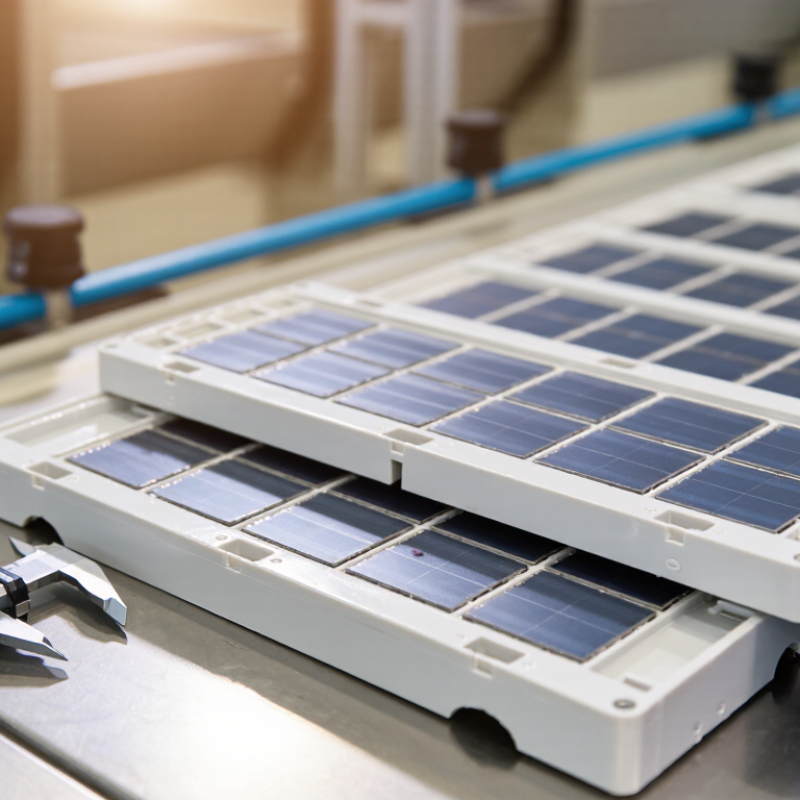
A solar cell cassette is a reusable carrier that stores and transfers delicate silicon wafers or finished cells. It keeps each piece separated inside narrow slots. This spacing reduces contact marks, edge chipping, and accidental stacking during production. The cassette also supports movement between cleaning, inspection, printing, and testing equipment.
Its design matters because every contact point can affect yield. Engineers usually check wafer dimensions, slot pitch, cassette capacity, and allowable weight. They also examine material cleanliness and chemical resistance. A suitable cassette should limit particles, static buildup, and thermal distortion. Smooth internal surfaces help protect fragile edges. Strong outer walls support stable handling by robots and operators.
Choosing the right model requires more than matching measurements. Check the production line’s transfer method, storage time, and cleaning process. Ask whether the cassette remains stable after repeated heating and washing cycles. A loaded trial is valuable. A cassette may fit perfectly on paper but still cause alignment errors in real operation. That possibility deserves attention. Operators should inspect slot wear, stains, and damaged corners at defined intervals. Clear identification also improves traceability between process stages. In practice, the best choice balances protection, capacity, cleaning needs, and long-term handling reliability. Perfect selection is unlikely. Careful testing makes mistakes smaller.

Choosing a solar cell cassette starts with the cell, not the machine. A cassette designed for one format may damage another. Measure length, width, thickness, and corner shape before ordering. Small differences matter. Thin silicon wafers need gentle support and stable separation. Their edges can chip when slots are too narrow or poorly finished. For thicker cells, slot spacing must prevent rubbing during loading and unloading. I have found that a nominal size check is insufficient. Actual samples reveal bowing, burrs, and tolerance differences.
Cell technology also affects cassette selection. PERC and TOPCon cells often share familiar dimensions, but their surfaces still require careful contact control. Heterojunction cells can be especially sensitive to scratches, pressure, and contamination. A cassette should hold each cell upright without pressing active surfaces. Check slot pitch, insertion depth, contact area, and internal clearance. Keep metal contact away from sensitive regions when possible. Materials should resist particles, moisture, and cleaning chemicals used on the production line. Yet “clean” is not permanent. Repeated handling can create wear that is easy to miss.
Match the cassette with the complete process, including conveyors, robotic grippers, inspection cameras, and storage time. A cassette that works manually may fail during automated transfer. Test loaded cassettes through vibration, temperature changes, and repeated cycles. Record broken edges, cell marks, and loading errors. Do not judge performance from one successful trial. That is a weak signal. A practical qualification test uses production-like cells and realistic operators. It should also confirm cleaning access and replacement intervals. If the cell design may change soon, leave modest dimensional flexibility, but avoid excessive clearance. Too much movement creates its own damage.
Choosing a solar cell cassette requires more than checking its price. Material stability matters during cleaning, drying, and thermal cycling. PEEK and PPS offer strong chemical resistance, while engineered polymers reduce weight and particle risk. Aluminum provides rigidity, but its surface treatment must resist corrosion and contact marks. In production trials, a cassette can appear durable yet deform after repeated heat exposure. That detail is easy to miss.
Capacity should match the cell format, loading density, and automation cycle. IEA PVPS Trends 2024 reports that global photovoltaic capacity exceeded 1.6 TW by the end of 2023. This scale increases pressure on throughput and cassette availability. A higher-capacity cassette may reduce handling frequency, but excessive stacking can increase edge contact and breakage risk. ITRPV’s 2024 roadmap also indicates continued wafer thinning, moving toward approximately 100–120 micrometres in future production. Smaller clearances may become dangerous.
Check the cassette’s actual handling behavior. Look for stable alignment, smooth robot access, secure gripping points, and readable identification labels. Test loaded weight, not empty weight. Measure warpage after repeated washing cycles. Also inspect whether operators can remove one cell without disturbing its neighbors. These practical checks often reveal weaknesses that specifications hide. Capacity is useful. Gentle handling matters more.
| Cassette Material | Typical Temperature Capability | Chemical Compatibility | Typical Capacity | Particle and Contamination Performance | Handling Features | Main Advantages | Key Limitations | Best-Fit Solar Cell Process |
|---|---|---|---|---|---|---|---|---|
| Quartz | Continuous use commonly around 900–1,100 °C, depending on design and thermal cycling. | Excellent resistance to most wet-process chemicals; suitable for high-temperature oxidation and diffusion environments. | Typically 25–100 wafers per cassette, depending on wafer size, slot pitch, and process equipment. | ★★★★★ Very low metal contamination when properly cleaned and handled. | Rigid construction, precise wafer slots, compatible with automated transfer systems; requires careful handling to avoid chipping or breakage. | High-temperature stability, good chemical resistance, and low contamination risk. | High purchase cost; brittle; heavier than many polymer alternatives; can develop micro-cracks after repeated thermal cycling. | High-temperature diffusion, oxidation, annealing, and other furnace processes. |
| PFA or PTFE | Typical continuous service range is approximately 150–260 °C, depending on grade, load, and mechanical design. | Excellent resistance to acids, bases, and many solvents used in wet processing. | Typically 25–100 wafers per cassette; capacity depends strongly on wall thickness and slot spacing. | ★★★★★ Low particle generation and low risk of metallic contamination when maintained correctly. | Lightweight, corrosion-resistant, and suitable for manual or robotic handling; polymer slots can reduce wafer edge damage. | Excellent chemical resistance, low weight, and strong protection against many wet-process chemicals. | Lower stiffness than quartz or metal; may deform under excessive heat or mechanical load; relatively high material cost. | Acid cleaning, texturing, etching, rinsing, and other aggressive wet-chemical steps. |
| Polypropylene (PP) | Commonly used up to approximately 80–100 °C in wet-process applications, subject to load and exposure time. | Good resistance to many acids, alkalis, and aqueous solutions; compatibility should be verified for strong oxidizers and solvents. | Typically 25–100 wafers per cassette; high-density configurations are available for standard wafer sizes. | ★★★★☆ Low particle risk when molded, cleaned, and dried correctly. | Lightweight, economical, easy to handle, and commonly available with standardized robotic interfaces. | Low cost, low weight, good chemical resistance, and practical for high-volume wet handling. | Not suitable for high-temperature furnace processes; can warp, embrittle, or absorb process residues over time. | Room-temperature or moderate-temperature cleaning, rinsing, texturing, and chemical transfer. |
| PEEK | Typical continuous service range can reach approximately 250–260 °C, depending on grade and mechanical stress. | Very good resistance to many acids, bases, hydrocarbons, and solvents; chemical validation is still required for specific recipes. | Typically 25–100 wafers per cassette; commonly selected when dimensional stability is important. | ★★★★★ Low outgassing and good dimensional stability for demanding processes. | Lightweight and rigid compared with many other polymers; supports precise slot alignment and repeated handling. | High mechanical strength, good thermal stability, and strong chemical resistance. | Higher cost than PP; some aggressive chemicals and high-temperature conditions may still require testing. | Higher-temperature wet processing, specialty cleaning, and applications requiring tight dimensional control. |
| PVDF | Typical continuous service range is approximately 120–150 °C, depending on grade and design. | Very good resistance to many acids, halogens, and oxidizing chemicals used in semiconductor and solar processing. | Typically 25–100 wafers per cassette, with capacity determined by wafer diameter and slot pitch. | ★★★★☆ Low contamination potential when properly cleaned and dried. | Lightweight, corrosion-resistant, and suitable for wet benches and manual or automated transfer. | Strong chemical resistance with better temperature capability than many commodity polymers. | More expensive than PP; may be less rigid than quartz or metal and requires process-specific compatibility checks. | Oxidizing wet chemistry, acid cleaning, rinsing, and moderate-temperature chemical processing. |
| Stainless Steel | Often suitable for elevated-temperature handling; practical limits depend on alloy, surface finish, and process atmosphere. | Good general durability, but exposure to chlorides, strong acids, or oxidizers can cause corrosion or metal-ion release without suitable protection. | Typically 25–100 wafers per cassette; custom high-capacity frames are possible. | ★★★☆☆ Requires electropolishing, passivation, or protective coating to reduce contamination risk. | High rigidity, durable frame, and excellent resistance to mechanical impact; heavier for operators and robots. | Strong, durable, and suitable for repeated mechanical handling and selected high-temperature applications. | Potential metal contamination, higher weight, and possible corrosion in aggressive wet chemistry. | Mechanical transport, selected high-temperature steps, and processes where structural rigidity is prioritized. |
| Quartz-Coated or Polymer-Coated Metal | Temperature capability depends on the coating system and substrate; verify the rated operating and thermal-cycling limits. | Can provide improved chemical resistance compared with bare metal, but scratches, pinholes, or coating wear may expose the substrate. | Typically 25–100 wafers per cassette, with custom capacities available. | ★★★★☆ Performance depends heavily on coating integrity, cleaning method, and service life. | Combines a rigid metal structure with a lower-contact-contamination surface; requires inspection before use. | Good mechanical strength with improved surface protection and process flexibility. | Coating damage can create contamination, wafer scratches, or corrosion sites; maintenance is more demanding. | Specialized handling systems requiring rigidity with improved chemical or contamination control. |
Choosing the right solar cell cassette starts with measurable cleanliness, not appearance. A cassette may look spotless yet release particles during loading.
ISO 14644-1 allows only 3,520 particles of at least 0.5 micrometers per cubic meter in an ISO Class 5 environment.
Ask for particle-shedding results, ionic contamination data, and cleaning records. Inspect corners, slots, and robot-contact areas under strong light. A white surface can hide residue.
Protection depends on wafer movement. The 2024 International Technology Roadmap for Photovoltaic tracks wider formats, including 182 mm and 210 mm wafers, alongside continued wafer thinning.
Measure slot width, pitch, and edge clearance against the actual wafer specification. Excessive contact can create edge chips. Loose pockets can permit rubbing during transport.
Static control also matters. Test loaded cassettes after conveyor vibration, not only on a workbench. Small damage becomes expensive at scale.
Production compatibility is often underestimated. Confirm robot handoff accuracy, cassette weight, cycle time, and cleaning frequency.
Compare trial yield before and after cassette installation. NREL’s 2024 efficiency chart records silicon research cells above 26%, leaving less tolerance for contamination and microcracks.
That figure does not prove a cassette’s value. It does show why small handling losses deserve attention.
I would not trust a supplier’s cleanliness claim alone. A short factory trial may reveal awkward loading, poor drying, or unexpected slot wear. That inconvenience is useful evidence.
A suitable solar cell cassette protects wafers during loading, transfer, heating, and storage. Start with cell dimensions, thickness, edge design, and required capacity. The cassette must support each cell without excessive pressure or movement. Check its material compatibility with process temperatures and cleaning chemicals. In production, small dimensional errors can cause edge chipping, scratches, or difficult unloading. I have learned that a cassette can look robust yet perform poorly after repeated thermal cycles.
Tips: Test before purchasing. Load dummy cells and run several production-like cycles. Measure insertion force, cell movement, surface marks, and unloading stability. Inspect the cassette after heating. Watch for warping, discoloration, loose supports, or trapped particles. Record results instead of trusting visual impressions alone. A simple test log can reveal problems that appear only after hours of use.
Maintenance should match the cassette material and factory process. Use approved cleaning methods, controlled drying, and regular visual inspections. Avoid aggressive tools that damage contact surfaces. Check alignment features and support points at scheduled intervals. Replace damaged units promptly, even when they still seem usable. This is where judgment can fail. Extending service life may reduce costs, but one worn cassette can create repeated defects. Review maintenance records, operator feedback, and inspection data together before changing the cassette design or cleaning frequency.

© Copyrights Levil Technology Corp 2022