5 Tips to Enhance Your Skills with a 5 Axis CNC Machine?
The advent of the 5 axis CNC machine has revolutionized the manufacturing industry. According to a report by MarketsandMarkets, the global CNC market is expected to reach $100 billion by 2026, with a significant portion driven by advancements in multi-axis machining. This technology allows for precise and complex geometries, which were once impossible to achieve.
To harness the full potential of a 5 axis CNC machine, operators must enhance their skills and expertise. Many industry professionals admit that mastering this technology isn't straightforward. Some struggle with programming or understanding the intricacies of tool paths, often leading to inefficient production. A survey by Gardner Research found that 40% of manufacturers encounter challenges in skill gaps related to CNC operations.
Focusing on continuous improvement is essential. Incorporating better techniques can lead to higher quality outputs and reduced waste. Practical training and innovative practices can bridge the gap between traditional and advanced machining methods. Through dedication and the right strategies, anyone can master the use of a 5 axis CNC machine.

Understanding the Fundamentals of 5-Axis CNC Technology
5-axis CNC technology represents a significant advancement in precision machining. It allows for complex geometries that can be produced in a single setup. According to a recent industry report, 5-axis machines can reduce machining time by 30%. This efficiency stems from their ability to access all part surfaces without repositioning the workpiece.
Understanding the fundamentals of 5-axis CNC requires knowledge of its components and operations. Operators must grasp the nuances of tool paths and how to program them effectively. The learning curve can be steep, but resources are available. Industry studies indicate that many machinists report feeling overwhelmed when transitioning from 3-axis to 5-axis machines.
Practicing with simulation software can help mitigate this challenge. Visualization tools can make complex movements clearer. However, not every operator takes advantage of such training. Some prefer hands-on experience, which can lead to mistakes. Embracing both methods is crucial for mastering this technology.
Exploring the Advantages of 5-Axis Machining Over Traditional Methods
5-axis machining offers significant advantages over traditional methods. It allows for more complex geometries and reduces the need for multiple setups. According to a study by Mordor Intelligence, the global market for CNC machines is projected to reach $88 billion by 2025. This growth reflects the increasing demand for precision and efficiency in manufacturing processes.
One major benefit of 5-axis CNC machines is their ability to cut parts from various angles. This capability minimizes setup time and increases accuracy. In fact, a report from Technavio suggests that 5-axis machining can enhance productivity by up to 30%. However, not all shops are equipped to utilize this technology effectively. Many operators face challenges in programming and tool selection, impacting their overall production quality.
Additionally, 5-axis machines require higher initial investment. This can be a barrier for small and medium enterprises. Some operators may struggle to justify the cost without clear understanding of potential returns. Investment in training is essential. It ensures staff are skilled in handling advanced technology. This investment can yield significant rewards, but only if implemented thoughtfully.
5 Tips to Enhance Your Skills with a 5 Axis CNC Machine
| Tip |
Description |
Advantages of 5-Axis Machining |
| 1. Understand Machine Capabilities |
Familiarize yourself with the specific functions and features of your 5-axis CNC machine. |
Allows complex geometries and reduces setup time. |
| 2. Practice Tool Path Programming |
Gain proficiency in software used for programming tool paths. |
Optimizes material removal and enhances surface finish. |
| 3. Focus on Workpiece Setup |
Learn best practices for securing workpieces to ensure accuracy. |
Ensures stability and precision during machining. |
| 4. Experiment with Different Materials |
Try machining various materials to understand material properties and behavior. |
Enhances versatility and capability to handle diverse projects. |
| 5. Continuous Learning and Feedback |
Seek feedback from experts and take courses to improve skills. |
Staying updated with trends enhances productivity and quality. |
Key Techniques for Mastering Toolpath Generation in 5 Axis CNC
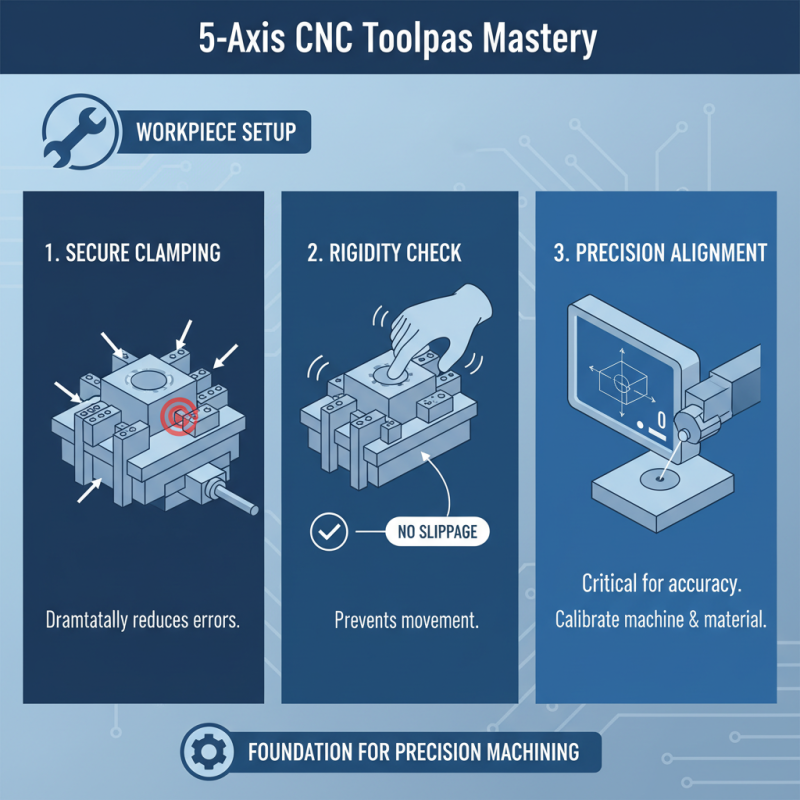
Mastering toolpath generation in a 5-axis CNC machine is essential for precision machining. The intricacies involved require a deep understanding of both the software and the machine's capabilities. Begin by focusing on the workpiece setup. Ensuring your material is securely clamped can dramatically reduce errors. Even the slightest movement may lead to inaccuracies in the final product.
Next, explore simulation software. This tool allows you to visualize the toolpath before actual milling begins. It's not foolproof; glitches can occur, and manual checks are necessary. A good practice is to run several simulations with different parameters. This helps in finding the optimal path. Always document what works and what doesn’t. It’s beneficial for future projects.
Consider the cutting strategies employed. Often, users underestimate the complexity of multi-axis movements. Maintaining a smooth toolpath can minimize tool wear and enhance surface finish. Remember, mistakes in toolpath planning can waste materials and time. Reflecting on past errors can lead to better decision-making in subsequent projects. Embrace the challenge, and keep fine-tuning your approach.
Importance of Material Selection in Optimizing 5-Axis CNC Machining
When optimizing 5-axis CNC machining, material selection plays a crucial role. Studies show that nearly 40% of machining issues arise from improper material choices. The right material impacts tool wear, surface finish, and machining time. High-strength alloys can improve durability, but they also pose challenges in terms of cutting speeds and tool life. Selecting the wrong material can lead to wasted resources and increased costs.
Machining different materials requires specific tooling. For instance, titanium and hardened steels often need specialized tooling to prevent premature wear. Reports indicate that using the appropriate material can reduce machining time by up to 30%. Yet, many operators overlook their impact. Failing to consider the machinability rating of materials often leads to inefficiencies. Not every high-grade material is suitable for every project.
In addition, material properties affect tolerances and finishes. For example, softer materials may yield smooth finishes easily, but harder ones might necessitate complex programming. The complexity of 5-axis machining demands a thoughtful approach to material selection. Too often, machinists focus on the latest technology while neglecting basic principles of material science. Balancing cost and functionality is essential but frequently underestimated.
Best Practices for Regular Maintenance of 5-Axis CNC Machines
Regular maintenance of 5-axis CNC machines is crucial for
optimal performance. These complex machines require attention to detail and consistent upkeep.
Clean the machine regularly to prevent dust and debris buildup. This simple step can make a
significant difference in precision and longevity.
Check the lubrication system frequently. Proper lubrication reduces friction and wear on moving
parts. Create a schedule for oil changes. Sometimes,
operators overlook this, leading to malfunctions. Monitor coolant levels closely as well.
Insufficient coolant can cause overheating and damage the machine.
Tools also need attention. Inspect cutting tools for wear and damage. Dull tools lead to poor
finishes and increased cycle times. Use the right tool for each job.
Ignoring this can result in poor-quality work. Keep a maintenance log to track all activities.
Reflect on areas needing improvement over time.
Regular maintenance fosters efficiency and extends the life of a 5-axis CNC machine.