
Choosing Faux Stone Panels is not simply a color decision. It affects moisture control, installation time, maintenance, and long-term visual quality. A panel that looks convincing under showroom lighting may appear flat beside a window. Small details matter.
The U.S. Census Bureau and Harvard Joint Center for Housing Studies continue to show strong remodeling activity across American homes. Harvard’s Leading Indicator of Remodeling Activity also tracks substantial annual spending, proving that homeowners are investing carefully in exterior and interior upgrades. Meanwhile, the National Association of Home Builders identifies durability, energy performance, and low maintenance as important remodeling considerations. These trends make material selection more practical than decorative. Buyers should compare panel weight, substrate compatibility, fire classification, water resistance, UV stability, warranty terms, and installation requirements. ASTM-tested products and clearly documented technical data deserve priority.
Measure twice.
A professional installer will also inspect wall flatness, drainage paths, fastener placement, and corner transitions before ordering materials. Manufacturers such as Versetta Stone and other established suppliers publish installation guides, but product systems differ. One adhesive may suit a dry interior wall and fail on a damp exterior surface. That uncomfortable detail is easy to overlook. I would also request physical samples, because printed colors rarely show texture accurately. No panel is perfect; even a premium product can look artificial when repeating patterns align across a large wall. The best choice balances appearance, climate, project budget, and verified performance. This guide explains how to evaluate those factors with evidence, not attractive photographs alone.
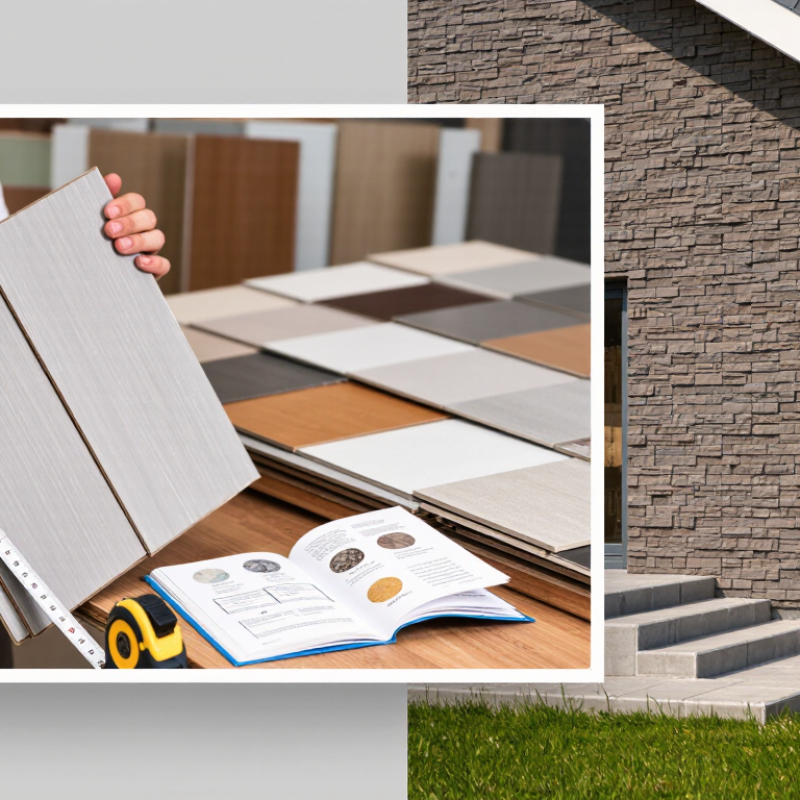
The right faux stone panel begins with the site, not the color chart. Start outside. NOAA’s 1991–2020 Climate Normals provide 30-year temperature, precipitation, and snowfall averages for local planning. Use those averages as a baseline, not a guarantee. Wind-driven rain, salt air, intense ultraviolet exposure, and freeze-thaw cycling can stress joints and finishes. FEMA’s National Risk Index evaluates 18 natural hazards, including coastal flooding and wildfire. That screening can reveal risks a showroom sample cannot.
Check whether the substrate is concrete, masonry, wood sheathing, or a framed rainscreen. Each assembly needs compatible weather-resistive barriers, flashing, drainage, fasteners, and movement detailing. A flat wall is not automatically a dry wall. Look for damp insulation, efflorescence, soft sheathing, and cracks around openings. Repair the cause before covering it. This step is easy to skip, but expensive to regret.
ASCE/SEI 7-22 uses site-specific wind, snow, seismic, and rain data. Confirm design values, exposure category, and attachment resistance with a qualified professional. Do not rely on a generic fastener schedule. The 2024 International Building Code and local amendments may govern fire performance, water management, building height, and installation methods. For combustible assemblies, ask whether NFPA 285 testing applies. Request assembly-specific water-penetration evidence, such as testing aligned with ASTM E331. I would not treat a dry inspection day as proof of long-term performance. Weather eventually finds weak details.

Weight affects handling, framing, and installation speed. Compare the panel weight per square foot, not only the package weight. Thickness also matters. Thicker panels may hide uneven surfaces better, but they can reduce clearance around doors and trim.
The texture should match the viewing distance. Deep relief looks convincing outdoors, yet it may appear exaggerated in a small interior room. The U.S. Environmental Protection Agency reported nearly 600 million tons of construction and demolition debris in 2018. That figure supports careful ordering and responsible offcut planning. Allow 10–15% waste for cuts, corners, breakage, and pattern matching.
How to Choose Faux Stone Panels for Your Project?
Performance should guide your faux stone panel selection, not appearance alone. Request an ASTM E84 report showing flame-spread and smoke-developed ratings. Confirm the tested assembly matches your planned substrate, adhesive, and installation method. A panel’s fire class can change when combined with other materials. That detail is easy to miss.
Water control deserves equal attention. Look for drainage paths, sealed joints, flashing guidance, and compatible weather barriers. On exposed walls, inspect corners and penetrations carefully. Small gaps can direct water behind the cladding. Ventilated cavities may improve drying, but only when the system design supports them. Do not treat a water-resistant panel as a complete wall system.
R-value also needs careful reading. Check whether the stated value applies to the panel alone or the entire assembly. Thin decorative panels usually provide limited insulation. Thermal bridges at fasteners and framing can reduce real-world performance. Ask for tested data, installation limits, and temperature conditions. A sample wall test may reveal more than a brochure.
I prefer a written compliance package. It should include fire testing, moisture details, thermal data, and maintenance requirements. If documentation feels vague, pause before ordering. I have seen attractive materials create problems through poor detailing. The honest choice is sometimes less dramatic. Performance first.
Choosing faux stone panels becomes easier when installation details guide the decision. An interlocking design can reduce visible gaps and speed up alignment. However, the panels still need careful handling around corners, windows, and outlets. Dry-fit several pieces before cutting. Small errors become obvious across a long wall.
Fasteners must match the panel material and substrate. Exterior projects usually require corrosion-resistant screws or approved clips. Place them according to the installation instructions, not by guesswork. Over-tightening can crush the panel and create a weak spot. I once focused too much on appearance and missed a slight framing irregularity. The finished seam looked uneven. That mistake reinforced the value of checking the wall first.
Seams need a deliberate layout. Stagger vertical joints, keep cuts clean, and avoid placing seams directly above openings. Some systems use overlapping edges, while others require a compatible joint treatment. Do not assume every panel handles water the same way. Behind the cladding, a suitable weather-resistant barrier, flashing, and drainage path help water escape. Leave required clearances near roofs, decks, and ground-level surfaces. Weep openings must remain unblocked.
Good drainage matters more than a perfectly tight-looking joint. A sealed seam may appear secure, yet trapped moisture can damage the supporting wall. Follow local building requirements and the panel manufacturer’s tested details. If the instructions seem unclear, pause and ask a qualified installer. That small delay is cheaper than removing a finished wall.
Installation comparison: interlocking design, fasteners, seams, and drainage.
The chart uses a practical 1–5 planning scale, where 5 indicates a more favorable installation characteristic. Interlocking panels generally improve alignment and installation speed, while mechanical fasteners provide stronger attachment control. Proper seam treatment helps reduce visible joints, and drainage detailing is essential for managing water behind exterior faux stone panels. Actual results depend on wall condition, panel dimensions, substrate, climate, and local building requirements.
How to Choose Faux Stone Panels for Your Project?
Choosing faux stone panels begins with supplier evidence, not catalog photography. Request a physical sample before approving the order. View it outdoors, under cloudy light, and beside your planned trim. A small sample can hide texture repetition. I once trusted a sample that looked warmer than the delivered color lot. That mistake was expensive.
Ask whether the supplier controls color lots and records batch numbers. The 2024 NAHB Cost of Construction Survey treats exterior wall finishes as a separate cost category. This supports comparing material, installation, and replacement costs together. Do not compare panel prices alone. Also review warranty terms carefully. Check coverage length, fading limits, moisture exclusions, installation requirements, and transfer conditions. A ten-year warranty may offer little protection if maintenance records are required.
Tips: Request two samples from different lots. Keep one outdoors for 30 days. Photograph color changes weekly. Ask for test reports, not general claims. ASTM E84 data should show flame-spread and smoke-developed indexes. Request the tested product name, thickness, substrate, and mounting method. Those details matter. Testing data may not represent your wall assembly. The 2023 U.S. Census Bureau American Housing Survey covers more than 130 million housing units, yet it does not verify panel durability. Supplier-specific evidence remains essential. I would also ask for installation references in similar climates. Perfect documentation is rare, but missing documentation should change your decision.

© Copyrights Levil Technology Corp 2022