
Choosing the best Oil Spray Gun is not simply a matter of selecting the most powerful model. Your material, surface, workspace, and daily workload all change the decision. A gun that performs beautifully on thin cooking oil may struggle with thicker industrial lubricants. The wrong nozzle can create uneven coverage, visible runs, or unnecessary waste.
Spray-equipment trainer Steve Smith explains, “The best gun is the one that controls the material, not merely moves it.” That principle deserves attention. A practical buyer should compare nozzle size, pressure range, spray pattern, tank capacity, seal quality, and cleaning requirements. Hold the gun comfortably. Check whether the trigger feels smooth after several minutes. Small details become tiring during real work.
Think about the application first. A narrow fan can reach corners inside machinery, while a wider pattern covers flat metal panels faster. Adjustable flow is useful when surfaces vary. Stainless-steel or solvent-resistant components may also improve service life, depending on the oil used. Always confirm compatibility with the manufacturer’s specifications and follow the product safety instructions.
There is no perfect choice.
Even experienced users sometimes overestimate pressure and underestimate maintenance. I have found that a simple, easy-to-clean gun often outlasts a more complicated model in busy workshops. That may sound unexciting, but reliability matters more than impressive packaging. This guide will examine the important differences, expose common buying mistakes, and help you choose an Oil Spray Gun that fits your actual working conditions.
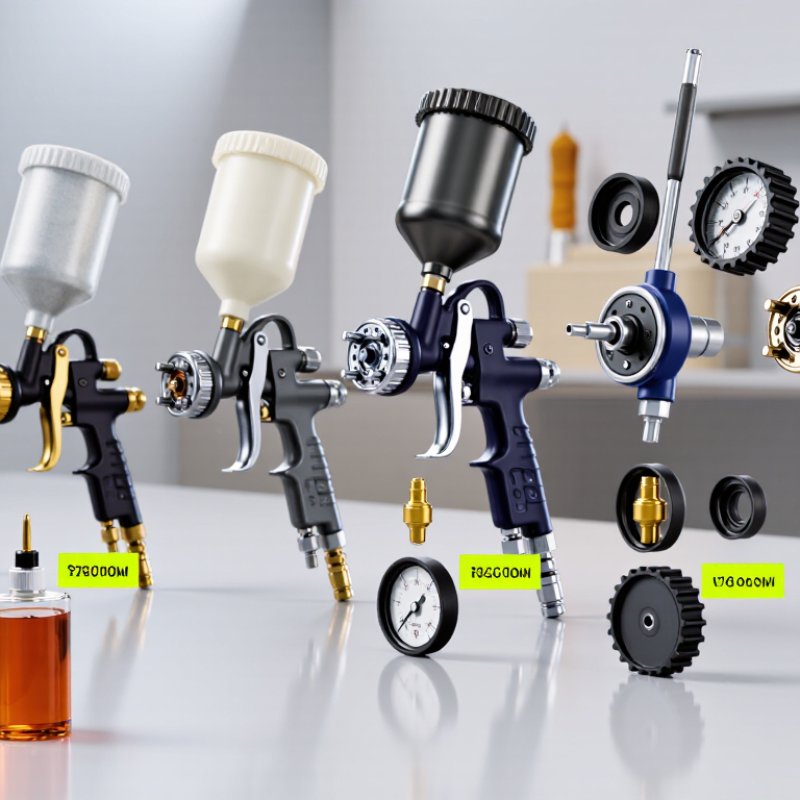
Choosing an oil spray gun starts with the fluid, not the price. Thin lubricating oil usually suits a pneumatic gun with a small nozzle and adjustable pressure. It creates a controlled mist for chains, bearings, and narrow machinery joints. Thicker protective oils need an airless or air-assisted airless gun. These systems deliver higher pressure and wider coverage.
The application changes the decision. A workshop may prefer HVLP equipment for visible surfaces and moderate output. The U.S. EPA identifies about 65% transfer efficiency as a practical HVLP benchmark in regulated coating applications. EPA AP-42 guidance reports typical conventional air-spray efficiency near 30–50%, while airless methods may reach roughly 50–80%. Actual results depend on viscosity, distance, and operator control. Overspray still happens.
Check the nozzle range, pressure adjustment, hose length, and cleaning access. A 1.0–1.5 mm nozzle can suit lighter oils, while thicker fluids may require a larger opening. Test the spray on cardboard first. Watch for a dry edge, pulsing, or uneven droplets. These small faults often reveal the wrong setup. I have found that maximum pressure rarely gives the best finish. It can waste oil and create a slippery work area. Safety data should also guide solvent and ventilation choices, as recommended by occupational exposure guidance from the National Institute for Occupational Safety and Health.

Nozzle size should match the oil’s viscosity, not just the gun’s price. Thin oils usually need a smaller orifice and lower fluid pressure. Heavier formulations require a wider nozzle and stronger atomization. A practical starting point is a gun with adjustable fluid, air, and spray-pattern controls. Fit matters. Look for solvent-resistant seals, a corrosion-resistant needle, and a removable fluid passage. These details make cleaning faster after each application.
Transfer efficiency deserves serious attention. U.S. EPA AP-42, Section 4.2, lists approximate efficiencies near 25% for conventional air spray and about 65% for HVLP equipment. Less overspray can reduce material waste and airborne emissions. The European Commission’s Surface Treatment Using Organic Solvents BREF also identifies high-transfer application methods as an important emissions-control measure. However, higher efficiency may reduce speed or require more operator practice. That trade-off is easy to underestimate.
Cup capacity affects handling. A 0.6-liter cup feels lighter during overhead work, while a larger tank suits longer production runs. Choose a balanced handle and a trigger that does not demand excessive force. Test the spray pattern on scrap metal first. I would not trust a perfect factory setting. Oil temperature, humidity, and operator technique can change the result. Some models advertise wide pressure ranges, but usable control at low pressure matters more than the maximum number. Be careful with cleanup time; neglected passages can distort the next spray pattern.
Choosing an oil spray gun starts with the oil, not the gun. Thin oils usually atomize well at lower pressure and through a smaller nozzle. Thicker oils need more pressure, a wider nozzle, or both. Always check the oil’s viscosity at its working temperature. Cold oil can behave very differently from warm oil.
In practical testing, I begin near the lower pressure range recommended by the equipment maker. Then I spray onto cardboard and inspect the pattern. A fine, even coat suggests a suitable setting. Large droplets often mean the pressure is too low or the nozzle is too small. Excessive mist can indicate too much pressure. It wastes oil and creates a messy work area. For light oils, a nozzle around 0.8 to 1.2 millimeters may work well. Heavier oils may need 1.5 millimeters or more, but the exact size depends on viscosity and the required coating thickness.
My first setup was too aggressive. The surface looked covered, but much of the oil drifted away. I reduced pressure and increased the nozzle size slightly, which produced a slower, more controlled spray. That result was better, though not perfect. Oil temperature, hose length, and filter condition can also change performance. I now record pressure, nozzle size, temperature, and spray distance for each test. A short trial saves time. Wear suitable eye and skin protection, and follow the oil and equipment safety instructions.
Choosing an oil spray gun starts with its power source. Pneumatic models provide steady output, but they need dry, filtered air. The U.S. Department of Energy reports that compressed air can consume up to 10% of industrial electricity. That makes air efficiency important during frequent use. Battery-powered tools offer mobility and faster setup. However, runtime, charging time, and battery replacement affect operating costs. I still overbuy sometimes. A smaller tool may suit occasional maintenance better.
Capacity should match the job, not personal preference. A compact tank reduces hand fatigue during short applications. Larger tanks limit refilling when treating machinery or wide surfaces. Check the container shape, fill opening, and remaining-fluid visibility. These details prevent spills and reduce guesswork. Maintenance matters just as much. ISO 8573-1 emphasizes air cleanliness classes, reminding users that contamination can damage pneumatic equipment. Clean the nozzle after every session. Inspect seals, hoses, and filters regularly. Neglect is expensive.
Tips: Compare actual flow requirements with compressor output. Leave operating headroom instead of running equipment continuously. Choose removable parts when possible. They simplify cleaning around the needle and nozzle. Keep a small inspection brush nearby. Do not guess. Read the service instructions before changing oil viscosity or pressure settings. A practical test with warm gloves can reveal whether the trigger, grip, and tank are genuinely comfortable. The best choice is not always the most powerful one.
Choosing the best oil spray gun starts with your budget and daily workload. For occasional maintenance, a compact, manually adjusted gun may be enough. It costs less and avoids unnecessary controls. For continuous shop use, prioritize nozzle durability, tank capacity, and easy trigger adjustment. A weak trigger can cause hand fatigue during repetitive work. I have found that a comfortable grip often matters more than a slightly lower purchase price.
Operating cost also deserves attention. The U.S. Department of Energy reports that compressed-air systems can consume 10% or more of industrial electricity. Its compressed-air best-practice guidance also identifies leaks as a major source of avoidable waste. Therefore, an air-powered spray gun needs a properly sized compressor, clean filters, and regular leak checks. Otherwise, the cheapest gun may become expensive through energy use and downtime. My own judgment here is imperfect: workload estimates often look smaller before real production begins.
Tips: Match the nozzle to the oil’s viscosity. Test spray width on scrap material. Choose adjustable controls for changing jobs. Check replacement seals before buying. ISO 8573-1 air-quality guidance can help when moisture or particles may affect performance. Keep a simple usage log for one week. It may reveal that a larger tank, not a cheaper gun, fits your workload better.
| Spray Gun Type | Best-Suited Workload | Typical Oil-Coating Use | Recommended Viscosity Range | Typical Fluid Capacity | Operating Requirement | Approximate Coverage Rate | Overspray Level | Typical Budget Range | Key Advantage | Main Limitation |
|---|---|---|---|---|---|---|---|---|---|---|
| Manual Trigger Sprayer | Light-duty touch-ups and very small projects | Thin oils, rust inhibitors, release agents, and small maintenance jobs | Low viscosity; generally below 100 cP | 0.25–0.75 L | No compressor or electrical power | Approximately 1–3 m² per hour | Low to moderate | US$10–30 | Lowest purchase cost and simple operation | Limited control, capacity, and productivity |
| Small Electric Cup Gun | Occasional home, workshop, and repair work | Thin to medium oil-based coatings, stains, primers, and protective finishes | Low to medium viscosity; often 50–300 cP after suitable thinning | 0.60–1.00 L | 120–240 V power supply, depending on model | Approximately 3–8 m² per hour | Moderate | US$40–120 | Portable and relatively easy to set up | Can be noisy and may require frequent refilling |
| HVLP Gravity-Feed Gun | Small to medium projects requiring a controlled finish | Oil-based enamel, varnish, lacquer, primer, and furniture coatings | Low to medium viscosity; commonly thinned according to coating instructions | 0.60–0.75 L | Compressor, typically 6–10 CFM at 20–30 psi at the gun | Approximately 5–12 m² per hour | Low to moderate | US$70–220 | Good transfer efficiency and precise spray control | Needs a suitably sized compressor and careful setup |
| HVLP Pressure-Feed Gun | Medium to high workloads and continuous spraying | Medium-viscosity oil coatings, industrial finishes, and larger surfaces | Medium viscosity; suitable fluid pressure depends on the coating | 1–10 L pressure pot or remote container | Compressor, often 8–15 CFM; separate fluid and air regulation | Approximately 8–20 m² per hour | Low to moderate | US$180–600 | Less downtime from refilling and consistent material delivery | More components, cleaning steps, and setup time |
| Conventional Pneumatic Gun | Workshops prioritizing speed and broad compatibility | Oil-based primers, enamels, machinery coatings, and general industrial finishes | Low to medium viscosity; some products require thinning | 0.60–1.00 L gravity or suction cup | Compressor, typically 8–15 CFM at 30–50 psi at the gun | Approximately 8–18 m² per hour | Moderate to high | US$60–250 | Fast application and widely available replacement parts | Higher overspray and greater air consumption than HVLP |
| Airless Electric Sprayer | Large surfaces and heavy-duty production work | Thicker oil-based paints, protective coatings, primers, and maintenance finishes | Medium to high viscosity; often requires little or no thinning | Direct suction from 5–20 L containers or larger | Electric motor; fluid pressure commonly 1,500–3,000 psi | Approximately 15–40 m² per hour | Moderate to high | US$250–1,200 | High productivity and strong handling of thick coatings | More overspray, higher cleaning demands, and less forgiving control |
| Air-Assisted Airless Gun | High-volume work requiring speed and improved finish quality | Industrial oil coatings, metal finishes, cabinets, doors, and production components | Medium to high viscosity; often used with controlled reduction | 1–10 L pressure pot or pump-fed container | Fluid pressure commonly 300–1,500 psi plus atomizing air | Approximately 12–30 m² per hour | Moderate | US$700–2,500 | Combines high output with better atomization than standard airless spraying | Higher equipment cost and more complex maintenance |
| Industrial Automatic Spray Gun | Continuous production lines and repeatable coating processes | Consistent application of oil-based industrial coatings on repeated parts | Depends on the pump, nozzle, and coating formulation | Remote pressure tank or metered supply system | Compressed air and automated fluid-control equipment | Approximately 20–60+ m² per hour, depending on line speed | Low to moderate when correctly enclosed and adjusted | US$1,000–5,000+ | Excellent repeatability and reduced operator fatigue | Requires installation, process calibration, and specialized maintenance |

© Copyrights Levil Technology Corp 2022