
Power Substation manufacturers are becoming strategic partners in a rapidly changing electricity system. Utilities now need equipment that supports renewable generation, digital monitoring, and stronger grid resilience. The International Energy Agency (IEA) estimates that annual grid investment must rise from about USD 300 billion to more than USD 600 billion by 2030. That requirement creates intense pressure on manufacturers, suppliers, and project owners.
Demand is also changing geographically. The IEA’s Electricity 2024 report expects global electricity consumption to grow strongly through 2026, driven by industry, cooling, data centers, and electrification. A modern Power Substation must therefore manage higher loads while limiting outages and maintenance delays. Practical buyers examine transformer efficiency, switchgear ratings, protection systems, cybersecurity controls, and spare-parts availability. Factory testing matters. So does field service.
Standards matter too.
IEC 60076 supports transformer evaluation, while IEC 62271 covers high-voltage switchgear and controlgear. ISO 9001 certification can indicate a controlled quality-management process, but it cannot replace site audits or reference checks. Experienced procurement teams compare manufacturers through verified project records, failure data, delivery performance, and lifecycle costs. They also review whether a supplier can adapt designs to local climates, grid codes, and environmental conditions.
No ranking is flawless. Manufacturer capabilities vary by region, voltage class, and application. Some companies excel in ultra-high-voltage transmission, while others perform better in compact urban substations or renewable-energy projects. This guide evaluates leading global manufacturers using technical expertise, documented experience, product reliability, and after-sales support. Readers should still validate every claim before making a major investment.
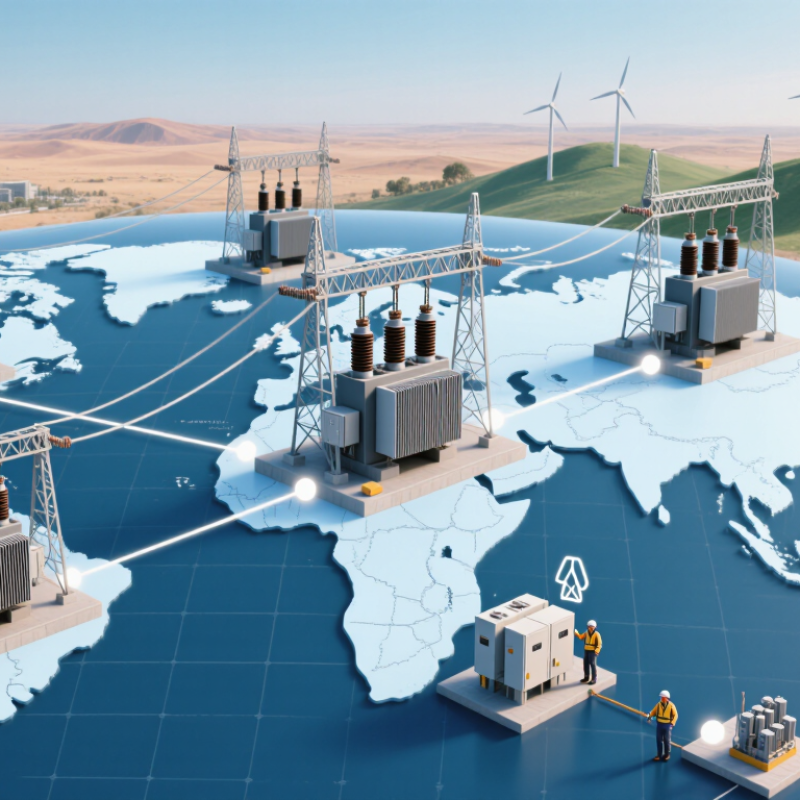
A power substation is the controlled junction between power generation, transmission, and local distribution. It changes voltage levels, directs electricity, and isolates faults before they spread. Typical equipment includes transformers, circuit breakers, busbars, protection relays, and monitoring systems. These components work together inside a carefully designed electrical environment.
Manufacturer selection matters because a substation is not a simple equipment purchase. Buyers need verified engineering capability, consistent factory testing, and clear technical documentation. Strong manufacturers explain design limits, cooling methods, insulation levels, maintenance needs, and emergency support. They also adapt equipment to climate, grid standards, soil conditions, and available space. A low initial price can become expensive when spare parts arrive slowly or field support is weak. No checklist is perfect. Buyers should still question attractive promises.
Tips: Request independent test records and recent project references. Compare warranty terms, delivery schedules, and service response times. Ask how the manufacturer handles design changes after approval. Inspect the quality system, not only the finished enclosure. Small details matter, such as cable labeling, access clearance, corrosion protection, and relay settings. These details often determine whether installation remains smooth under pressure.
Reliable selection also requires communication between the manufacturer, utility, contractor, and local authorities. One missing interface can delay energization. Buyers should review drawings with experienced engineers before production begins. Factory acceptance testing is useful, but it cannot replace careful site inspection. A practical supplier welcomes difficult questions and records every agreed requirement. That behavior is often more valuable than polished marketing language.

Comparing global power substation manufacturers requires more than reviewing rated voltage and quoted price. Start with the project’s load profile, fault level, climate, and expansion plan. A 132 kV substation near a humid coast needs different insulation protection than an inland installation. Ask whether the manufacturer has delivered equipment under similar conditions.
Technical compliance should be measurable. Review transformer losses, short-circuit withstand, insulation levels, protection relay coordination, and control system compatibility. Confirm testing procedures, including routine tests, type tests, and factory acceptance testing. Reliable manufacturers provide traceable documents, calibrated test records, and clear deviation lists. Small omissions matter. A missing cable schedule can delay commissioning for weeks.
Service capability deserves equal attention. Examine spare-parts availability, remote support, local engineers, warranty response, and training for operating teams. Evaluate the full lifecycle cost, not only the initial quotation. A cheaper switchgear package may require specialized maintenance or costly replacement parts. Site references are useful, but they should be verified through operating data and customer interviews. Tender evaluations are rarely perfect; technical teams can overvalue polished presentations and undervalue practical field support. Ask difficult questions, record every assumption, and leave room for design changes when grid conditions evolve.
Top Power Substation Manufacturers for Global Buyers
Leading power substation manufacturers differ by region, grid condition, and product focus. In Europe, buyers often prioritize compact gas-insulated switchgear, digital protection, and renewable integration. North American suppliers commonly focus on large power transformers, mobile substations, and wildfire-resilient equipment. Asia-Pacific manufacturers typically offer broad production capacity, from distribution transformers to high-voltage direct-current systems. The Middle East and Africa require robust outdoor switchgear, dust protection, and reliable cooling. Latin American projects often emphasize adaptable medium-voltage systems and easier local maintenance.
The International Energy Agency reported in World Energy Investment 2024 that annual grid investment must rise from about 400 billion dollars in 2023 to over 600 billion dollars by 2030. This pressure is reshaping manufacturer selection. Buyers should check transformer efficiency, short-circuit performance, seismic design, spare-parts access, and commissioning support. IEC 60076 and IEC 62271 compliance provide useful technical reference points, but certification alone does not prove field reliability. Factory acceptance testing should include temperature-rise, insulation, and control-system checks.
No ranking is permanent. A technically strong manufacturer may still struggle with local service response or replacement lead times. That weakness matters during a summer outage. Public market-share figures also vary between reports, so buyers should compare audited capacity, installed projects, warranty terms, and independent test records. The best regional choice is usually the one matching voltage class, climate, grid code, and long-term maintenance reality—not simply the lowest quotation.
Regional capability overview based on commonly supplied substation equipment, voltage classes, and widely adopted international standards. Company names and brands are intentionally excluded.
| Region | Primary Product Focus | Common Voltage Classes | Typical Substation Formats | Widely Applied Standards | Typical Buyer Applications | Regional Manufacturing Strengths |
|---|---|---|---|---|---|---|
| East Asia | Power transformers, distribution transformers, GIS, AIS, prefabricated substations, protection and control panels | Low voltage to 1,100 kV AC systems, depending on manufacturer and project scope | Indoor and outdoor AIS, GIS substations, skid-mounted and containerized units | IEC 60076, IEC 62271, IEC 61850, IEEE C57 where specified | Utility transmission, renewable-energy collection, industrial plants, rail electrification and urban distribution | Large production capacity, broad product ranges, export-oriented engineering and competitive delivery for standardized equipment |
| Japan and South Korea | High-efficiency transformers, compact GIS, digital substation systems, high-reliability switchgear and railway power equipment | Distribution through extra-high-voltage transmission classes, with project-specific ratings | Compact urban GIS, indoor substations, marine and industrial substations | IEC 60076, IEC 62271, IEC 61850, JEC and KS requirements when locally specified | Dense urban networks, semiconductor and manufacturing facilities, railways, data centers and high-reliability utilities | Compact designs, stringent quality control, advanced automation and strong performance in space-constrained installations |
| India and South Asia | Transmission transformers, distribution transformers, shunt reactors, AIS, GIS and rural electrification equipment | Low voltage distribution through 765 kV-class transmission projects | Outdoor AIS, indoor switchboards, GIS, mobile substations and prefabricated distribution units | IEC 60076, IEC 62271, IEC 61850 and applicable national utility specifications | National grids, solar and wind projects, rail corridors, commercial infrastructure and industrial expansion | Strong engineering for large utility programs, broad domestic demand and cost-effective transformer and switchgear production |
| Germany and Central Europe | High-voltage GIS, power transformers, digital protection, energy management systems and industrial substations | Medium voltage through 550 kV-class equipment and selected higher-voltage applications | GIS, AIS, indoor metal-enclosed switchgear and digitally monitored substations | IEC 60076, IEC 62271, IEC 61850, EN standards and European grid-code requirements | Interconnected transmission grids, offshore wind, data centers, chemical plants and energy-intensive industry | Advanced automation, grid interoperability, engineered-to-order systems and strong compliance documentation |
| Italy and Western Europe | Medium-voltage switchgear, distribution transformers, compact substations, renewable-grid equipment and protection systems | Typically 1 kV to 36 kV for distribution, with higher-voltage products available for selected projects | Compact secondary substations, ring-main units, indoor switchgear and packaged renewable substations | IEC 60076, IEC 62271, IEC 61439 and IEC 61850 where digital integration is required | Urban distribution, photovoltaic plants, wind farms, commercial buildings and industrial facilities | Flexible medium-voltage engineering, compact layouts, renewable integration and customized enclosure solutions |
| North America | Utility transformers, pad-mounted transformers, metal-clad switchgear, distribution automation and protection systems | Common distribution voltages include 4.16 kV, 12.47 kV and 13.8 kV; transmission projects extend to 500 kV-class systems | Outdoor AIS, pad-mounted equipment, metal-clad switchgear, mobile substations and utility-scale transformer yards | IEEE C57, IEEE C37 series, ANSI requirements, NEMA practices and IEC standards for international projects | Investor-owned utilities, cooperatives, data centers, oil and gas facilities, mining and renewable interconnections | Strong utility qualification processes, robust outdoor equipment, domestic code compliance and replacement-market support |
| Türkiye and Eastern Europe | Distribution transformers, medium-voltage switchgear, AIS, compact substations and industrial power systems | Medium voltage through 154 kV-class transmission applications, subject to local grid requirements | Outdoor AIS, packaged substations, ring-main units and indoor medium-voltage switchgear | IEC 60076, IEC 62271, IEC 61439 and local utility technical specifications | Industrial plants, construction projects, utilities, export EPC projects and renewable-energy installations | Regional export logistics, adaptable engineering, medium-voltage production and project-oriented customization |
| Middle East | High-capacity transformers, GIS, AIS, mobile substations, oil and gas switchgear and harsh-environment packages | Medium voltage through 400 kV-class transmission systems, with project-specific requirements | Outdoor AIS, GIS, desert-rated substations, mobile units and containerized substations | IEC 60076, IEC 62271, IEC 61850, utility specifications and oil-and-gas client standards | Oil and gas, desalination, airports, large commercial developments, utilities and solar parks | High-temperature design, dust protection, corrosion control, project certification and turnkey EPC coordination |
| Southeast Asia | Distribution transformers, medium-voltage switchgear, compact substations, industrial substations and renewable-grid equipment | Low voltage distribution through 230 kV-class systems, varying by national grid | Outdoor AIS, indoor switchboards, compact substations, pole-mounted units and containerized systems | IEC 60076, IEC 62271, IEC 61439, IEC 61850 and national utility standards | Urban expansion, manufacturing, ports, commercial buildings, islands and solar-plus-storage projects | Tropical-climate adaptation, corrosion-resistant enclosures, modular delivery and integration with regional EPC projects |
| Latin America | Distribution and power transformers, subtransmission equipment, AIS, medium-voltage switchgear and renewable substations | Medium voltage through 230 kV-class systems, with national variations in grid voltage and frequency | Outdoor AIS, compact distribution substations, pole-mounted systems and renewable-energy collector substations | IEC 60076, IEC 62271, IEEE C57 and national utility specifications | Mining, utilities, agriculture, urban distribution, hydropower, solar and wind generation | Adaptation to long-distance networks, rugged outdoor equipment, local service support and project-specific utility approvals |
Global buyers assess power substation manufacturers through evidence, not polished brochures. They review transformer efficiency, switchgear ratings, protection systems, and enclosure performance under defined conditions. Factory acceptance tests should verify insulation, temperature rise, wiring accuracy, and control logic. Clear test records matter.
Compliance must match the project location. Buyers compare designs with applicable IEC, IEEE, and national grid requirements. They also check certificates, calibration records, material traceability, and documented quality procedures. A supplier should explain how its equipment handles humidity, dust, salt exposure, seismic movement, and unstable grid conditions. Small omissions can create expensive delays.
Technical support often separates a capable manufacturer from an ordinary one. Experienced buyers ask about relay settings, installation supervision, commissioning, spare parts, and response times. Remote support is useful, but it cannot replace a skilled field engineer during energization. Communication should remain clear after the contract is signed. That is where some suppliers become less responsive.
No evaluation is perfect. Buyers may focus heavily on price and overlook training quality or software compatibility. They may also accept generic compliance statements without checking project-specific evidence. A stronger review includes technical workshops, reference projects, inspection plans, and practical questions from maintenance teams. Reliable manufacturers welcome those questions and admit design limits before shipment.
How global buyers evaluate quality, compliance, and technical support
This reference buyer scorecard assigns a 100-point evaluation weight to the factors most commonly reviewed during international substation procurement. Product quality and engineering capability receive the highest weighting, followed by regulatory compliance, testing documentation, delivery performance, and lifecycle technical support. The model is supplier-neutral and does not represent any individual company.
Choosing a substation manufacturer starts with the duty, not the catalogue. The IEA’s Electricity Grids and Secure Energy Transitions report says annual grid investment must exceed $600 billion by 2030. It estimates current investment at about $400 billion. Record voltage, transformer capacity, fault current, ambient temperature, altitude, soil conditions, and future expansion space. A neat specification can still miss humidity. That mistake becomes expensive in the field.
Build a shortlist using measurable evidence. Request IEC type-test reports, routine-test procedures, factory acceptance records, and audited quality certificates. Review projects with similar ratings and environmental conditions. Confirm experience with protection systems, relay coordination, SCADA interfaces, and local spare-parts support. IRENA’s World Energy Transitions Outlook 2024 indicates that renewable capacity may need to reach 11.2 terawatts by 2030. This growth increases the need for flexible substations and reliable grid connections.
Compare lifecycle cost, not only the purchase price. Examine losses, maintenance intervals, delivery risk, warranty terms, and technician response times. Ask for a detailed bill of materials and clear exclusions. Independent witness testing can expose problems before shipment. Cybersecurity requirements also deserve written verification. A low bid may be attractive. It may also conceal weak service coverage or costly modifications. Buyers should challenge their own assumptions, especially when a familiar design appears automatically suitable.

© Copyrights Levil Technology Corp 2022