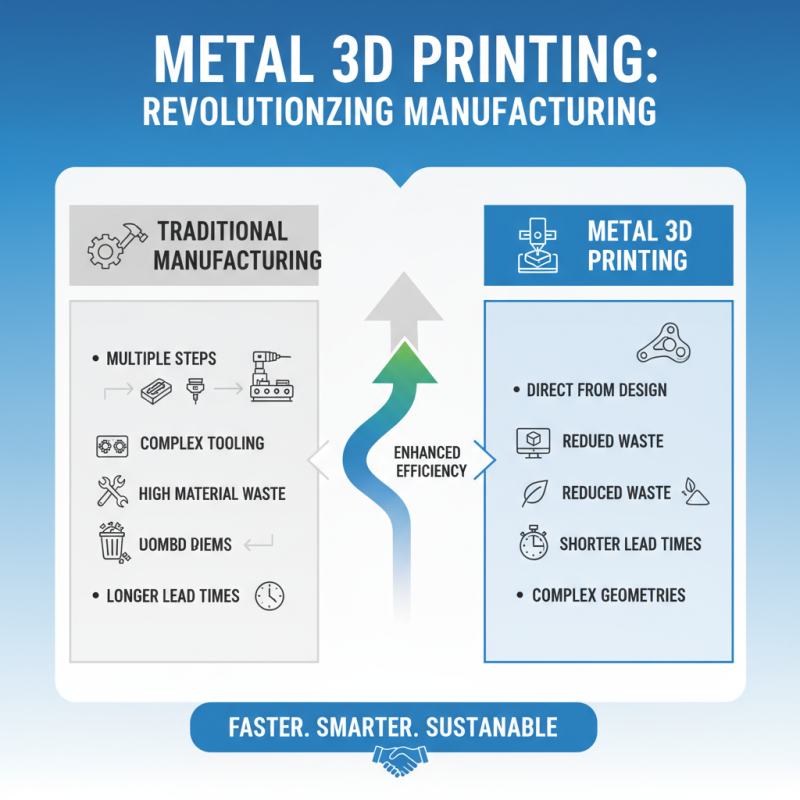
Why Metal 3D Printing is Revolutionizing Manufacturing Industries?
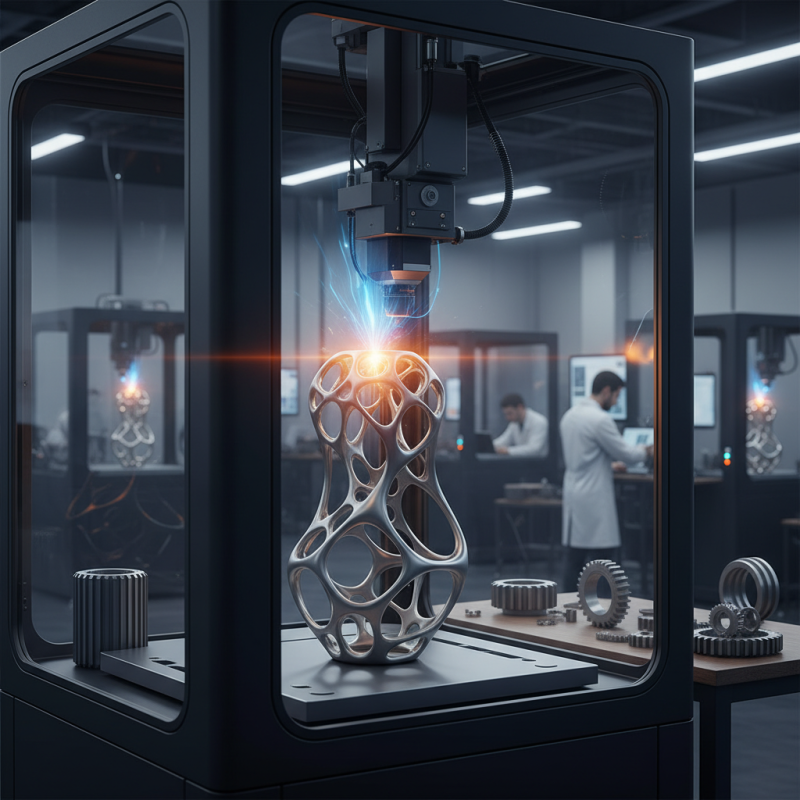
The rise of metal 3D printing is reshaping manufacturing industries. According to Dr. John Hart, an expert in additive manufacturing, "Metal 3D printing allows for designs that were once impossible." His observation highlights a significant transformation in how products are envisioned and created.
Traditional methods often limit design possibilities due to constraints. Metal 3D printing breaks these barriers, enabling complex geometries. This innovation reduces waste and can lower production costs. However, it is not without challenges. Quality control remains a concern, and materials can be expensive.
As industries adopt this technology, they must weigh the benefits against potential drawbacks. Balancing innovation with reliability is crucial. The future of metal 3D printing holds great promise, but careful consideration is necessary for sustainable progress.
The Evolution of Metal 3D Printing Technologies in Manufacturing
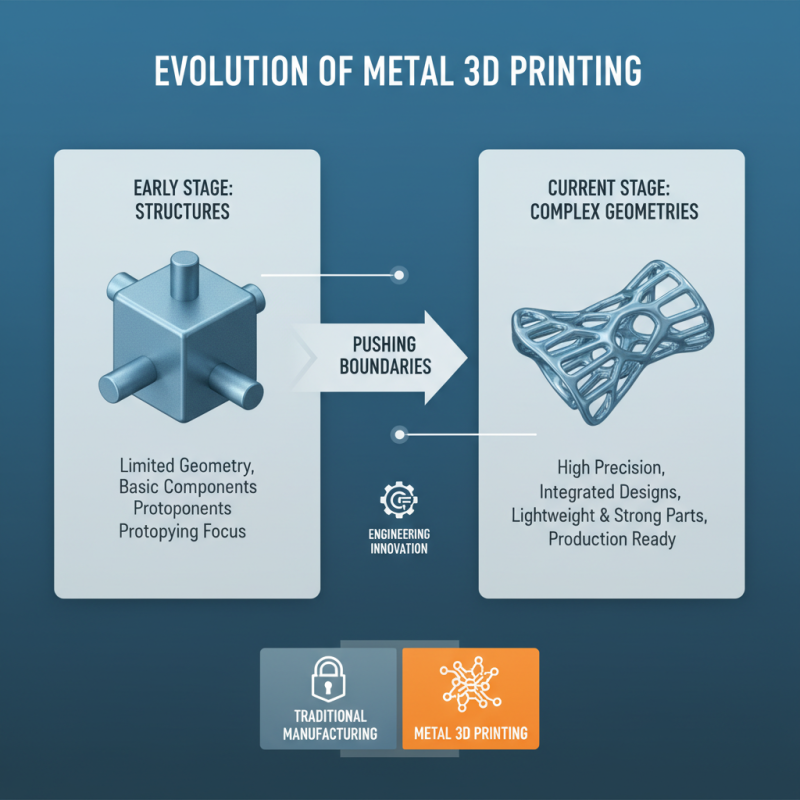
Metal 3D printing has evolved significantly. It began with simple structures. Now, it creates complex geometries with high precision. Traditional manufacturing methods often limit design. With metal 3D printing, engineers push these boundaries. This technology enables intricate designs that were once impossible. For example, creating lightweight yet strong components is now feasible.
The journey of metal 3D printing is fascinating. Early machines were slow and limited in capability. Today's printers use advanced techniques. They can produce detailed parts quickly. Materials have also improved. From titanium to aluminum, options are expanding. However, challenges remain. The cost of metal powders can be high. Moreover, the adaptation to new workflows can be difficult. Industries must navigate these hurdles to fully realize the benefits.
As metal 3D printing gains traction, its impact is palpable. It reduces waste, a common issue in traditional methods. Parts are made only when needed. Still, the technology requires careful understanding. Each printer has its unique characteristics. Users must learn and adapt. Overall, the evolution of metal 3D printing in manufacturing reflects a dynamic intersection of innovation and practicality.
Impact of Metal 3D Printing on Production Efficiency and Cost Reduction
Metal 3D printing is changing the landscape of manufacturing. This technology enhances production efficiency significantly. Traditional methods often require multiple steps and complex tooling. In contrast, metal 3D printing creates parts directly from digital designs. This reduces material waste and shortens lead times.
The cost reduction from using metal 3D printing cannot be ignored. Businesses can save on both labor and material expenses. 3D printing allows for the production of complex geometries that were previously difficult or impossible to make. The initial investment might be high, but the long-term savings are promising. However, quality control remains a challenge. Not every printed part meets the required standards. Manufacturers must be vigilant in this area.
As industries adopt this technology, there are ongoing discussions about its impact. Companies might need to retrain employees. There is also a need for more robust quality assurance systems. As practices evolve, there will be lessons learned. Adjustments in operational strategies will be essential as the market matures.
Key Industries Adopting Metal 3D Printing: Aerospace and Automotive
Metal 3D printing is changing the aerospace and automotive sectors significantly. In aerospace, this technology allows for lighter designs. Reducing weight is crucial for improving fuel efficiency. Complex geometries, often impossible with traditional methods, are now achievable. Parts can be produced on-demand, decreasing lead times. However, achieving the right material properties remains a challenge.
In the automotive industry, manufacturers are embracing metal 3D printing for prototyping and production. Customized parts can enhance vehicle performance. This technology allows for rapid iteration, reducing development costs. Yet, scaling production reliably can be tricky. Quality control measures often need to be more robust. These are growing pains that require attention as the industry evolves.
Challenges persist, but potential rewards are significant. Companies must balance innovation with practicality. The journey is as important as the destination. As these industries evolve, embracing these technologies will reshape manufacturing's future.
Why Metal 3D Printing is Revolutionizing Manufacturing Industries? - Key Industries Adopting Metal 3D Printing: Aerospace and Automotive
| Industry |
Application Area |
Benefits |
Adoption Rate (%) |
| Aerospace |
Engine Components, Support Structures |
Weight Reduction, Design Flexibility |
25% |
| Aerospace |
Customized Tools and Fixtures |
Cost Savings, Reduced Lead Time |
30% |
| Automotive |
Prototyping and Testing |
Rapid Development, Improved Performance |
40% |
| Automotive |
Production of Low-Volume Parts |
Material Efficiency, Supply Chain Simplification |
35% |
| Aerospace |
Lattice Structures |
Performance Enhancement, Reduced Material Usage |
20% |
Comparative Analysis: Metal 3D Printing vs. Traditional Manufacturing Methods
Metal 3D printing is reshaping manufacturing. This technology allows for complex designs that traditional methods cannot achieve. Recent reports show that the global metal 3D printing market could reach $5.4 billion by 2025, with a growth rate of around 25% annually. This growth signals a shift in how industries approach production.
Traditional manufacturing relies heavily on subtractive methods. These processes often waste material, leading to increased costs and longer lead times. Metal 3D printing, on the other hand, builds parts layer by layer. This not only reduces waste but also enables customization at scale. According to a recent study, companies adopting metal 3D printing can reduce production time by up to 90% in some cases. However, the initial investment for metal 3D printers is high. Not every company can afford the upfront costs, creating a barrier to entry.
Quality control remains a challenge in 3D printing. Variations in material properties may affect the final product's performance. Additionally, the post-processing stage can be time-consuming and complex. While metal 3D printing is transforming manufacturing, these hurdles need addressing. The industry must continue to refine processes to fully unlock its potential. Data indicates that further advancements in technology could alleviate many of these issues in the coming years.
Comparison of Time Efficiency: Metal 3D Printing vs. Traditional Manufacturing Methods
Future Trends and Challenges in Metal 3D Printing for Industry Applications
Metal 3D printing is reshaping manufacturing in various industries. It offers new possibilities but also poses unique challenges. The technology allows for complex designs that were previously unachievable. However, the quality control of these intricate parts remains a concern.
One significant trend is the move towards customization. Companies can now produce tailored components on demand. This enhances efficiency but requires a shift in design and production processes. It is not all smooth sailing; the integration of this technology into existing workflows can lead to hiccups.
Another challenge lies in material limitations. While there are advancements, not all metals are suitable for 3D printing. This restriction can hamper innovation. As industries adopt metal 3D printing, ongoing research is essential. The path forward is filled with potential but demands careful consideration and adaptation.