How to Succeed in the CNC Industry for Beginners?
The CNC industry has seen rapid growth in recent years, with projections estimating a market value of over $100 billion by 2026. This sector combines creativity and precision, making it an attractive field for newcomers. Companies often seek skilled individuals who can navigate the complexities of CNC machinery and software. However, many beginners feel overwhelmed by the vastness of this industry.
Entering the CNC industry requires both technical and interpersonal skills. Aspiring professionals must learn machining fundamentals and the operation of CNC machines. Reports indicate that nearly 70% of employers prioritize hands-on experience and problem-solving capabilities. Yet, many beginners struggle to gain this essential experience.
Moreover, the fast-paced nature of technological advancements in CNC makes continuous learning vital. Beginners need to adapt and embrace new techniques quickly. Reflection on personal progress is crucial in this field. Developing a habit of self-assessment can lead to growth and success in the CNC industry.

Understanding the Basics of CNC Machining: Key Concepts and Terminology
CNC machining is pivotal in modern manufacturing. It transforms raw materials into precision components. Understanding key concepts is crucial for beginners. CNC stands for Computer Numerical Control. This technology automates machine tools through computer programming. It enhances accuracy and reduces human error.
Basic terminology is essential. An axis is a line around which a body rotates. CNC machines operate on multiple axes. Common types include 3-axis and 5-axis machines. Feasibility reports indicate that the global CNC market will reach $100 billion by 2026. The demand for skilled operators is high, yet many beginners lack basic knowledge.
Errors can arise from poor programming or miscommunication. Beginners might overlook essential calculations, leading to costly mistakes. Understanding feeds and speeds is vital; it's about optimizing tool performance and material type. The journey into CNC machining requires continual learning. Seeking mentorship can help bridge the knowledge gap. Engage with the community and stay updated on industry trends, as this field is ever-evolving.
Understanding the Basics of CNC Machining: Key Concepts and Terminology
Essential Skills for Beginners in the CNC Industry: A Comprehensive Guide
Entering the CNC industry can be daunting for beginners. Essential skills are paramount. Proficiency in CAD/CAM software is crucial. According to a recent report, 70% of CNC job postings list this as a requirement. Understanding machining principles is another key skill. Knowledge of materials and their properties helps in making informed decisions.
Moreover, attention to detail plays a significant role. Mistakes in programming or measurements can lead to costly errors. A survey indicated that 60% of new CNC operators face challenges in precision. This can create setbacks and delays in production. Beginners should focus on honing their attention to detail through practice and mentorship.
Creativity also has its place in CNC work. Designing new parts requires innovative thinking. However, many beginners may struggle with this aspect. Learning from experienced machinists can bridge this gap. Building a network within the industry is beneficial. Engaging with others can provide fresh insights and improve problem-solving abilities.
Exploring CNC Machinery: Types and Their Applications in Various Industries
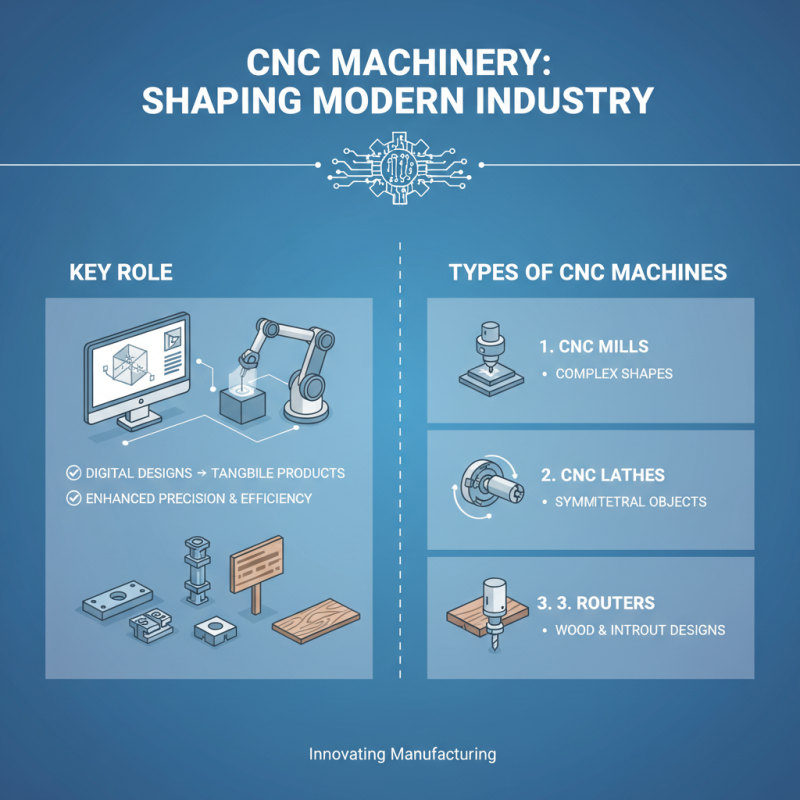
CNC machinery plays a key role in various industries today. These machines convert digital designs into tangible products, enhancing precision and efficiency. There are several types of CNC machines, each serving different purposes. For example, CNC mills, lathes, and routers perform unique functions. A CNC mill can cut complex shapes. On the other hand, lathes excel at producing symmetrical objects. Routers are commonly used for wooden products and intricate designs.
Different industries utilize CNC machinery for specific applications. The automotive sector relies heavily on CNC for parts manufacturing. Precision is critical for parts that must fit together seamlessly. In aerospace, CNC machines create lightweight components. Failure to meet specifications can lead to expensive consequences. Additionally, in the medical field, CNC technology produces intricate surgical tools. The challenges in mastering CNC operations are real. Newcomers often face a steep learning curve, struggling with programming and machine setup. However, understanding these challenges can help you adapt and grow in the industry.
Market Trends in CNC: Growth Statistics and Future Opportunities for Newcomers
The CNC industry is experiencing notable growth, with a projected market value expected to reach
$117 billion by 2027. This growth correlates with the increasing demand for
precision manufacturing. Newcomers in the field should be aware of these statistics. They indicate a vibrant market and potential job
opportunities.
Recent studies reveal that additive manufacturing and automation are
key trends driving this growth. The integration of CNC machines with artificial intelligence
is also changing the landscape. These innovations could lead to improved efficiency in production processes. As a beginner, understanding
these trends can help in gaining a competitive edge. Markets are evolving, and adapting is essential.
Moreover, despite the promising growth, challenges exist. Many beginners face skills gaps. A
considerable portion of the workforce lacks advanced CNC programming knowledge. This presents an opportunity for aspiring machinists
to invest in upskilling. Engaging with industry training programs can close this gap. Reflection on personal skills and seeking out suitable
education will be vital in navigating the CNC industry successfully.
Safety Protocols in CNC Operations: Best Practices for Beginners to Follow
In the CNC industry, safety must be a priority for beginners. According to the National Safety Council, over 4 million injuries occur in the workplace annually. Many of these involve machinery, including CNC equipment. Proper protocols can significantly reduce these numbers. Beginners should familiarize themselves with the machine’s operation manual. Understanding these basics helps prevent accidents.
Wearing appropriate personal protective equipment (PPE) is critical. This includes goggles, gloves, and steel-toed boots. The Bureau of Labor Statistics reports that PPE can reduce the risk of injury by up to 70%. This is crucial for new operators who might overlook safety due to inexperience. Regular safety drills and training sessions further embed safety habits.
Additionally, maintaining a clean workspace is essential. Clutter can lead to operational hazards. In fact, a study from the Occupational Safety and Health Administration indicates that poor maintenance can increase the risk of accidents by 30%. Newbies should develop a routine for cleaning and organizing tools and materials. Reflection on past mistakes is key to improvement; each error is a learning experience.
How to Succeed in the CNC Industry for Beginners? - Safety Protocols in CNC Operations: Best Practices for Beginners to Follow
| Safety Protocol |
Description |
Frequency |
Responsible Party |
| Wear Personal Protective Equipment (PPE) |
Always wear safety goggles, gloves, and steel-toed boots while operating CNC machines. |
Every Operation |
Operator |
| Machine Inspection |
Inspect CNC machines for any wear or damage before use. |
Daily |
Operator |
| Emergency Stop Functionality |
Ensure that emergency stop buttons are functional and accessible. |
Weekly |
Maintenance Staff |
| Proper Tool Setup |
Verify that tools are properly secured and set up before starting operations. |
Before Each Use |
Operator |
| Maintain Clean Workspace |
Keep work area clean and free of clutter to avoid accidents. |
Constantly |
Everyone |