China Top 5 Axis CNC Milling Machine Manufacturers
China has become a significant source of advanced machining equipment for aerospace, medical, automotive, and precision tooling applications. This article introduces five leading Chinese manufacturers of 5 axis cnc milling machine systems. It focuses on practical evidence rather than impressive claims alone.
The comparison considers machine structure, spindle performance, positioning accuracy, control systems, automation options, and after-sales support. It also examines how each manufacturer handles installation, operator training, maintenance, and spare parts. These details matter on a real factory floor. A strong machine should cut complex turbine blades, molds, or medical components consistently, not only perform well in a showroom demonstration.
Real experience can reveal differences that brochures often hide. Buyers should request test cuts, inspect sample parts, and review accuracy reports before making a decision. Service response also deserves attention, especially when production schedules are tight. However, public information is not always complete or equally reliable. Some manufacturers publish limited technical data, so certain comparisons may require further verification. That is an important limitation.
This guide aims to provide a balanced starting point for engineers, purchasing teams, and factory owners. It does not treat the largest supplier as automatically the best choice. Machine capacity, workpiece size, budget, software compatibility, and local technical support can change the final decision. Careful evaluation remains essential.
What Is a 5-Axis CNC Milling Machine?
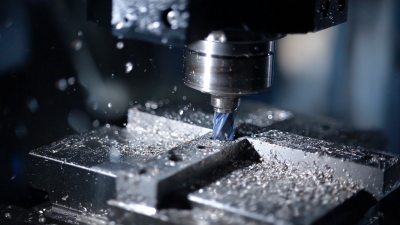
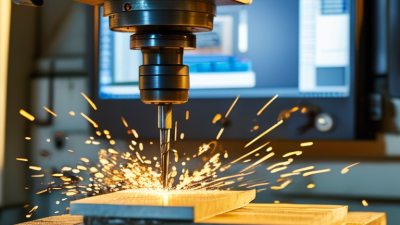
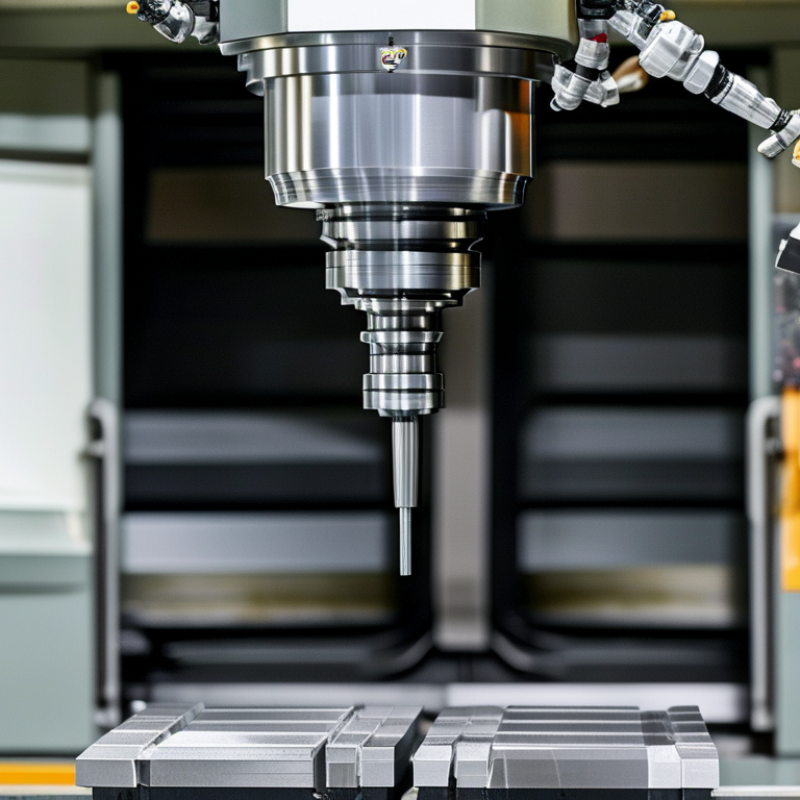
A 5-axis CNC milling machine moves a cutting tool along three linear axes: X, Y, and Z. It also rotates the workpiece or spindle around two additional axes, commonly called A, B, or C. These coordinated movements can reach five surfaces in one setup. That matters when machining turbine blades, medical components, or deep aerospace parts.
The definition sounds neat, but shop-floor reality is messier. Five axes do not automatically create better parts. Machine stiffness, probing accuracy, tool length, software control, and operator experience remain critical. Fortune Business Insights estimated the global CNC machine market at about USD 83.65 billion in 2023, with continued growth expected through 2032. This wider market data signals strong demand, but it does not prove that every five-axis model fits every factory. A careful buyer should compare repeatability, rotary-axis accuracy, spindle speed, work envelope, and service response. Cutting tests are more convincing than brochures.
Tips: Ask for a sample part using your actual material and tolerances. Check cycle time, surface finish, and tool access. Also inspect the control interface. A powerful machine can still become an expensive mistake if programming feels awkward. I would challenge one common assumption: fewer setups usually improve consistency, but poor fixturing can erase that advantage. Review maintenance records, calibration methods, and training support before comparing China’s leading five-axis CNC milling machine manufacturers.
China Top 5 Axis CNC Milling Machine Manufacturers - What Is a 5-Axis CNC Milling Machine?
A 5-axis CNC milling machine controls three linear axes and two rotary axes, allowing the cutting tool or workpiece to approach a component from multiple directions in a single setup.
| Machine Configuration |
Typical Axis Arrangement |
Main Working Principle |
Typical Workpiece Size |
Common Accuracy Range |
Suitable Applications |
Key Advantages |
| Trunnion Table Type |
X, Y, Z linear axes plus two rotary table axes |
The workpiece rotates and tilts while the cutting tool moves along three linear axes. |
Small to medium components, commonly up to approximately 500 mm in diameter. |
About ±0.005 to ±0.020 mm, depending on machine class and testing method. |
Automotive parts, impellers, molds, medical components, and aerospace fittings. |
Compact design, strong rigidity, good accessibility, and efficient machining of complex surfaces. |
| Swivel-Head Type |
X, Y, Z linear axes plus two rotary spindle-head axes |
The spindle head tilts and rotates to reach different tool orientations while the workpiece remains fixed. |
Medium to large components, with fewer limitations from table diameter. |
About ±0.008 to ±0.025 mm under typical controlled conditions. |
Large molds, aerospace structures, turbine components, and heavy-duty parts. |
Handles larger workpieces and provides flexible tool access without repeatedly repositioning the part. |
| Hybrid Table-and-Head Type |
Three linear axes, one rotary table axis, and one swiveling spindle axis |
One rotary motion is supplied by the worktable and the other by the spindle head. |
Small to medium-sized parts requiring both flexibility and stable support. |
About ±0.005 to ±0.020 mm, depending on calibration and thermal control. |
General precision machining, mold making, prototypes, and multi-sided components. |
Balanced flexibility, good workholding stability, and broad application coverage. |
| Continuous 5-Axis Type |
All five axes can move simultaneously during cutting |
The machine continuously adjusts tool orientation and position while following complex 3D toolpaths. |
Small to medium components with intricate geometry. |
Often approximately ±0.005 to ±0.015 mm on high-precision equipment. |
Blades, blisks, impellers, medical implants, and complex aerospace surfaces. |
Reduces setups, improves surface continuity, and minimizes tool-axis changes and collision risks. |
| 3+2 Positioning Type |
Three linear axes cut after two rotary axes position the workpiece or spindle |
The two rotary axes position the cutting angle, then the three linear axes perform the cutting operation. |
Small to large parts, depending on table capacity and machine travel. |
About ±0.008 to ±0.025 mm in typical production environments. |
Multi-sided drilling, prismatic parts, valve bodies, fixtures, and mold components. |
Lower programming complexity than continuous 5-axis machining and improved access to multiple faces. |
Technical note: Accuracy values are representative industry ranges rather than guaranteed specifications. Actual results depend on machine structure, axis travel, spindle condition, workholding, tooling, material, thermal compensation, calibration, and the applicable inspection standard.
China’s 5-Axis CNC Milling Machine Manufacturing Industry
China’s 5-Axis CNC Milling Machine Manufacturing Industry has grown through practical engineering and strong production capacity. Manufacturers serve aerospace, medical, automotive, energy, and precision tooling sectors. Their machines can reduce multiple setups, improve part consistency, and reach complex surfaces from several angles.
In factory evaluations, buyers should examine spindle stability, rotary-axis accuracy, thermal compensation, and control-system usability. A rigid machine frame matters during deep cutting. So does reliable calibration. Experienced suppliers usually provide test-cut reports, inspection records, operator training, and responsive technical support. However, no manufacturer is perfect. Some machines perform well in demonstrations but require better process planning on the shop floor. This gap deserves honest discussion.
Tips: Request a sample machining test using your material and tolerances. Check repeatability after warm-up, not only during a short trial. Ask how service teams handle software updates, spare parts, and emergency diagnosis. Review ISO-based quality procedures, but verify actual inspection practices. Small details matter. Thin walls may vibrate. Long tools may deflect. A capable manufacturer should explain these limits clearly, instead of promising universal performance.
China Top 5 Axis CNC Milling Machine Manufacturers
China’s 5-Axis CNC Milling Machine Manufacturing Industry
This technology-based comparison uses the number of controlled axes as the data dimension rather than company or brand data. A 3+2 configuration uses three linear axes with two rotary positioning axes, while simultaneous 5-axis machining can coordinate all five axes during cutting.
Criteria for Evaluating Chinese 5-Axis CNC Manufacturers
China Top 5 Axis CNC Milling Machine Manufacturers
Evaluating Chinese five-axis CNC manufacturers requires more than comparing prices. Grand View Research valued the global CNC machine market at about USD 83 billion in 2022. Its report also projected strong growth through 2030. This demand increases competition, but it can hide uneven quality. Buyers should verify spindle accuracy, rotary-axis repeatability, thermal stability, and service response. ISO 230-2 testing provides a practical framework for positioning accuracy and repeatability.
Ask each manufacturer for recent test reports, not only catalog figures. A reliable supplier should explain ball-bar results, volumetric compensation, and inspection conditions. Check whether tests use calibrated equipment and traceable procedures. Cutting samples matter too. Machine aerospace-grade aluminum, hardened steel, and a complex impeller. Inspect surface finish, tool marks, cycle time, and dimensional drift after continuous operation. Short demonstrations can mislead.
Service capability often separates a dependable factory from an attractive quotation. Deloitte’s 2023 smart manufacturing research found that many manufacturers still struggle to scale digital production projects. This warning applies to machine tool purchases. Confirm training hours, spare-part availability, remote diagnostics, and local engineers. Review installation records from comparable workshops, while protecting customer confidentiality. I would also visit the assembly area and inspect cable routing, lubrication systems, guarding, and calibration habits. A polished showroom is not proof. Even experienced evaluators can overvalue specifications and undervalue operator support. That mistake deserves attention.
Profiles of China’s Top Five 5-Axis CNC Milling Machine Manufacturers
China’s five-axis CNC milling sector combines scale, export reach, and specialized engineering. Grand View Research reported that Asia-Pacific held the largest share of the global CNC machine market in 2023. China remains a major production base, supported by dense supplier networks and strong domestic demand. Rankings still vary by accuracy, service, and verified installations.
One leading profile is a large integrated manufacturer with cast-iron beds, linear scales, and automated tool changers. A second focuses on export-ready machines, offering CE documentation, remote diagnostics, and multilingual service. A third serves aerospace and energy customers, where titanium cutting, thermal stability, and five-axis interpolation matter. These capabilities require testing, not marketing language.
A fourth manufacturer targets compact workshops. Its machines use smaller footprints, high-speed spindles, and practical probing systems. The fifth profile is an automation integrator, combining milling centers with pallet changers, robots, and production software. Mordor Intelligence has identified automation and connected manufacturing as major CNC market growth drivers through the decade. IMARC’s industry analysis also highlights rising demand for high-precision, multi-axis equipment. Buyers should inspect sample parts, volumetric accuracy reports, spindle-load data, and local response times. Some published specifications look impressive. They may not reflect real cutting conditions. A factory visit can reveal more than a brochure.
Comparison of Products, Applications, Services, and Market Strengths
China’s top five-axis CNC milling machine manufacturers differ more in execution than in brochure claims.
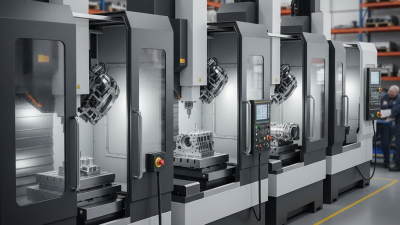
Their product ranges commonly include compact vertical centers, gantry machines, and high-speed five-axis models. Compact systems suit medical parts, turbine components, and precision prototypes. Gantry designs handle larger molds and aerospace structures. High-speed machines reduce cutting time, but they may demand stricter thermal control.
Application fit matters more than maximum spindle speed.
A machine cutting aluminum brackets needs different rigidity from one machining hardened tool steel. Buyers should compare rotary-table diameter, positioning accuracy, tool capacity, and control compatibility. Sample cuts reveal practical performance. They also expose weaknesses.
Service quality separates the leading suppliers.
Strong manufacturers provide installation guidance, operator training, remote diagnostics, and stocked replacement parts. On-site commissioning is especially valuable when calibration errors affect surface finish. Response time should be measured in hours or days, not vague promises. Some suppliers offer impressive technical documents but slower field support. That gap deserves attention.
Market strength often comes from export experience, engineering depth, and stable component sourcing.
Established manufacturers usually support custom fixtures and process development. However, a large production scale does not guarantee consistent quality. Factory audits, test reports, customer references, and acceptance trials improve reliability. Warranty terms should cover both parts and labor. No ranking is perfect. Production results still depend on programming, tooling, maintenance, and operator skill.