Top Agricultural Drones to Watch in 2026 for Global Buyers
As agriculture evolves, Agricultural Drones become increasingly vital. These advanced tools streamline farming operations, enhancing efficiency and productivity. By 2026, the global market will see remarkable innovations. Advanced sensors and AI integration will elevate crop monitoring and management.
However, challenges remain. Adaptation to varied farming practices can be difficult. Farmers may initially hesitate to embrace new technologies. Yet, these drones promise data-driven insights that can transform traditional methods. The precision agriculture sector is evolving rapidly, making it essential for global buyers to stay informed.
With a plethora of options emerging in the field, understanding the landscape of Agricultural Drones is crucial. Features like flight time, payload capacity, and software compatibility can greatly impact decision-making. Buyers must carefully evaluate these factors to ensure they select the right drone for their specific agricultural needs. Investing wisely in Agricultural Drones can significantly enhance yields and sustainability in future farming.
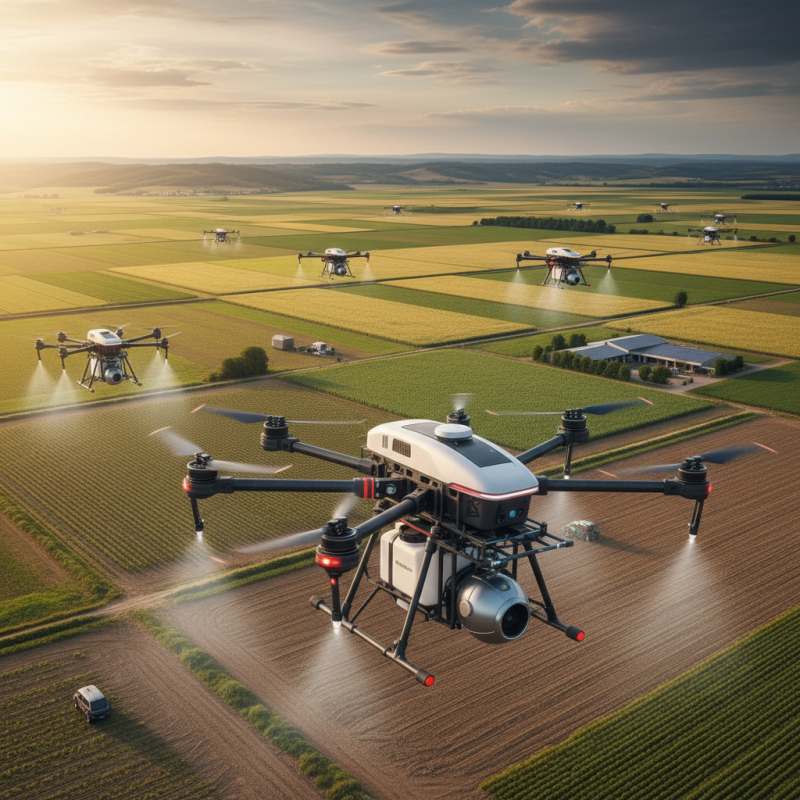
Emerging Trends in Agricultural Drone Technology for 2026
Agricultural drones are transforming farming practices. In 2026, buyers will witness significant advancements in this sector. A report from Grand View Research indicates that the global agricultural drone market is expected to reach USD 6.4 billion by 2026. This growth is driven by improving technology and increased demand for precision farming.
Emerging trends include enhanced imaging capabilities. New drones will feature multispectral and thermal imaging. These tools allow farmers to monitor crop health more effectively. According to a study by MarketsandMarkets, the precision agriculture market is projected to grow at a CAGR of 12.2% from 2021 to 2026. Drones will play a crucial role in optimizing resource use and boosting yields. However, the high initial investment can be a barrier. Many farmers may hesitate to adopt these innovations.
Data analytics and artificial intelligence are also on the rise. Drones equipped with advanced sensors will collect vast amounts of data. This data will be analyzed to provide actionable insights. Still, not all farmers may have the necessary expertise to utilize this data effectively. Training and support will be essential to overcome these challenges. As we move towards 2026, the intersection of technology and agriculture will continue to evolve, shaping the future of farming.
Key Features to Look for in Agricultural Drones
When selecting agricultural drones for 2026, buyers should focus on key features that enhance efficiency and reliability. Flight time is crucial. Look for drones that can operate for a minimum of 30 minutes. This ensures coverage of larger fields without frequent recharges. Additionally, a payload capacity of at least 5 kilograms is important for carrying necessary equipment and supplies.
Another vital feature is the sensor technology. Drones equipped with multispectral and thermal imaging sensors provide valuable data. This helps in monitoring crop health and detecting irrigation issues early. The ability to gather and analyze data will be essential for informed farming decisions.
**Tips:** Consider drones with user-friendly interfaces. Complex controls may lead to mistakes in operation. Also, ensure the drone has a robust support system. Technical issues may arise, and having reliable customer support can make a difference in productivity. Don’t overlook the importance of maintenance practices. Regular checks can prevent costly damages and prolong the drone's lifespan.
Leading Manufacturers of Agricultural Drones in 2026
The agricultural drone market is set to grow significantly by 2026. A recent industry report estimates the market to reach $6 billion, driven by advancements in technology and increasing adoption among farmers. Key manufacturers are innovating to enhance features such as precision targeting and crop health monitoring. These improvements are critical in optimizing yields and resource management.
Leading companies in this sector are focusing on autonomous flight capabilities. Drones equipped with AI can analyze crop conditions in real-time. This technology allows farmers to make informed decisions quickly. However, challenges remain. Many users report difficulties in navigating regulatory environments. Compliance with local aviation authorities can slow the deployment of new technologies.
Additionally, the cost of entry into drone farming can be high. Not all farmers can invest in the latest models. Yet, as prices gradually decrease, accessibility is improving. Reports indicate that early adopters have seen significant ROI. Continuous innovation is essential to thrive in this competitive landscape. As more data becomes available, insights will drive further evolution in agricultural drone technology.
Comparative Analysis of Agricultural Drones on the Market
The agricultural drone market is rapidly evolving, driven by advancements in technology and the increasing need for efficiency. According to a recent industry report, the global agricultural drone market is projected to reach $6.5 billion by 2026, growing at a CAGR of 30% from 2023. Drones are becoming essential for tasks such as crop monitoring, soil assessment, and precision spraying. These machines greatly reduce labor costs and enhance crop yield management.
When analyzing the current offerings, several technical specifications stand out. Look for drones equipped with high-resolution cameras and multispectral sensors for better data acquisition. The battery life is crucial; models offering over 30 minutes of flight time enhance operational efficiency. Inadequate battery life can hinder large-scale inspections.
Tips: Selecting the right drone involves assessing your specific agricultural needs. Prioritize models featuring user-friendly interfaces for ease of navigation. Also, consider regulatory restrictions in your area. While drones present numerous benefits, challenges such as data security and weather dependency remain. Regular training is vital to maximize their potential and minimize risks.
Impact of Agricultural Drones on Global Farming Practices
The impact of agricultural drones on global farming practices cannot be overstated. These innovative tools are reshaping how farmers manage crops. They offer precise analytics and data collection, enhancing decision-making processes. For instance, drones can monitor crop health and soil conditions in real time. This leads to better resource management and higher yields.
One of the remarkable aspects is how drones enable farmers to act quickly. They can identify issues like pest infestations or nutrient deficiencies before they escalate. By using drones, farmers can reduce chemical usage significantly. This promotes sustainable farming practices while still protecting crops. However, some farmers may hesitate to adopt this technology. The initial investment can be daunting, and training is essential.
Tips for adopting drone technology:
- Thoroughly research models that suit specific needs.
- Look for drones that provide user-friendly interfaces.
- Consider participating in local workshops or online tutorials.
- This will help ease the learning curve and maximize benefits.
- It is essential to reflect on whether the investment aligns with long-term farming goals.
Embracing drone technology requires commitment but offers potential for significant returns.