
What will define the best Circuit Breaker Parts in 2026? The answer will involve more than interrupting current. Engineers will examine contact durability, arc-chute design, trip-unit accuracy, terminal temperature, and replacement compatibility. Small components can decide whether a breaker opens cleanly or leaves dangerous heat inside a panel.
MarketsandMarkets estimates that the global circuit breaker market could grow from approximately USD 8.7 billion in 2024 to USD 12.5 billion by 2029. Grand View Research also identifies grid modernization, renewable-energy integration, and industrial automation as important growth drivers. These trends increase demand for stronger contacts, electronic trip mechanisms, compact operating springs, and higher-performance insulation materials. The figures describe the market, not every part.
John D. McDonald, an IEEE Fellow and recognized power-system protection specialist, offers a useful perspective: “Protection must operate correctly under the worst credible fault, not merely during normal conditions.” That principle should guide every 2026 parts comparison. A copper contact may look acceptable, yet surface erosion can reveal a different story. A molded case may fit perfectly, while its thermal rating remains unsuitable. Tiny details matter.
This article examines the leading Circuit Breaker Parts expected to shape maintenance, manufacturing, and retrofit decisions in 2026. It also questions common assumptions. Not every newer component is better. Not every low-cost replacement is truly compatible. Reliable selection requires test records, manufacturer data, field experience, and careful attention to applicable standards such as IEC 60947-2 and UL 489.
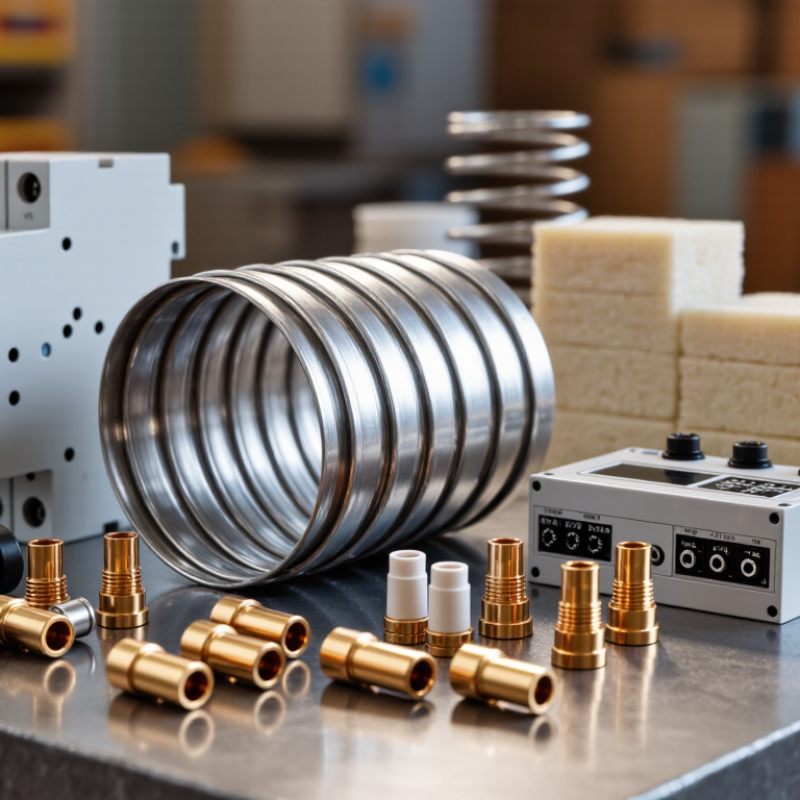
Circuit breaker parts determine how quickly and safely a fault is controlled. The trip unit senses abnormal current and releases the operating mechanism. Its settings must match the circuit, not simply the equipment rating. A misadjusted trip unit can delay protection or cause nuisance interruptions.
The contacts carry normal current, while the arc chute controls the intense arc created during opening. Thermal-magnetic units respond to overloads and short circuits. Electronic trip units provide finer measurement, event records, and adjustable protection zones. Terminals create the connection point, so correct torque matters. Loose hardware can produce heat, discoloration, and eventual failure. It sounds simple.
The enclosure and insulation separate energized conductors from people and nearby components. Auxiliary contacts report breaker status to monitoring systems, which helps maintenance teams confirm whether a device opened correctly.
IEC 60947-2 and UL 489 provide widely used performance frameworks for low-voltage breakers.
The International Energy Agency’s Electricity 2025 report forecasts global electricity demand growth of about 4% annually through 2027. That growth increases pressure on dependable protection and coordination. MarketsandMarkets projects the circuit breaker market to reach approximately 10.4 billion dollars by 2028, up from about 7.9 billion dollars in 2023. These figures support greater attention to replacement parts and testing.
Still, market forecasts are not field evidence. A breaker may pass a visual inspection yet fail under heat, vibration, or repeated fault stress. Technicians should verify contact wear, trip response, insulation condition, and terminal torque using documented procedures.

Current-carrying parts remain central to circuit breaker performance in 2026. Terminals, contacts, and conductors control how safely electricity enters, travels, and stops. Small parts matter. A terminal must hold a cable firmly while resisting heat, vibration, and corrosion. Poor clamping can create a hot spot within minutes. During field inspections, technicians often find discoloration before they find a complete failure.
Contacts need a clean, stable mating surface. Their material should limit arcing, pitting, and electrical resistance during repeated switching. Silver-based contact materials are still common in demanding applications, but material selection depends on current level, switching frequency, and enclosure conditions. Contact pressure also matters. Too little pressure causes heating; too much can accelerate mechanical wear.
Conductors must carry rated current without excessive temperature rise. Copper offers strong conductivity, while suitable alloys can improve strength and durability. Insulation around conductors deserves equal attention, especially near terminals where heat concentrates. I have seen designs that looked excellent on paper but performed poorly after loose connections developed.
Specifications alone are not enough. Each component should be checked through torque testing, thermal inspection, continuity testing, and repeated operating cycles. One overlooked detail can change the whole result. Reliability is built at the connection point.
In 2026, arc interruption parts remain essential in high-performance circuit breakers. Arc chutes, barriers, and insulation work together during a fault.
When contacts separate, the arc chute divides the hot arc into smaller sections. Its metal plates cool, lengthen, and weaken the arc. Vent openings then guide heat and gases away from sensitive components. A practical inspection should check plate alignment, burn marks, loose hardware, and blocked vents. Small errors matter.
Barriers help prevent flashover between phases and grounded surfaces. They must resist heat, impact, and tracking caused by dust or moisture. Insulation supports safe spacing around live conductors. Engineers should verify creepage distance, clearance, material condition, and resistance readings against the breaker’s rated voltage and interrupting duty.
Field teams often find cracks near mounting points first. I have seen a clean-looking barrier fail after repeated thermal cycling. That detail is easy to miss. Heat aging can reduce insulation strength without obvious discoloration. Maintenance records should include photographs, torque checks, and test results. Replacement parts also need accurate dimensions; a slightly loose arc chute can vibrate during operation. No checklist replaces judgment. A second inspection is sometimes worthwhile.
What Are the Top Circuit Breaker Parts in 2026?
Operating mechanisms remain central to circuit breaker performance. A strong spring stores energy for rapid contact movement. This speed helps limit arcing and reduce equipment stress. Charging springs may use a motor, a manual handle, or both. During inspection, technicians should check spring tension, charging noise, and smooth movement. A stiff mechanism often signals contamination, wear, or poor alignment.
Trippers control when the breaker opens. Thermal trippers respond to sustained overloads, while magnetic trippers react to sharp fault currents. Electronic trip units can measure current more precisely and support adjustable protection settings. Closing systems then restore service through stored spring energy and controlled contact pressure. In field work, timing tests reveal problems that visual checks miss. I have seen clean-looking mechanisms fail because a small latch surface had worn unevenly. That detail is easy to underestimate.
Tips: Keep moving joints clean and lightly lubricated only when approved by the maintenance procedure. Never assume a replacement spring matches the original force profile. Record trip times before and after servicing. Compare results with the equipment’s technical data and applicable safety standards. One assumption deserves challenge: newer mechanisms are not automatically more reliable. Poor adjustment can defeat advanced design. A careful technician verifies isolation, tests each operating cycle, and documents unusual resistance or noise. Small evidence matters.
In 2026, the most valuable circuit breaker parts do more than interrupt current. Control and safety accessories make switching predictable, visible, and safer to service. Auxiliary contacts report whether the breaker is open or closed. Their signals support alarms, building controls, and remote monitoring. A clear status signal can prevent a technician from opening an energized panel by mistake.
Shunt trips provide remote opening during emergency conditions. Undervoltage releases prevent unexpected re-energizing after power loss. Motor operators allow controlled switching where manual access is difficult. Mechanical interlocks also matter, especially in systems with multiple incoming supplies. They help prevent unsafe operating sequences. Small terminal shields and insulating barriers protect against accidental contact near live connections. These parts look simple, but poor fitting can weaken the entire safety design.
Reliable protection still depends on the trip unit, arc chute, and connection hardware. Electronic trip units can measure overloads and short-circuit events with useful precision. Arc chutes divide and cool the arc during interruption. In field inspections, loose terminals and aging control wiring remain common concerns. Accessory compatibility must be checked by voltage, mounting method, and operating duty. No accessory is perfect. Sensors may fail, labels may fade, and remote signals can be misunderstood. Regular testing, torque checks, and documented maintenance reveal these weaknesses before they become dangerous.
| Part or Accessory | Category | Primary Function | Typical Operating Behavior | Common Applications | Relevant Technical Reference |
|---|---|---|---|---|---|
| Electronic Trip Unit | Protection | Measures current and initiates circuit interruption when an overload, short circuit, or ground-fault condition exceeds the configured protection limits. | May provide long-time, short-time, instantaneous, and ground-fault functions, commonly identified as L, S, I, and G. | Low-voltage molded-case and insulated-case circuit breakers in commercial, industrial, and data-center distribution systems. | IEC 60947-2; UL 489 where applicable |
| Thermal-Magnetic Trip Mechanism | Protection | Provides automatic overcurrent protection through a thermal element for sustained overloads and a magnetic element for high fault currents. | The thermal element responds with an inverse-time action; the magnetic element responds rapidly to severe short circuits. | General-purpose branch and feeder protection where electronic monitoring is not required. | IEC 60947-2; UL 489 where applicable |
| Shunt Trip Release | Control | Opens the circuit breaker remotely when an external electrical signal is applied. | Often used with emergency-stop circuits, fire-alarm interfaces, smoke-control systems, and remote shutdown controls. | Facilities requiring supervised or emergency remote disconnection of electrical loads. | IEC 60947-2 and applicable installation requirements |
| Undervoltage Release | Safety | Prevents closing or causes opening when the control voltage falls below the release operating threshold. | Helps prevent automatic restart after a supply interruption and supports low-voltage protection schemes. | Motor control panels, safety-critical machinery, and installations requiring controlled restart. | IEC 60947-2; machine-control requirements may also apply |
| Auxiliary Contact | Signaling | Reports the main contact position or circuit-breaker status to a control, monitoring, or building-management system. | Normally open and normally closed contacts change state when the breaker opens or closes. | Remote status indication, electrical interlocking, PLC inputs, and energy-management systems. | IEC 60947-5-1 for control-circuit contact devices |
| Alarm Contact | Signaling | Indicates that the breaker has tripped because of a fault rather than being manually switched off. | Changes state only after a qualifying trip event and normally resets when the breaker mechanism is reset. | Fault annunciation, remote alarm panels, supervisory systems, and maintenance notifications. | IEC 60947-5-1 and circuit-breaker accessory requirements |
| Motor Operator | Automation | Charges or operates the circuit-breaker mechanism electrically for remote opening, closing, or automatic transfer functions. | Can support remote switching and integration with automatic transfer or power-management equipment, subject to breaker design. | Unmanned electrical rooms, automatic transfer systems, and remotely managed distribution boards. | IEC 60947-2; control-circuit requirements depend on the installation |
| Closing Release | Control | Closes the circuit breaker electrically after the mechanism has been charged and all permissive conditions are satisfied. | Usually works with interlocks, undervoltage protection, and anti-pumping logic to prevent unsafe repeated closing. | Remote switching, automated substations, industrial control systems, and transfer equipment. | IEC 60947-2 |
| Arc Chute Assembly | Safety | Splits, cools, and extinguishes the electrical arc produced when the breaker interrupts current. | Uses insulating barriers and arc plates to increase arc voltage and dissipate energy inside the interruption chamber. | Low-voltage air circuit breakers and other breakers designed for interrupting load or fault current. | IEC 60947-2 test and performance requirements |
| Mechanical Interlock | Safety | Prevents incompatible circuit breakers or switching devices from being closed at the same time. | Creates a physical dependency between operating mechanisms, reducing the risk of unintended paralleling or backfeed. | Source-transfer systems, dual-incomer switchboards, and generator utility changeover arrangements. | IEC 60947-6-1 and applicable switchboard requirements |
| Terminal Lugs and Line/Load Connectors | Connection | Provide the electrical and mechanical connection between the circuit breaker and field conductors or busbars. | Must match conductor material, cross-sectional area, torque requirements, temperature rating, and available fault-duty requirements. | Panelboards, switchboards, motor-control centers, and distribution assemblies. | IEC 60947-1; applicable wiring and product certification requirements |
| Padlocking and Lockout Attachment | Safety | Restricts operation of the circuit breaker during inspection, maintenance, or de-energization procedures. | Can hold the handle in the OFF position or prevent unauthorized operation, depending on the breaker design. | Electrical maintenance, lockout/tagout procedures, industrial facilities, and service-disconnect applications. | Applicable occupational safety and installation requirements |
| Ground-Fault Sensor or Residual-Current Sensor | Protection | Detects current imbalance or leakage to ground and sends a signal to the trip system. | Works with a trip unit or protection relay to disconnect the circuit when the configured residual-current threshold is exceeded. | Personnel protection, equipment protection, industrial feeders, and systems with increased leakage-risk exposure. | IEC 60947-2 and applicable residual-current protection requirements |
| Arc-Fault Detection Module | Fire Safety | Identifies electrical signatures associated with dangerous series or parallel arcing and initiates disconnection. | Uses electronic signal processing and is normally applied in accordance with the requirements of the installation jurisdiction. | Selected residential, commercial, and special-use circuits where arc-fault protection is required or specified. | IEC 62606 or applicable national arc-fault requirements |

© Copyrights Levil Technology Corp 2022