Top Industrial Metal 3D Printers in 2026 What to Know?
The world of manufacturing is evolving quickly. One significant development is the rise of the industrial metal 3D printer. These machines are transforming how industries approach production and design. They offer high precision, speed, and the ability to create complex structures.
In 2026, the landscape for industrial metal 3D printers may look very different. Companies are adopting this technology for its efficiency. However, challenges remain. The costs can be daunting, and not every business can keep up. Understanding the capabilities and limitations of these printers is crucial. They promise reduced waste and customized solutions.
As we delve deeper into this topic, we will explore the top industrial metal 3D printers available. We will examine their features, applications, and market trends. This is not just about machines; it’s about innovation and its implications for the future. The journey into the realm of industrial metal 3D printing invites both excitement and caution.
Top Industrial Metal 3D Printers: Market Growth Projections for 2026
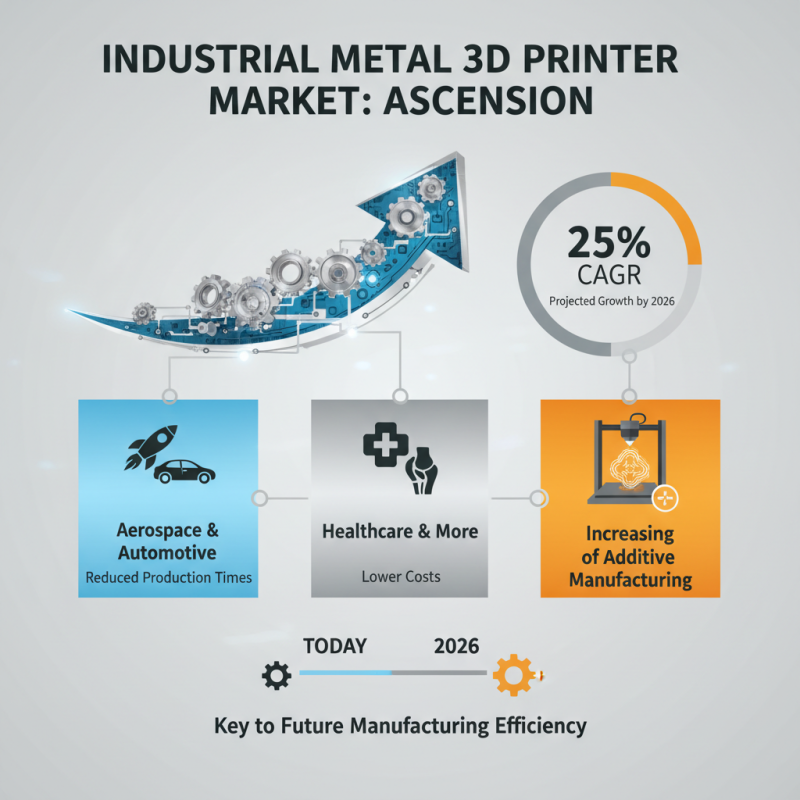
The market for industrial metal 3D printers is on a significant ascent. According to a recent industry report, the sector is projected to grow at a compound annual growth rate (CAGR) of 25% by 2026. This growth signals an increasing adoption of additive manufacturing across various industries, including aerospace, automotive, and healthcare. As companies seek to reduce production times and costs, metal 3D printing offers a solution.
One aspect to consider is the technology's current limitations. Many manufacturers still grapple with material constraints. Some metals may not perform as well under certain conditions. Additionally, not all 3D printers can handle complex geometries efficiently. Reports indicate that while the demand is surging, the available technologies are not yet fully ready for widespread industrial use. This presents an opportunity for research and development efforts.
Research also highlights a skills gap in the workforce. Crafting components using metal 3D printers requires specialized knowledge. A lack of trained personnel could hinder market growth. As we look toward 2026, addressing these challenges will be essential. The evolution of industrial metal 3D printing relies on improvements in technology and workforce training to reach its full potential.
Key Features Driving Performance in 2026 Metal 3D Printing Technologies
In 2026, industrial metal 3D printers are evolving rapidly. Key features are becoming crucial for performance. One major drive is the enhanced precision in printing. This enables the production of complex geometries with intricate details. Industries are increasingly relying on these innovations for critical applications.
Another significant touchpoint is the material adaptability. Printers that can handle various metal alloys are in high demand. This versatility opens doors for customization in production, catering to specific needs. Users should evaluate the compatibility of materials with their projects.
Tips: Consider the latest technologies when investing. Look for printers that prioritize user-friendly interfaces. It’s essential to keep an eye on the software updates, as they can improve your printing experience. Be prepared for learning curves; mastering these machines may take time and effort. Remember that not every print will be perfect. Reflections on failed attempts can lead to better results.
Top Industrial Metal 3D Printers in 2026
This chart represents the market share of different metal 3D printing technologies in 2026, highlighting the key features driving their performance.
Leading Brands and Their Innovations in Industrial Metal 3D Printers
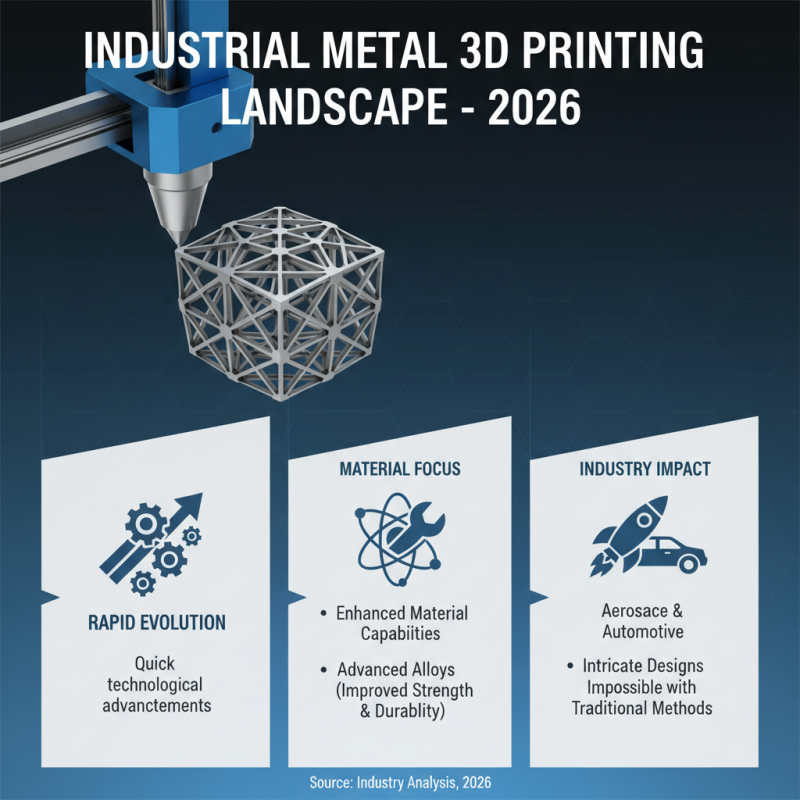
In 2026, the industrial metal 3D printing landscape is evolving rapidly. Leading brands focus on enhanced material capabilities. They are incorporating advanced alloys that improve strength and durability. This development is pivotal for industries like aerospace and automotive. Manufacturers aim to produce components with intricate designs that traditional methods cannot achieve.
Moreover, innovations in software are streamlining the printing process. These tools enable better simulation and optimization of prints. However, challenges remain. Many operators still struggle with the precision of these machines. Calibration can be tedious and often requires expert intervention. The learning curve for new users can be steep, impacting adoption rates.
Nonetheless, the momentum in this sector is undeniable. Brands continuously push boundaries, yet some developments may lack rigorous testing. Quality control is essential, yet not all manufacturers prioritize this aspect. As the market matures, balancing innovation with reliability becomes critical. Users must remain attentive to the evolving capabilities and potential pitfalls in industrial metal 3D printing.
Applications of Industrial Metal 3D Printing Across Key Sectors in 2026
Industrial metal 3D printing is transforming key sectors in 2026. In aerospace, parts that were once heavy and costly are now lightweight and affordable.
Studies indicate that this technology can reduce material waste by up to 70%. This advantage drives significant cost savings and accelerates production cycles.
In the automotive industry, manufacturers leverage metal 3D printing for prototyping and producing complex components. The ability to create intricate geometries leads to improved performance and efficiency.
According to a recent report, the automotive sector's adoption of this technology could boost production rates by 30%. However, challenges remain in material consistency and finishing processes.
Healthcare is another vital area. Custom implants and surgical tools are now achievable through industrial metal 3D printing. The technology allows for tailored solutions that fit individual patient needs.
A survey found that over 40% of medical professionals see the potential to enhance patient outcomes. Yet, regulatory hurdles still present obstacles. Balancing innovation with compliance will be crucial moving forward.
Challenges and Opportunities in the Metal 3D Printing Industry by 2026
The metal 3D printing industry is at a critical juncture as we approach 2026. With rapid technological advancements, many challenges remain. High costs of materials and machines still deter smaller manufacturers from entering this space. Inconsistent quality also poses issues. Not every print meets the desired standards, leading to scrapped operations and wasted resources.
Opportunities abound in addressing these challenges. Research into new alloys could improve performance while reducing costs. Collaborative projects between industries can enhance innovation. Companies can pursue specialized training for technicians to ensure top-quality outputs. Streamlined production processes may help minimize costs and waste.
Tips: Focus on quality control. Implementing strict guidelines can reduce errors. Also, stay informed about new materials. This knowledge can provide a competitive edge. Finally, engage with a community of peers. Sharing experiences often leads to unexpected solutions.
Top Industrial Metal 3D Printers in 2026
| Printer Model |
Build Volume (mm) |
Layer Thickness (µm) |
Max Material Temperature (°C) |
Key Features |
| Model A |
300 x 300 x 400 |
50 |
200 |
High-speed printing, Multi-material capability |
| Model B |
250 x 250 x 300 |
75 |
300 |
Advanced cooling system, User-friendly interface |
| Model C |
400 x 400 x 500 |
20 |
250 |
High precision, Automated material handling |
| Model D |
500 x 500 x 600 |
100 |
350 |
High throughput, Energy-efficient |
| Model E |
350 x 350 x 400 |
60 |
280 |
Compact design, Quick setup |