2026 Top Trends in Metal Printing You Need to Know?
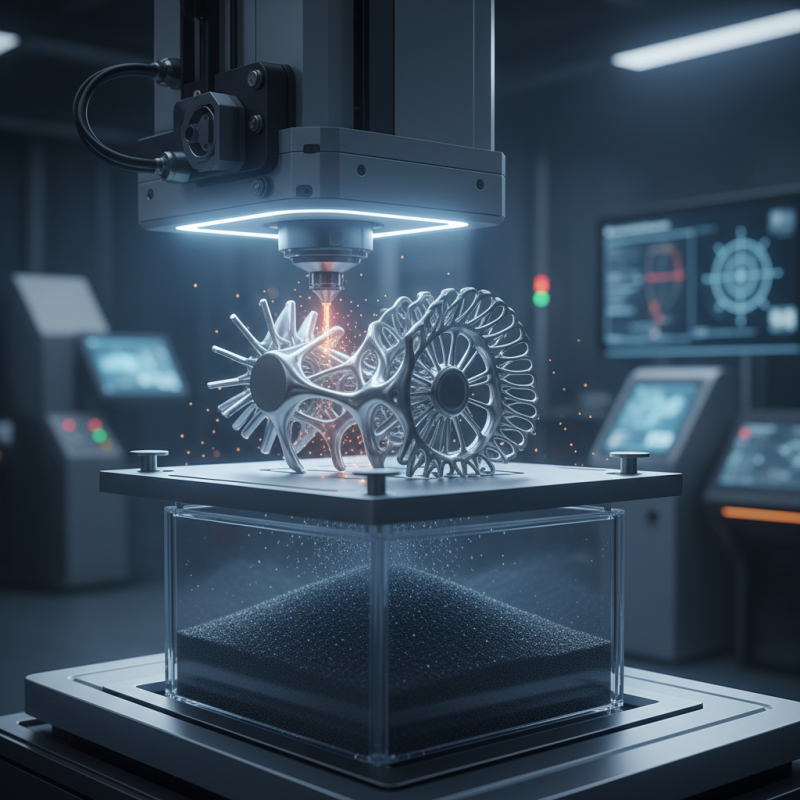
As we approach 2026, the landscape of metal printing is evolving rapidly. This technology has begun to redefine manufacturing and design across various industries. Metal printing offers remarkable precision and customization, making it essential for aerospace, automotive, and medical applications.
New trends are emerging, focusing on sustainability and efficiency. Innovations in metal powders and printing techniques are leading to reduced waste and enhanced production speed. However, challenges in material selection and cost-effectiveness remain significant.
Moreover, the skills gap in the workforce can hinder progress. Educational initiatives are crucial to bridge this gap. As metal printing continues to advance, companies that adapt will thrive, but a cautious approach to its implementation is vital. Understanding these trends will be key in navigating the future of metal printing effectively.
Emerging Technologies Revolutionizing Metal Printing in 2026
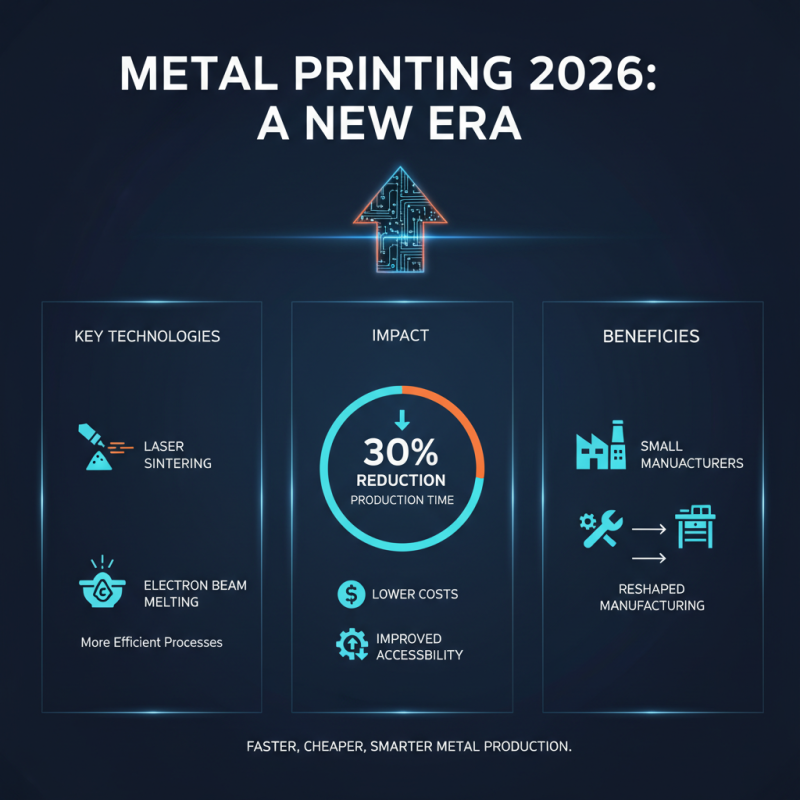
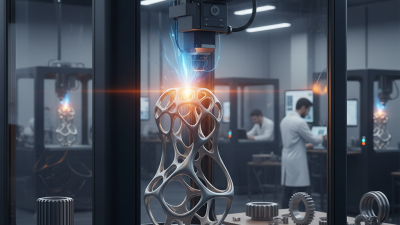
The landscape of metal printing is evolving rapidly. In 2026, several emerging technologies will reshape how industries utilize metal printing. Advances in laser sintering and electron beam melting are becoming more efficient. Research indicates that these processes can reduce production times by up to 30%. This will significantly lower costs and improve accessibility for smaller manufacturers.
Another key trend is the integration of artificial intelligence in metal printing. AI algorithms enhance design capabilities and predict structural integrity. A report from the Metal Additive Manufacturing Association suggests that AI could improve part performance rates by 25%. However, with such innovation often comes challenges in implementation and workforce adaptation. The need for skilled technicians may outpace the current training programs available.
Sustainability is also a pressing concern. Innovative techniques for recycling metal powders are under development. A recent study notes that up to 90% of unused powder could be reused, minimizing waste. Nonetheless, the reality is that many facilities struggle with current recycling processes. As these technologies emerge, the industry must confront the gaps between innovation and practical application.
Key Materials Driving Innovation in Metal 3D Printing
Metal 3D printing is gaining momentum. Key materials are crucial for its evolution. Titanium, aluminum, and stainless steel lead the way. Each material offers distinct advantages, enhancing various applications across industries.
Titanium stands out for its strength-to-weight ratio. It's highly resistant to corrosion. This makes it ideal for aerospace and medical implants. Aluminum is lightweight and cost-effective. It's often chosen for automotive parts. Stainless steel is versatile, used in everything from tools to kitchenware. Each material allows innovations that were not possible before.
Tips: Consider the end-use of printed parts carefully. Choosing the right material impacts costs and durability. Testing different materials can lead to unexpected benefits. Always evaluate how a material performs under real-life conditions. Understanding the properties of each material will refine your process. Take time to reflect on past choices. What worked? What didn’t? This can guide future projects.
2026 Top Trends in Metal Printing You Need to Know
| Trend |
Description |
Key Materials |
Applications |
| High-Performance Alloys |
Emergence of alloys that provide higher strength and heat resistance. |
Titanium, Inconel, Tool Steel |
Aerospace, Automotive, Medical Devices |
| Metal Matrix Composites |
Combination of metal with ceramics for improved wear resistance. |
Aluminum Matrix, Magnesium Matrix |
Industrial Equipment, Aerospace |
| Sustainability Focus |
Increase in recycling and use of sustainable materials in metal printing. |
Recycled Metal Powders |
General Manufacturing |
| Speed and Efficiency |
Advancements in printing technology to reduce build times. |
Laser Powder Bed Fusion Materials |
Rapid Prototyping, Tooling |
| Integration with AI |
Utilizing AI for optimization of printing processes and material usage. |
Various Metal Powders |
Smart Manufacturing |
Sustainability Trends Influencing Metal Printing Practices
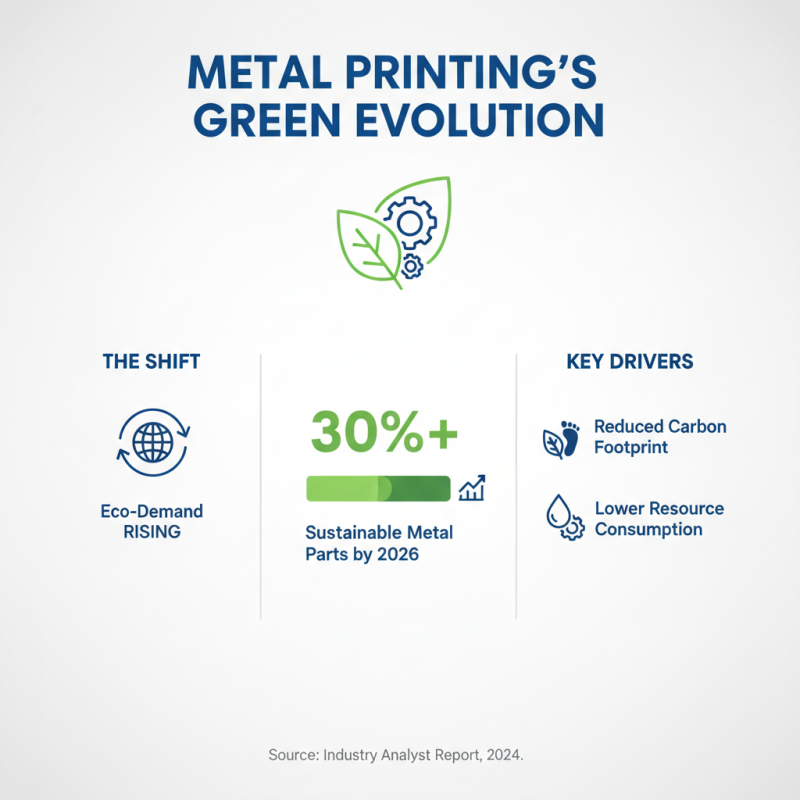
Sustainability is becoming a crucial factor in metal printing practices. According to a recent report by a leading industry analyst, the demand for eco-friendly manufacturing methods is increasing. By 2026, it is estimated that over 30% of metal parts will be produced with sustainable processes. This trend reflects a growing emphasis on reducing carbon footprints and resource consumption.
The use of recycled metals is on the rise. Reports indicate that adopting recycled materials can cut energy costs by up to 20%. However, challenges loom—ensuring quality and consistency remains a concern. Many manufacturers must rethink their sourcing strategies to effectively incorporate these materials. The transformation requires innovation and a shift in mindset throughout the industry.
Consumer expectations are shifting as well. A survey found that 70% of buyers prefer products made from sustainable materials. This demand places pressure on companies to adapt. Metal printing, usually viewed for its precision, must evolve to meet these standards. Inconsistent practices in using eco-friendly methods can undermine trust. Drawing a clear path to sustainability is essential, but it's a complex journey, filled with hurdles and learning opportunities.
Applications of Metal Printing in Various Industries in 2026
Metal printing technology is making waves in various industries as we approach 2026. The aerospace sector heavily utilizes this method for creating lightweight components. These parts reduce fuel consumption and enhance efficiency. Precision is crucial here. Each layer must be flawless to ensure safety and reliability. However, challenges remain. The material properties can be inconsistent, and this causes concerns in critical applications.
The automotive industry is also embracing metal printing. It enables rapid prototyping and custom parts production. Manufacturers can create complex geometries that traditional methods struggle with. Yet, achieving the desired surface finish has proven tricky. Some components require extensive post-processing to meet quality standards. This leads to increased costs and time.
In the medical field, metal printing is transforming implant production. Custom-designed implants improve patient outcomes. Smaller, more complex devices are now possible. Still, the regulatory landscape is complex. Each device must undergo rigorous testing, complicating the development process. As with any new technology, balancing innovation with quality assurance is essential.
Future Challenges and Opportunities in Metal Printing Development
The metal printing industry is evolving rapidly. However, significant challenges remain. Material properties can vary greatly. Ensuring consistency is critical. Variations can lead to defects in the final products. This raises questions about quality control measures currently in place.
Another challenge is the high cost of metal printing technology. It restricts accessibility for smaller manufacturers. Many businesses struggle to justify the investment. While large corporations leverage these technologies, small entities may lag behind. This creates an imbalance in the industry landscape.
Despite these challenges, opportunities are plentiful. Innovators are exploring new materials, such as lighter alloys. These advancements can enhance performance in various applications. Additionally, sustainable practices are becoming a focus. The demand for eco-friendly solutions is on the rise. Companies that adapt may find themselves at the forefront of this transformation. Investing in research and development is essential for long-term success.