
Choosing a dependable CVT Chain / CVT Belt supplier takes more than comparing catalog prices. Product dimensions, materials, heat treatment, and production consistency can all affect service life. A chain or belt that looks suitable on paper may behave differently under repeated acceleration, heat, and load. Details matter.
This guide introduces suppliers serving different markets and explains practical points buyers can verify. These include product range, manufacturing capabilities, quality documentation, testing methods, customization options, and technical support. Ask for clear specifications, sample reports, and application guidance before making a decision. Where possible, compare a supplier’s stated tolerances with the requirements of the transmission design. Request details about traceability, too; a batch number is useful only when records can be retrieved.
There is no single best supplier for every vehicle, climate, or production volume. A large catalog does not automatically mean a suitable match. Supplier information can also change, and public claims may not reveal how parts perform in a specific application. That deserves attention. Use the overview as a starting point, then confirm current capabilities directly with each manufacturer. Careful evaluation helps buyers make a more informed shortlist, even when the final choice still involves trade-offs.
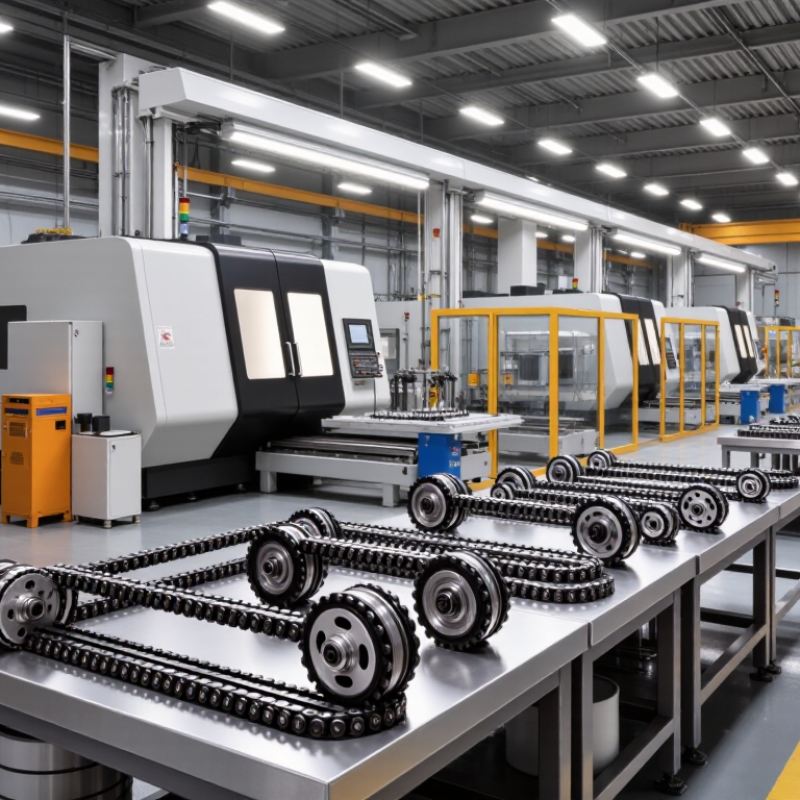
A continuously variable transmission changes its ratio without fixed gear steps. It does this by moving two conical pulley halves closer together or farther apart. As the running radius changes, the output speed changes too. The chain or belt carries power between the pulleys under substantial pressure. That contact needs careful engineering.
A CVT chain uses linked steel plates and pins. It bends around the pulleys, while its contact points transfer force through friction. A metal pushbelt works differently: steel elements sit between flexible steel bands and push against one another as the pulleys turn. Smaller CVTs may use rubber V-belts instead, so “CVT belt” does not describe just one construction. That distinction matters.
Chains and belts can both deliver smooth ratio changes, but neither is universally better. Design, load, pulley geometry, lubrication, and heat all affect durability and efficiency. A chain may suit a compact, high-load layout; a belt’s construction may offer other packaging or operating advantages. These are not rules for every transmission. When assessing suppliers, examine material specifications, dimensional consistency, fatigue testing, and application data—not just advertised strength. Even then, published figures can miss real operating conditions. That deserves a closer look.

Reliable CVT chains and belts start with controlled materials and repeatable forming. A steel push belt contains precisely shaped metal elements held by layered steel bands. A CVT chain uses linked plates and pins, sized for its pulley system. Some belt designs use reinforced elastomer instead of metal, so manufacturing depends on the application. Parts are formed, heat-treated where specified, finished, and assembled. Small burrs matter. They can accelerate wear or disrupt smooth movement.
Tips: Ask suppliers for material specifications, dimensional inspection records, and test conditions—not just a pass label. Check that samples match production parts. Keep operating temperature, load, and lubrication realistic.
Testing combines dimensional checks with fatigue and endurance trials. On a test rig, the transmission cycles through changing ratios under load. Engineers monitor noise, temperature, slippage, and visible damage. Results are useful only when test settings reflect the intended vehicle. A component may pass a short run and still wear poorly over time. That is an uncomfortable limitation. Traceable batch records and independent audits help buyers compare suppliers, but they cannot replace application testing. Even careful inspection can miss a weak point.
Evaluating worldwide CVT component suppliers takes more than comparing prices. Start with the exact application: vehicle type, torque range, operating temperature, and expected service life. The U.S. Environmental Protection Agency’s Automotive Trends Report for model year 2022 records average new-vehicle fuel economy at 26.0 mpg, a record at the time. That context makes efficiency claims worth checking, but it does not prove a belt or chain will perform well in a specific transmission. Ask suppliers for test conditions and measured results, not a single headline figure.
For each candidate, review material specifications, dimensional tolerances, batch traceability, and documented quality controls. Request durability results across repeated ratio changes, heat exposure, and representative loads. Compare like with like: a chain and a push belt may need different test methods. Check whether the supplier can explain failure limits and provide corrective-action records. A polished brochure is not evidence. One uncomfortable gap: public data rarely lets buyers compare suppliers on equal terms, so independent validation may be necessary.
Tips: Ask for sample parts and the corresponding test report. Confirm the report names the test setup, load, temperature, sample size, and acceptance criteria. If any detail is missing, ask why. Then verify lead times and production capacity against your own demand forecast.
Leading CVT chain suppliers serve automakers and transmission manufacturers across Asia, Europe, and North America. They range from large component makers with in-house heat treatment to specialist firms producing precision links and pins. A supplier’s location matters, but process control matters more. Buyers should check pitch consistency, pin hardness, fatigue life, noise, and traceability across production batches.
OICA reported 93.5 million motor vehicles produced worldwide in 2023, a useful indicator of the scale of the automotive supply base. The IEA’s Global EV Outlook 2024 put electric-car sales at nearly 14 million in 2023, or about 18% of global car sales. Those figures do not measure CVT chain demand directly. Not a perfect proxy. Still, they show why suppliers must plan for changing powertrain mixes without assuming CVTs will grow everywhere. During audits, inspect chain samples after endurance testing, not only polished showroom pieces. Ask for documented test conditions and reject vague “high durability” claims. Some procurement teams overlook cold-start noise; that detail can reveal fit or lubrication issues. Supplier comparisons also need care: test methods differ, and published figures may not align. A modest gap in reported fatigue life can be meaningless without matching test loads.
This company-neutral comparison summarizes common CVT component categories and practical supplier-selection criteria. It is not a ranked list of manufacturers; specifications vary by transmission design and application.
| Supplier Product Category | Typical Construction | Common Applications | Key Specifications to Compare | Useful Supplier Validation |
|---|---|---|---|---|
| Metal CVT chain assemblies | Articulated metal links or plates joined by pins; the assembly runs between variable-diameter pulleys. | Automotive and other CVT systems designed for a chain-based torque-transmission element. | Chain dimensions, allowable torque and speed, pulley compatibility, fatigue life, lubrication requirements, and operating-temperature limits. | Request application-specific drawings, material and heat-treatment details, dimensional inspection records, and endurance-test results for the intended transmission. |
| Metal pushbelt assemblies | Typically a stack of metal elements supported and guided by flexible metal rings; torque is transmitted through contact with the pulley faces. | Automotive CVTs engineered for a metal pushbelt system. | Element and ring dimensions, pulley geometry, torque capacity, permitted speed range, lubrication, and service-life requirements. | Confirm compatibility with the exact transmission design and review fatigue, wear, dimensional, and production-quality documentation. |
| Rubber or elastomeric CVT belts | Flexible belt constructions may use elastomer compounds and reinforcing cords; construction depends on the vehicle and drive design. | Scooters, powersports vehicles, and other belt-driven CVT applications. | Width, length, profile, cord construction, compound, temperature range, and compatibility with the specified sheaves. | Check the application fitment data, belt dimensional tolerances, material specifications, and durability testing under relevant load and temperature conditions. |
| Custom or application-specific CVT transmission components | Components engineered around a particular pulley, transmission, or vehicle specification; may include chain or belt assemblies. | Original-equipment programs, replacement parts, and specialized mobility or industrial projects. | Design interface, duty cycle, torque and speed envelope, environmental conditions, traceability, and production capacity. | Assess engineering support, sample approval process, change control, quality-system documentation, and ongoing batch consistency. |
| Replacement and service-market components | Parts supplied to match a specified transmission or vehicle application; designs and material specifications differ by product. | Vehicle maintenance and repair where the correct CVT component can be identified. | Exact application fit, part dimensions, installation requirements, warranty terms, and service documentation. | Verify fitment against the transmission or vehicle reference, request inspection records, and confirm packaging and traceability procedures. |
Selection note: CVT chains, metal pushbelts, and elastomeric belts are not interchangeable. Confirm the transmission design and its specified component before comparing quotations or performance claims.
CVT belt suppliers serve vehicle and equipment makers across many regions. Their products may look similar, but construction can differ. A belt’s cord material, rubber compound, tooth shape, and width affect how it performs. Small details matter. Buyers should check whether a supplier can match the belt to the pulley geometry and operating conditions, rather than relying on a general catalogue description.
Useful supplier evidence includes dimensional inspection records, batch traceability, and test data for heat, flexing, and load. Ask how samples are checked and what happens when a production measurement falls outside tolerance. A supplier that explains its process clearly is easier to assess. Still, a polished datasheet is not proof of consistent production. Requesting samples from more than one batch can reveal variations that a single sample may miss.
Regional suppliers may offer shorter shipping routes, while overseas manufacturers can provide broader production capacity. Compare both options using the same criteria: material specifications, minimum order quantities, lead times, packaging, and technical support. Confirm that the belt has been evaluated under conditions close to its intended use, including temperature and exposure to oils where relevant. No supplier choice is perfect. Communication gaps and changing delivery schedules deserve attention, even when the quoted price looks attractive.

© Copyrights Levil Technology Corp 2022