Why Choose a Smart Door Lock Solution for Your Business?
Choosing the right Smart door lock solution can reshape how a business protects people, rooms, and valuable equipment. In practice, the change is visible at reception, where staff can issue access permissions without replacing physical keys. Managers can review entry records, adjust credentials, and respond quickly when an employee changes roles. That control matters in offices, hotels, warehouses, healthcare facilities, and shared workspaces.
Security is only one part of the decision. A reliable system should support strong authentication, encrypted communication, clear user permissions, and dependable battery alerts. It should also connect smoothly with existing access control, property management, or workforce systems. Small details matter. A lock that fails during a busy morning creates more than inconvenience. It can delay deliveries, frustrate employees, and weaken confidence in the technology.
No system is perfect. A rushed rollout can create confusion. Weak installation practices can reduce protection. Battery maintenance may be overlooked. These risks deserve honest attention before purchase. Experienced providers should explain offline access, emergency procedures, data handling, software updates, and support response times. Independent testing, documented product specifications, and practical demonstrations can strengthen trust. Staff feedback is valuable too, because daily users often notice problems that technical teams miss.
The strongest choice is not always the most advanced lock. It is the solution that fits operational needs, security policies, building conditions, and future growth. With careful planning and regular review, smart access can become a dependable business process rather than another complicated device.
What Is a Smart Door Lock Solution for Business?
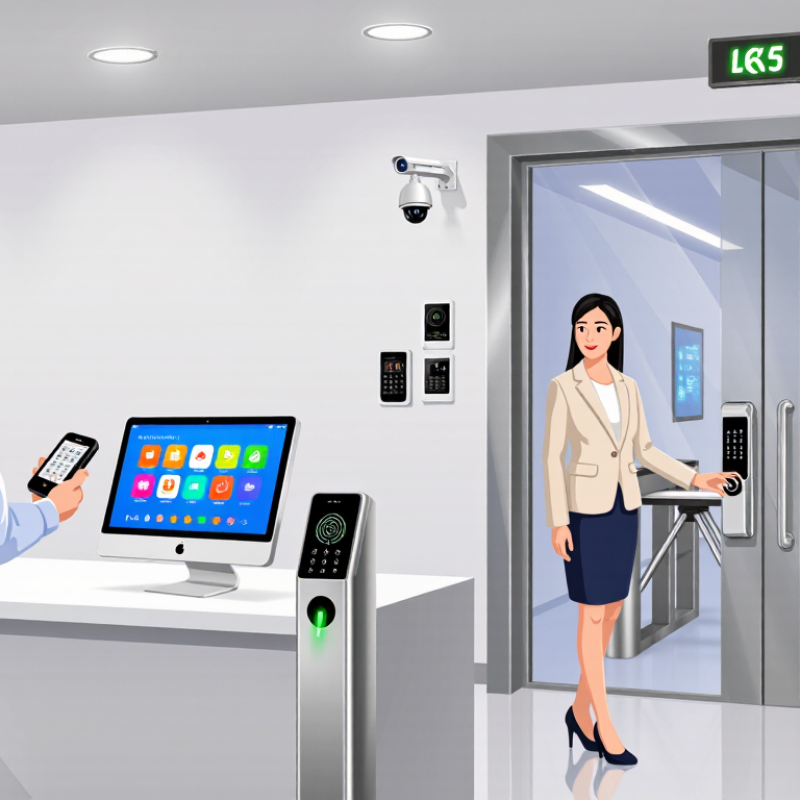
A smart door lock solution for business is an integrated access system, not simply a keypad on a door. It combines electronic locks, digital credentials, remote administration, and event records. Employees may use mobile passes, PINs, cards, or biometrics, depending on workplace needs. Managers can assign access by person, room, schedule, or role. They can also revoke permissions without collecting physical keys.
The value becomes clearer during daily operations. A coworking office can give contractors access only between 9 a.m. and 5 p.m. A warehouse manager can review who opened a storage room at 11:42 p.m. The 2024 Data Breach Investigations Report found that human involvement appeared in 68% of breaches. Better access controls cannot solve every security problem, but they can reduce careless sharing and improve accountability.
Market evidence also shows growing demand. A 2024 MarketsandMarkets report valued the global smart lock market at about 2.3 billion dollars and forecast strong growth through 2029. However, growth does not guarantee a good deployment. Weak passwords, poor device maintenance, and unclear emergency procedures still create gaps. The system needs encryption, reliable identity management, audit logs, and offline access planning. It should also connect with existing security workflows. Sometimes, a simpler setup is safer.
How Smart Door Locks Improve Workplace Access Control
Smart door locks improve workplace access control by replacing shared keys and fixed badges with managed, time-limited credentials. A facilities manager can grant a contractor access to one storage room, from 9:00 to 11:00, then remove it automatically. This creates a clearer access trail. The 2024 Data Breach Investigations Report found that human involvement appeared in 68% of breaches, showing why forgotten keys and reused credentials deserve attention.
Modern systems can connect with employee directories, visitor platforms, and security dashboards. Access changes can follow real workplace events, such as onboarding, shift changes, or termination. Administrators can review who entered, when, and through which door. The 2024 Cost of a Data Breach Report reported an average breach cost above 4.8 million dollars, reinforcing the value of tighter identity controls. A smart lock cannot prevent every incident, though. Weak passwords, poor network setup, and careless permissions still create openings.
Good deployment starts with practical controls. Use multi-factor authentication for administrators, maintain emergency entry procedures, and review permissions every quarter. Battery alerts and offline operation matter when a busy office cannot pause. Small offices may also underestimate training. Employees need clear instructions, not just a new app. A door that unlocks quickly is useful; a system that records reliable decisions is better. Still, access logs can contain sensitive information, so retention limits and role-based viewing should be planned before installation.
Key Features to Evaluate Before Choosing a Business Lock
Choosing a business smart lock is less about a sleek keypad and more about controlled access. Evaluate credential types, audit trails, offline operation, and administrator roles. The 2024 Data Breach Investigations Report found human involvement in 68% of breaches. That figure makes shared PINs a poor default. Prefer individual credentials, fast revocation, and alerts for unusual entry times. Test the reader with wet gloves, poor lighting, and a phone battery at 5%. Small failures matter. No test is perfect.
Check the security architecture behind the door. Ask how data is encrypted in transit and at rest, how firmware is updated, and whether logs can be exported for investigations. The 2024 Cost of a Data Breach Report placed the global average breach cost at $4.88 million. A lock cannot prevent every incident, but weak administration can widen one. Require multi-factor administration, least-privilege permissions, backup entry procedures, and recovery steps after network loss. NIST digital identity guidance supports phishing-resistant authentication for higher-risk access. Use that standard for management accounts, not just ordinary users. Review integration with access control, visitor management, and fire systems before signing. Compatibility is often promised too casually. Ask for test evidence, retention periods, service response targets, and an end-of-life plan. Logs matter.
Security, Convenience, and Cost Benefits for Organizations
A smart door lock solution strengthens security by replacing uncontrolled keys with identity-based access. Employees can enter with verified credentials, while administrators can remove access immediately after a resignation. The 2024 Data Breach Investigations Report found that the human element appeared in 68% of breaches. That figure concerns digital security, not doors, but it highlights a shared weakness: forgotten or misused permissions. A detailed access log also shows who entered, when, and which area they visited.
Convenience becomes visible during ordinary moments. A contractor arrives at 7 a.m.; facilities staff issue a time-limited code remotely. A manager loses a phone; access can be suspended without changing every lock. Staff no longer carry heavy key rings. They spend less time answering access requests. However, convenience depends on reliable networks, clear procedures, and backup entry methods. The first installation may be frustrating. Batteries need checking, and some older doors require hardware upgrades.
Cost benefits come from reducing rekeying, emergency callouts, physical key replacement, and manual administration. The 2024 Cost of a Data Breach Report placed the global average breach cost at 4.88 million dollars. A smart lock cannot prevent every breach, and that number is not a door-lock saving. Still, stronger access control can reduce exposure when credentials are shared or left active. Organizations should compare installation, maintenance, training, and replacement costs over several years. Cheap systems can become expensive when support is poor.
How to Plan and Implement a Smart Lock System
Why Choose a Smart Door Lock Solution for Your Business?
How to Plan and Implement a Smart Lock System
A smart lock project should begin with a door inventory, not a device catalogue. Record each entrance, user group, operating hours, power source, and network condition. Map every door. Include emergency exits and shared areas.
Define access rules before installation. Managers may need time-based permissions, while contractors need temporary credentials. Keep permissions narrow and review them monthly. Verizon’s 2024 Data Breach Investigations Report found that the human element appeared in 68% of breaches. Training, multi-factor authentication, and prompt access removal therefore matter as much as hardware. The system should also create reliable entry logs without collecting unnecessary personal data.
Run a small pilot in two or three different locations. Test mobile access, offline operation, battery alerts, audit records, and mechanical override procedures. Test the fallback. A perfect rollout is unlikely. Weak Wi-Fi, forgotten credentials, or unclear ownership can expose problems quickly. Assign one security owner and one facilities owner. Measure failed entries, help-desk requests, battery replacements, and time needed to remove access. IBM’s 2024 Cost of a Data Breach Report placed the global average breach cost at 4.88 million dollars, showing why connected access needs cybersecurity planning. Encrypt communications, update firmware through controlled processes, and document incident response steps before expanding. Our assumptions may still be wrong, so review pilot evidence with staff who use the doors daily.