
French Doors Patio Doors offer a familiar, balanced look and a wide opening to a garden, deck, or balcony. Their paired glass panels can bring daylight into a living room and make outdoor access feel more connected. But style is only part of the decision. A good choice depends on room layout, local weather, privacy, and how often the doors will be used.
Swing direction matters. Each panel needs clear floor space, so a dining chair, rug, or narrow walkway can affect everyday comfort. In a compact room, that detail is easy to miss. Compare frame materials, glazing options, weather seals, and locking hardware, then check the manufacturer’s performance information for your climate. Good installation matters, too; poorly fitted doors may leak air or water, regardless of their appearance. A qualified installer can verify the opening, threshold, and drainage before ordering.
There are trade-offs. French doors can provide an inviting, broad opening, yet sliding doors may suit tight spaces better. Glass also affects heat gain, views, and privacy, so consider the door’s orientation and suitable window coverings. This guide explores why homeowners choose French doors for patio access, along with the practical details worth checking before purchase. The right option is not always the most decorative one. Measure twice. Ask questions. Revisit your assumptions; door choices look simple until furniture, weather, and daily habits enter the picture.
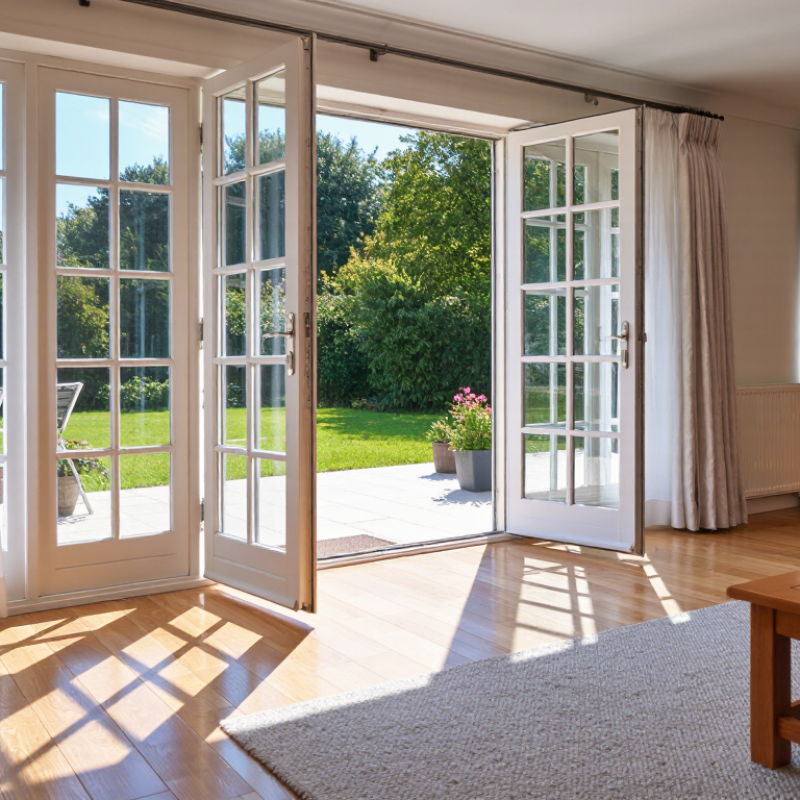
A French patio door is defined by its paired panels, broad glass areas, and hinged operation. One or both panels may open, depending on the design. Unlike a sliding patio door, the panels swing on hinges, so the room needs clear space for their movement. The familiar image is practical: two glazed leaves opening toward a garden, with a central meeting point and narrow frames around the glass. Some designs include fixed sidelights, but those are separate elements, not what makes the door French.
Performance depends on the whole assembly, not just the glass. Look for a National Fenestration Rating Council label showing the product’s U-factor and solar heat gain coefficient; these ratings help compare insulation and solar performance. The U.S. Department of Energy estimates that heat gain and loss through windows account for 25–30 percent of residential heating and cooling energy use. That figure is not specific to patio doors, so it should not be treated as a French-door savings estimate. Still, it explains why glazing and weather seals deserve attention. Check the threshold, too. A beautiful pair that admits a draft is less charming in January. French doors can also take more floor space than sliders, a detail that is easy to overlook when planning furniture.

French doors can turn a patio entrance into a more inviting connection between home and garden. Their glazed panels bring daylight into nearby rooms, while opening both doors creates a generous passage for fresh air and easy movement. On a warm evening, the kitchen can feel less separate from the outdoor table. It feels open.
The effect depends on the room and the patio. Clear glass gives an uninterrupted view, but it can also increase glare and heat near sunny windows. Curtains, exterior shade, or suitable glazing can help manage this. French doors also need clear floor space for their swing, which may be awkward in a narrow room. Sliding furniture around can reveal a problem that looked minor on a floor plan. Weather seals and a secure, properly fitted frame matter too; a beautiful view is less appealing if drafts follow.
Tips: Check which way the doors will open, and measure the furniture nearby. Consider screens if you want airflow without inviting insects inside. Keep the threshold comfortable to cross, especially if children or older adults use the patio often.
| Feature | Hinged French Patio Doors | Sliding Patio Doors |
|---|---|---|
| How they open | One or both door panels swing on hinges. The opening direction depends on the door design and installation. | One panel typically slides horizontally along a track past a fixed panel. |
| Indoor–outdoor connection | When both panels are open, the pair can create a broad, unobstructed passage that suits gatherings and moving larger items. | Provides a convenient connection while the panels remain within the frame; the fixed panel limits the opening area. |
| Space to operate | Requires clear floor space in the direction each panel swings. Furniture, walkways, and outdoor steps may affect placement. | Does not need swing clearance, which can be useful where indoor or patio space is limited. |
| Ventilation | Opening one or both panels can provide a large airflow path, subject to the door configuration and conditions outside. | Allows airflow through the portion of the frame opened by the sliding panel. |
| Threshold and access | Threshold height and the meeting point between panels vary by product. Check the specified details for accessibility and weather protection. | The track forms part of the threshold; track profile and height vary. Check accessibility requirements and drainage details. |
| Everyday considerations | Hinges, handles, locks, and seals should be inspected and maintained according to the manufacturer’s care instructions. | Tracks should be kept clear of dirt and debris, and rollers and locks should be maintained as directed. |
| A good fit when… | You want a classic paired-door appearance and a wide passage, and have enough space for the panels to swing. | You want a patio door that opens without swinging into the room or onto the patio. |
Note: Opening width, glazing, threshold design, energy performance, and security features vary by product and installation. Compare the specifications for the doors being considered.
French doors bring daylight into a patio-facing room through broad glass panels, making the connection to the garden feel immediate. Their balanced frames suit both traditional and contemporary homes. When both doors open, the wide passage helps people carry chairs or serving trays outside. A single door can still provide everyday access.
Small detail, real difference.
The design works best when the doors fit the room. Check the swing area before choosing an inward- or outward-opening model; a nearby table or narrow patio can make either option awkward. Clear glass offers an open view, while divided panes add visual structure but need more cleaning.
Quality weather seals and well-fitted locks matter for comfort and security. Threshold height matters, too, especially for children, older adults, or anyone using wheels.
French doors are not automatically the easiest choice: wind can catch a wide open panel, and glass needs regular care.
Measure carefully. A practical layout may look less dramatic, but it often feels better to use every day.
French patio doors are available in several frame materials, each suited to different conditions. Wood offers a warm, traditional look and can be painted or stained, but it needs regular upkeep, especially in damp or sunny locations. Fiberglass resists moisture and temperature changes, though its finish and cost vary. Vinyl is often low-maintenance, while aluminum has a slim profile that allows larger glass areas. Each has trade-offs; no material is perfect.
Configurations affect how the doors work in a real room. A pair of hinged panels can open inward or outward, depending on furniture placement, patio space, and local wind exposure. Check the swing. Some models include one active panel and one fixed panel, while others let both panels open. Sidelights can brighten a narrow entry, and divided-light grilles change the view and cleaning routine. Threshold height, drainage, and weather seals deserve attention too. Small details matter. Measure the opening carefully, and consider whether the path outside stays clear after rain. I would not choose by appearance alone; the best fit depends on the home, climate, and everyday use.
French doors can bring daylight and a wide opening to a patio, but the right choice depends on your room. Check whether the doors should swing inward or outward, and measure the clear space around them. Measure twice. A pair of open panels can meet a table, block a walkway, or catch strong wind. Note where people naturally enter and whether the opening will be used daily.
Glazing, frame material, and installation details matter too. Choose glass suited to your climate and privacy needs; low-emissivity glazing can help limit heat transfer. Light matters. Wood offers a classic look but needs regular care, while other frame materials may require less maintenance. Compare insulation ratings and ask how the frame handles local weather. The sill deserves attention: a low threshold can ease access, but it must also manage rainwater. It is easy to focus on the doors’ appearance and overlook this detail. Ask a qualified installer to check the opening, flashing, and hardware before ordering. A beautiful door is less useful if it sticks after a season of temperature changes.

© Copyrights Levil Technology Corp 2022