7 Best CNC Machine Printing Technologies for Global Buyers?

Global manufacturing is changing as buyers seek faster, cleaner, and more flexible production systems. The phrase “cnc machine printing” often describes hybrid equipment that combines computer numerical control machining with additive, marking, or material-deposition processes. However, the market does not use this term consistently. That creates confusion.

The Wohlers Report 2024 valued the global additive manufacturing industry at approximately $20.0 billion in 2023. Its findings show stronger adoption of metal printing, production tooling, and industrial applications. Meanwhile, the International Federation of Robotics reported 541,302 industrial robot installations worldwide in 2023. These figures suggest a clear direction: factories are investing in automation, digital control, and more adaptable production cells.

This guide examines seven CNC machine printing technologies for global buyers. It considers material compatibility, dimensional accuracy, build volume, spindle performance, software integration, maintenance, and total ownership cost. A machine may look impressive in a showroom, yet perform poorly with difficult alloys or unstable power supplies. That detail matters.

Regional service capacity matters too. Spare-part availability can determine whether production stops for two days or two weeks. Buyers should also review ISO 9001 certification, safety documentation, operator training, and local compliance requirements. These checks support reliable purchasing decisions across different markets.

The category remains imperfectly defined. Some systems combine additive and subtractive operations, while others only add printing functions to conventional CNC platforms. Therefore, specifications require careful verification. This article offers a practical comparison, not a promise that one technology fits every factory. Real-world trials still matter.
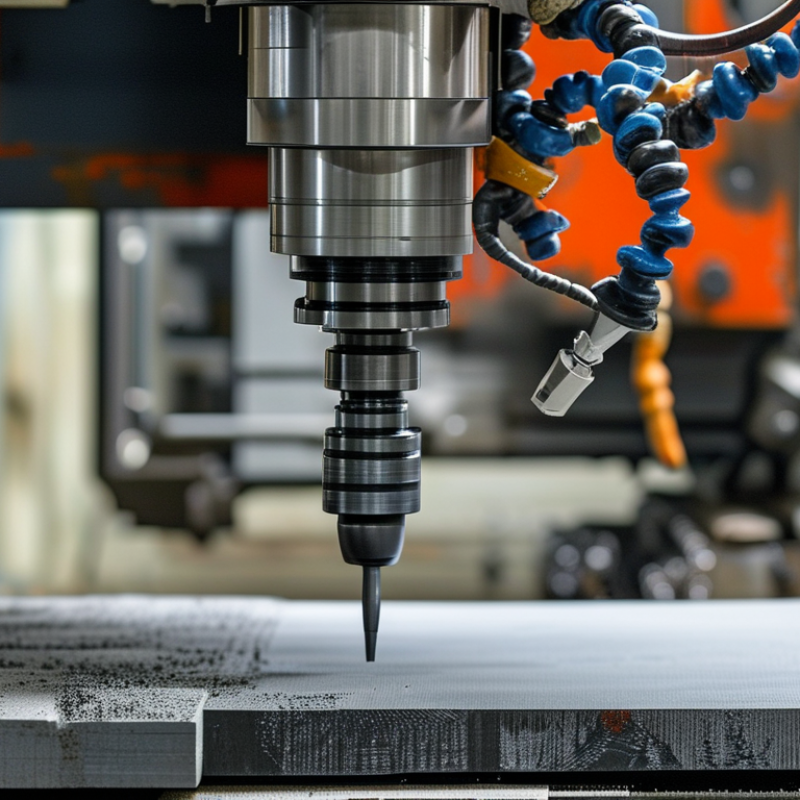
7 Best CNC Machine Printing Technologies for Global Buyers?

What CNC Machine Printing Technology Means and How It Works

7 Best CNC Machine Printing Technologies for Global Buyers?

What CNC Machine Printing Technology Means and How It Works

CNC machine printing usually describes computer-controlled production, not ink printing. A digital CAD model becomes toolpath instructions through CAM software. The controller then moves cutting, drilling, turning, or forming tools along programmed axes. Some systems remove material from a metal block. Others add material layer by layer. Hybrid machines can perform both operations.

The seven common technology groups include milling, turning, routing, laser cutting, plasma cutting, waterjet cutting, additive manufacturing, and hybrid processing. Each method suits different materials, shapes, and tolerances. Milling handles detailed components. Turning produces round parts. Waterjet cutting limits heat distortion. Additive systems reduce waste but may need surface finishing. In practice, the best choice depends on production volume, material hardness, accuracy, and maintenance support.

Tips: Confirm the machine’s working envelope, axis travel, spindle speed, and software compatibility. Ask for sample tolerances on your actual material. Check training, spare-part access, electrical requirements, and safety documentation. Do not trust impressive speed figures alone. Real results depend on fixturing, operator skill, tool condition, and inspection methods. A beautifully printed sample may hide difficult setup work. I have found that buyers sometimes overlook chip removal and calibration. That mistake becomes expensive later. Trial production remains wise, even when specifications look convincing.
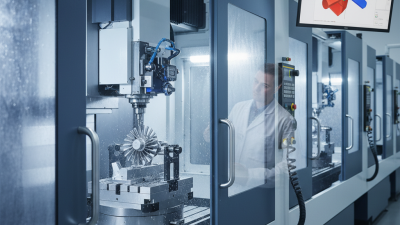
Seven Leading CNC Printing Technologies for Industrial Applications

Industrial buyers often use “CNC printing” to describe computer-controlled material processing. Seven leading technologies serve different production needs. CNC milling removes material with rotating cutters, creating precise slots, faces, and complex cavities. CNC turning spins a workpiece against a fixed tool, making shafts, bushings, and threaded parts. CNC routing handles wood, plastics, composites, and lightweight metals efficiently.

Laser cutting produces clean profiles in sheet metal with limited mechanical contact. Plasma cutting works faster on thicker conductive steel, although its edges may need finishing. Waterjet cutting uses high-pressure water and abrasive particles to cut stone, glass, rubber, and heat-sensitive metals. Electrical discharge machining shapes hardened conductive materials through controlled electrical sparks. It can reach narrow features, but the process is usually slower.

In practical sourcing, material, tolerance, batch size, and surface requirements should guide the choice. A milled aluminum housing may need inspection points near mounting holes. A waterjet part may show a slight taper at its lower edge. That detail matters. Ask suppliers about calibration records, operator experience, inspection equipment, and dimensional reports. Global buyers should also verify electrical standards, packaging strength, delivery documentation, and local compliance requirements. No method wins every project. Even experienced engineers can underestimate fixturing time, tool wear, or post-processing costs. A small prototype run can expose these weaknesses before full production.

How CNC Printing Technologies Compare in Quality, Speed, and Cost

7 Best CNC Machine Printing Technologies for Global Buyers

How CNC Printing Technologies Compare in Quality, Speed, and Cost

Global buyers should compare seven workflows: CNC milling, CNC turning, five-axis machining, FDM, SLA, SLS, and metal powder-bed fusion. CNC milling and turning usually deliver the best dimensional accuracy and surface finish. Five-axis machining reduces repositioning marks on complex parts. However, tooling costs can rise sharply for small batches.

Additive methods often reduce setup time and material waste. FDM is economical for prototypes, while SLA produces finer details and smoother surfaces. SLS creates strong, nestable parts without support structures. Metal powder-bed fusion supports complex metal geometries, but inspection and post-processing remain expensive. The 2024 Wohlers Report valued the global additive manufacturing industry at 20.035 billion US dollars in 2023, with 13.5% annual growth. That growth does not mean every printed part is cheaper.

Tips: Request the same test geometry from each supplier. Check tolerance, Ra surface roughness, lead time, and post-processing fees. Ask for inspection records, not only attractive samples. ISO 9001 certification can support process reliability, but it does not guarantee perfect parts. A common purchasing mistake is comparing hourly rates alone. Cycle time, scrap, tooling, finishing, and shipping can change the final cost. For production volumes above several hundred units, CNC often becomes more competitive. For intricate, low-volume designs, printing may win. The boundary is not fixed.

Choosing the Right CNC Printing Method for Different Materials

7 Best CNC Machine Printing Technologies for Global Buyers?

Choosing the Right CNC Printing Method for Different Materials

Material should guide the machine choice, not the other way around. Aluminum usually suits three-axis milling, especially for brackets, housings, and light structural parts. Sharp carbide tools, steady coolant, and proper chip removal can produce clean edges. Thin walls still need careful support. They may vibrate more than expected.

Steel demands greater cutting force and slower tool movement. A rigid four- or five-axis machine can reduce repeated setups and improve alignment. For round shafts, CNC turning is often more efficient than milling. Stainless steel needs controlled heat management because it can harden during cutting. That mistake is costly.

Plastics such as acetal and nylon need low-friction tools and moderate cutting speeds. Excessive heat may soften edges or distort narrow slots. Wood and composite sheets are better matched with CNC routing, using dust extraction and suitable flutes. Titanium benefits from a highly rigid five-axis system, conservative feeds, and continuous cooling. Hybrid CNC printing methods can add material before final machining, but bonding quality requires testing.

Engineers should confirm hardness, stock size, tolerance, surface finish, and production volume before choosing equipment. A ±0.02 mm tolerance may be realistic for aluminum, yet difficult for a large plastic panel. Supplier drawings, trial parts, and inspection reports reveal more than attractive machine specifications. I have seen material assumptions fail when moisture, heat, or tool wear was ignored. That deserves another check.

7 Best CNC Machine Printing Technologies for Global Buyers? - Choosing the Right CNC Printing Method for Different Materials

Technology Primary Process Best-Suited Materials Typical Dimensional Accuracy Typical Surface Finish Strengths Limitations Recommended Applications Relative Cost
3-Axis CNC Milling Rotating cutting tools remove material along X, Y, and Z axes. Aluminum, brass, copper, mild steel, stainless steel, titanium, engineering plastics, wood. Approximately ±0.025–0.100 mm, depending on machine, tooling, material, and part size. About Ra 0.8–3.2 μm after suitable finishing passes. Versatile, widely available, suitable for prototypes and production parts. Requires workholding and may need repositioning for complex undercuts. Machine housings, brackets, fixtures, molds, precision mechanical components. Medium
4-Axis and 5-Axis CNC Milling Multi-axis cutting positions the tool or workpiece at several angles in one setup. Aluminum alloys, titanium, stainless steel, tool steel, nickel alloys, plastics, composites. Approximately ±0.010–0.050 mm for suitable parts and controlled processes. About Ra 0.4–1.6 μm with appropriate tooling and finishing strategy. Produces complex contours, reduces setups, and improves positional consistency. Higher programming, fixturing, inspection, and machine-hour requirements. Aerospace structures, impellers, medical components, complex molds, turbine parts. High
CNC Turning and Mill-Turning The workpiece rotates while tools perform external, internal, facing, threading, or milling operations. Steel, stainless steel, aluminum, brass, copper, titanium, plastics, nickel-based alloys. Approximately ±0.010–0.050 mm for standard precision work. About Ra 0.4–3.2 μm, depending on feed rate, insert geometry, and material. Highly productive for round, cylindrical, threaded, and concentric parts. Less suitable for large flat parts or shapes without rotational symmetry. Shafts, pins, bushings, nozzles, couplings, fittings, threaded components. Low to Medium
CNC Routing A high-speed spindle cuts sheet or slab materials using programmed toolpaths. Wood, plywood, MDF, plastics, acrylic, foam, aluminum sheet, laminates, composites. Approximately ±0.050–0.250 mm, depending on machine size and material stability. About Ra 1.6–6.3 μm on suitable plastics and metals; wood varies with grain and tooling. Fast sheet processing, large working areas, and comparatively low operating cost. Lower rigidity than heavy-duty mills; limited performance on hardened metals. Signage, furniture panels, display parts, plastic prototypes, architectural models. Low to Medium
Wire Electrical Discharge Machining (Wire EDM) A continuously moving electrically charged wire erodes conductive material in a dielectric fluid. Hardened tool steel, carbide, stainless steel, titanium, copper, and other electrically conductive materials. Approximately ±0.0025–0.010 mm with finishing cuts and stable conditions. About Ra 0.2–1.6 μm, depending on the number of skim cuts. Cuts hardened materials and intricate profiles with minimal mechanical cutting force. Only conductive materials; generally slower than conventional milling for bulk removal. Punch and die components, precision slots, medical parts, aerospace profiles. High
CNC Sinker EDM A shaped electrode creates controlled electrical discharges to form cavities in conductive workpieces. Hardened tool steel, carbide, stainless steel, copper alloys, and conductive superalloys. Approximately ±0.005–0.025 mm, depending on cavity geometry and finishing stages. About Ra 0.2–3.2 μm, controlled by discharge energy and finishing passes. Forms deep cavities, sharp internal details, ribs, and complex mold features. Needs an electrode; electrode design and wear can increase lead time and cost. Injection molds, die-casting dies, deep cavities, fine ribs, and complex internal geometry. High
CNC Laser Cutting A focused laser beam melts, burns, or vaporizes material along programmed contours. Carbon steel, stainless steel, aluminum, brass, copper, acrylic, wood, cardboard, and selected composites. Approximately ±0.050–0.200 mm, influenced by thickness, heat input, and material reflectivity. Cut edges are typically smooth; thin metals may achieve roughly Ra 3.2–12.5 μm. Fast sheet cutting, narrow kerf, low mechanical force, and efficient nesting of flat parts. Heat-affected zones, edge taper, thickness limits, and reflection concerns with some metals. Sheet-metal panels, brackets, enclosures, decorative parts, gaskets, and prototypes. Medium

Note: Accuracy, surface finish, material thickness, and cost are typical industry ranges. Actual results depend on machine rigidity, tooling or electrode selection, programming, workholding, operator skill, inspection method, and production volume.

Key Buying Factors for Global CNC Machine Customers

7 Best CNC Machine Printing Technologies for Global Buyers?

Key Buying Factors for Global CNC Machine Customers

Global buyers should compare seven options: three-axis milling, five-axis milling, CNC turning, mill-turn systems, wire EDM, laser processing, and hybrid additive-subtractive machines. Each suits different materials, tolerances, and production volumes. Five-axis equipment reduces repositioning, but it usually demands stronger programming skills. Hybrid systems save setup time, yet maintenance can become complicated. The best choice is not always the most advanced one.

Deloitte’s 2024 Smart Manufacturing and Operations Survey reports that 92% of manufacturers view smart manufacturing as a major competitiveness driver. This supports buying machines with monitoring, data connectivity, and predictive maintenance. Still, connectivity alone does not guarantee value. Check spindle power, repeatability, thermal stability, tool capacity, and controller compatibility. ISO 230-2 testing can help verify positioning accuracy. Ask for test cuts using your actual material. A glossy brochure is not evidence. Freight, installation, operator training, spare parts, and local technical support also affect total cost. Many buyers underestimate these expenses.

Tips: Request a three-year ownership estimate. Confirm voltage, safety certification, software language, and export documentation before payment. Review real customer references in similar climates. One overlooked detail matters: humidity can affect storage, electrical systems, and measurement accuracy. Consider automation only when your workflow is stable. The International Federation of Robotics recorded 541,302 industrial robot installations in 2023, showing strong automation demand. However, automation can expose weak processes rather than fix them. That is an uncomfortable, but useful, buying lesson.

7 Best CNC Machine Printing Technologies for Global Buyers

Key Buying Factors for Global CNC Machine Customers

The chart compares representative typical numbers of controlled axes across major CNC machine technologies. More axes can support complex geometries and reduce repositioning, while buyers should also evaluate accuracy, material compatibility, work envelope, cycle time, automation, service support, energy use, and total cost of ownership. Exact specifications vary by machine configuration and application.