What Is the Best 4 Axis CNC Machine in 2026?

Choosing the best 4 axis cnc machine in 2026 requires more than comparing spindle speed and advertised accuracy. A reliable evaluation must connect specifications with real workshop demands, including material type, batch size, operator skill, and available floor space. A machine that cuts aluminum smoothly may struggle with deep pockets in hardwood or stainless steel. Small differences matter.

This guide examines machine architecture, rotary-axis performance, controller usability, work envelope, rigidity, and service support. It considers practical details, such as whether a vise leaves enough clearance for indexed machining and whether the coolant system handles long production cycles. Independent test reports, manufacturer documentation, warranty terms, and user feedback should support each major claim. Marketing language alone is not enough.

No machine wins every test. A compact model may offer excellent precision but limit fixture options. A powerful industrial unit may deliver stronger cuts but demand costly installation and experienced programming. That trade-off is easy to underestimate. I also acknowledge that published accuracy figures can change under temperature, tooling, and maintenance conditions. Real results depend on setup quality.

The following discussion compares leading options through measurable performance and everyday usability. It aims to help manufacturers, educators, and serious hobbyists choose with confidence. The final choice should reflect verified evidence, not a dramatic specification sheet.
What Is the Best 4 Axis CNC Machine in 2026?

What Defines a 4-Axis CNC Machine?

What Is the Best 4 Axis CNC Machine in 2026?

What Defines a 4-Axis CNC Machine?

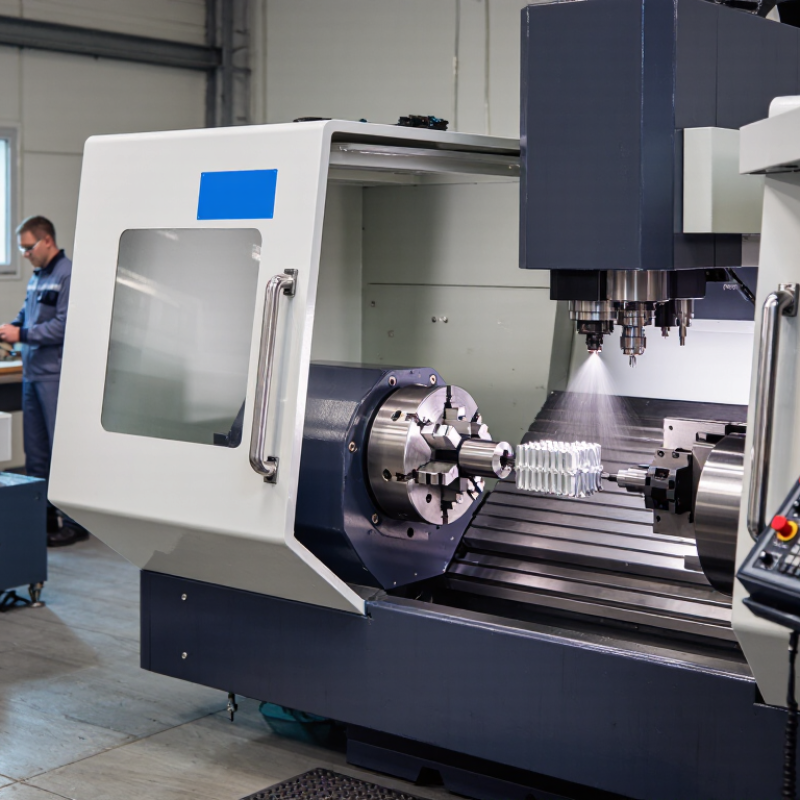
A 4-axis CNC machine controls three linear movements and one rotary movement. The linear axes are X, Y, and Z. The fourth axis is usually called A, B, or C, depending on its rotation direction. It can turn a workpiece around an axis while the cutting tool removes material.

That rotary movement changes practical machining. A cylindrical part can be cut from several sides without repeated manual repositioning. This improves alignment and can reduce setup time. On a shop floor, the difference is visible around the fixture. Fewer clamps are needed. Fewer alignment marks appear.

A true 4-axis system may operate in indexed or simultaneous mode. Indexed machining rotates the part, stops, and then cuts. Simultaneous machining moves the rotary axis during cutting. The controller, servo system, CAM software, and postprocessor must work together correctly. One weak link can create poor toolpaths or unexpected motion.

I have found that the fourth axis does not automatically make a machine better. A rigid rotary table matters. So do spindle accuracy, workholding, and accessible service support. For example, thin aluminum parts can vibrate when clamping pressure is uneven. I once underestimated that issue and blamed the cutting tool. The fixture was the real problem.

The best choice depends on part geometry, material, production volume, and operator skill. Some buyers focus heavily on travel size. That can be misleading. Rotary clearance and setup flexibility often matter more. Performance claims should be checked through sample cuts, inspection records, and repeatability tests. Expect a learning curve.
Key Features to Compare in 2026

What Is the Best 4 Axis CNC Machine in 2026?

The best 4 axis CNC machine depends on production goals, not only table size. Compare the rotary axis first. Check its diameter, torque, indexing accuracy, and continuous rotation capability. A strong rotary axis should hold heavy workpieces without visible vibration. Spindle speed also matters, but torque matters more for steel and titanium. For aluminum, higher speed can shorten cycle times. Review the manufacturer’s test conditions carefully. Accuracy numbers can look impressive but remain incomplete without thermal data. ISO 230-2 provides a recognized method for testing positioning accuracy and repeatability.

Control software deserves equal attention. Look for probing support, collision prevention, tool-life monitoring, and simple program recovery. These features reduce mistakes during busy shifts. The International Federation of Robotics reported 541,302 industrial robots installed globally in 2023. This suggests stronger demand for connected automation. A 4 axis machine should therefore communicate reliably with inspection systems, robots, and production software. Yet, integration is often harder than sales literature suggests. I would request a live demonstration using a similar workpiece.

Tips: Measure the largest real part, not the largest possible part. Check door clearance, chip evacuation, coolant filtration, and service response times. Ask for repeatability results after several hours of operation. Calculate total ownership costs, including tooling, training, electricity, and downtime. A cheaper machine can become expensive when setup work remains manual. I still question any comparison based on one perfect test cut. Daily reliability matters more than showroom speed.

What Is the Best 4-Axis CNC Machine in 2026?

Key features to compare when selecting a 4-axis CNC machine

The comparison uses a manufacturer-neutral 100-point evaluation framework for 2026. Accuracy, rigidity, rotary-axis integration, spindle capability, work envelope, and automation are weighted according to their practical impact on precision, productivity, and long-term operating cost. The ideal machine depends on the materials, part size, tolerance requirements, and production volume.

Top 4-Axis CNC Machine Types and Applications

What Is the Best 4 Axis CNC Machine in 2026?

Top 4-Axis CNC Machine Types and Applications

The best 4-axis CNC machine depends on part geometry, production volume, and operator experience. A rotary-table machine adds a controlled A-axis beside the standard X, Y, and Z movements. It suits shafts, flanges, valve bodies, and parts requiring repeated radial features.

A trunnion-style machine tilts and rotates the workpiece, exposing several faces without repeated fixturing. It works well for impellers, medical housings, and aerospace-style components with angled pockets. A dual-rotary configuration offers broader access, but programming becomes less forgiving. Small alignment errors can appear as visible seams or uneven hole patterns.

A 4-axis mill with a built-in rotary unit is practical for workshops handling mixed orders. Operators can machine an aluminum housing, rotate it, and cut side ports with fewer setups. This reduces handling time and may improve repeatability. However, the rotary axis does not automatically create better accuracy. Poor clamping, tool deflection, and incorrect post-processing still cause problems.

The application should guide the purchase. High-speed work favors rigid construction and stable thermal behavior. Heavy steel cutting demands torque, coolant control, and strong workholding. Complex prototypes may benefit from accessible programming rather than maximum spindle speed. One overlooked detail is inspection access. If the finished part cannot be measured easily, even excellent machining data becomes difficult to trust.

What Is the Best 4 Axis CNC Machine in 2026? - Top 4-Axis CNC Machine Types and Applications

The best configuration depends on part geometry, workpiece size, material, production volume, and the required balance between setup speed and machining flexibility. The values below are typical industry ranges and can vary by machine design, tooling, workholding, and cutting conditions.

4-Axis CNC Type Axis Configuration Typical Work Envelope Rotary-Axis Capability Best Applications Key Advantages Main Limitations
3-Axis Mill with an Indexing Rotary Table X, Y, Z linear axes plus a rotary A-axis, usually rotating around the X-axis. Approximately 400–1,000 mm in X, 250–600 mm in Y, and 300–600 mm in Z. Usually 360° indexing; continuous rotation depends on the rotary table and control system. Prismatic parts, bolt patterns, shafts, flanges, and components requiring machining on multiple sides. Lower purchase cost, simple programming, and a practical upgrade from standard 3-axis machining. Often requires repositioning or clamping changes; the rotary axis may not support full simultaneous contouring.
Simultaneous 4-Axis Vertical Machining Center X, Y, Z, and a continuously controlled rotary axis operate during the cutting cycle. Approximately 500–1,200 mm in X, 300–700 mm in Y, and 400–700 mm in Z. Continuous 360° rotation is common; programmable speed and angular positioning depend on the drive system. Fluted components, impellers, helical features, cam profiles, and parts with curved surfaces around a central axis. Fewer setups, improved access around cylindrical workpieces, and better consistency on indexed features. Requires advanced CAM programming, accurate rotary-axis calibration, and careful collision checking.
Trunnion-Style 4-Axis Machining Center X, Y, Z, plus a tilting or rotating trunnion axis, commonly an A-axis. Typically 300–800 mm in X, 250–600 mm in Y, and 300–600 mm in Z; usable space is reduced by the trunnion structure. Common ranges include 360° rotation or approximately −30° to +110° tilting, depending on design. Compact multi-sided parts, medical components, mold details, aerospace fittings, and complex prismatic work. Excellent access to several faces, shorter setups, and rigid support for smaller workpieces. Limited workpiece diameter and height; fixture clearance and loading access must be checked carefully.
Horizontal 4-Axis Machining Center X, Y, Z, and a rotary B-axis or pallet rotation axis, generally rotating around the Y-axis. Approximately 500–1,000 mm in X, 500–800 mm in Y, and 500–900 mm in Z. Often provides 360° pallet or workpiece rotation for four-sided machining. Engine components, gearbox housings, manifold bodies, structural parts, and high-volume production. Strong chip evacuation, good tool access, reduced fixture interference, and efficient multi-face machining. Higher equipment and installation cost; generally requires more floor space and skilled setup personnel.
4-Axis CNC Lathe or Turning Center Common combinations include X, Z, and C axes with a driven-tool or secondary linear axis. Typical turning diameters are approximately 200–800 mm, with turning lengths of about 300–1,500 mm. C-axis positioning or continuous spindle interpolation is commonly used for milling features on turned parts. Shafts, threaded components, flanges, eccentric parts, and turned parts with drilled or milled features. Combines turning and milling operations, reduces transfers between machines, and improves concentricity. Less suitable for large flat prismatic parts; programming and tool management are more complex than on a basic lathe.
Rotary-Table 4-Axis Router X, Y, Z, plus a rotary axis for cylindrical or round workpieces. Approximately 600–2,500 mm in X, 900–1,500 mm in Y, and 100–300 mm in Z; rotary diameter is commonly 100–400 mm. Usually continuous 360° rotation, with torque selected according to workpiece size and material. Wooden columns, foam models, plastic prototypes, signage, patterns, and lightweight non-ferrous parts. Large cutting area, efficient cylindrical carving, and relatively simple production of decorative or prototype parts. Lower rigidity than metal-cutting machining centers; unsuitable for demanding heavy-duty metal removal.
Selection guide: Choose an indexing rotary table for affordable multi-side machining, simultaneous 4-axis control for curved or helical features, a trunnion configuration for compact complex parts, a horizontal machine for production work, and a 4-axis turning center when turning and milling must be combined in one setup.

How to Choose the Best Machine for Your Needs

Choosing the best 4 axis CNC machine in 2026 starts with your actual work, not impressive specifications. A rotary axis is valuable for shafts, indexed parts, angled faces, and repeated setups. It may add little value for simple flat panels. Define your materials, part dimensions, tolerance targets, and daily production volume before comparing machines.

A practical evaluation should examine rigidity, spindle power, rotary clearance, control features, and chip evacuation. Check the complete work envelope with the rotary unit installed. Some machines lose useful space after adding the fourth axis. Ask for repeatability data, service records, training options, and test-cut results using your material. Measure twice. That matters.

Your budget should include tooling, software, fixturing, installation, maintenance, and operator training. A lower purchase price can become expensive when support is slow or replacement parts are difficult to obtain. I have seen buyers focus on cutting speed while overlooking table access and setup time. That choice often reduces real productivity. My own preference may also be too conservative; a simpler machine can outperform an advanced system when operators use it confidently. Leave room for future work, but do not pay for capacity you cannot explain. Safety interlocks, documented procedures, and verified electrical requirements should guide the final decision. The best machine is the one your team can run accurately, safely, and consistently.

Essential Buying and Operating Considerations

What Is the Best 4 Axis CNC Machine in 2026?

The best 4-axis CNC machine depends on your parts, materials, and production rhythm. A machine with a rotary axis can reduce repositioning and improve consistency. However, extra motion does not automatically mean better output. According to Fortune Business Insights’ 2024 CNC machine market report, the global market may grow from about $93.7 billion in 2024 to $138.3 billion by 2032. This expansion reflects stronger demand for flexible, automated machining.

Buying decisions should begin with rigidity, not attractive specifications. Check spindle torque, rotary-axis accuracy, work-envelope limits, and thermal stability. For steel, torque matters more than impressive maximum speed. For aluminum, chip evacuation and coolant delivery can influence cycle time. Ask for test-cut results using your actual material. A realistic test is more valuable than a showroom demonstration. MarketsandMarkets identifies automation and multi-axis capability as major CNC market drivers, but integration costs still deserve careful review.

Operating discipline determines whether the machine earns its price. Use probing to verify work offsets, and inspect backlash during scheduled maintenance. Record tool life, spindle load, rejected parts, and setup time. Small records reveal expensive habits. Post-processor errors can also create avoidable scrap, especially with simultaneous rotary movements. Training should cover simulation, fixture design, safe program verification, and emergency procedures. I would not choose the fastest machine first. A slightly slower model with stable calibration, accessible service, and clear operator training may perform better. My own buying checklist still has gaps; real production trials can expose assumptions that specifications hide.