Best Metal CNC Machining Suppliers in China?

Finding the best metal CNC machining suppliers in China takes more than comparing unit prices. A low quote may exclude tooling, finishing, inspection, or protective packaging. Those omissions change the real cost. Buyers should check whether a shop’s equipment and quality controls match the part, not just the sales description.

This guide explains how to assess suppliers for metal cnc work across prototypes and repeat orders. Look for clear evidence of experience with the required material, such as aluminum, stainless steel, or brass. Ask how they verify critical dimensions, document material grades, and handle drawing revisions. A sample inspection report can be more informative than a broad promise of “high precision.” It matters.

Lead time deserves the same scrutiny. Confirm whether quoted dates include machining, deburring, surface treatment, and shipping preparation. For complex parts, a short technical discussion before ordering can reveal whether tolerances, tool access, or finish expectations need clarification. No supplier is perfect, and a polished website alone proves little. Even capable shops can misunderstand a drawing. Clear questions and written acceptance criteria reduce that risk.

The comparison should focus on verifiable processes, responsive engineering support, and consistent communication, alongside price. The sections ahead offer practical checks for building a shortlist and deciding which supplier fits your project.
Best Metal CNC Machining Suppliers in China?

What Metal CNC Machining Suppliers in China Do

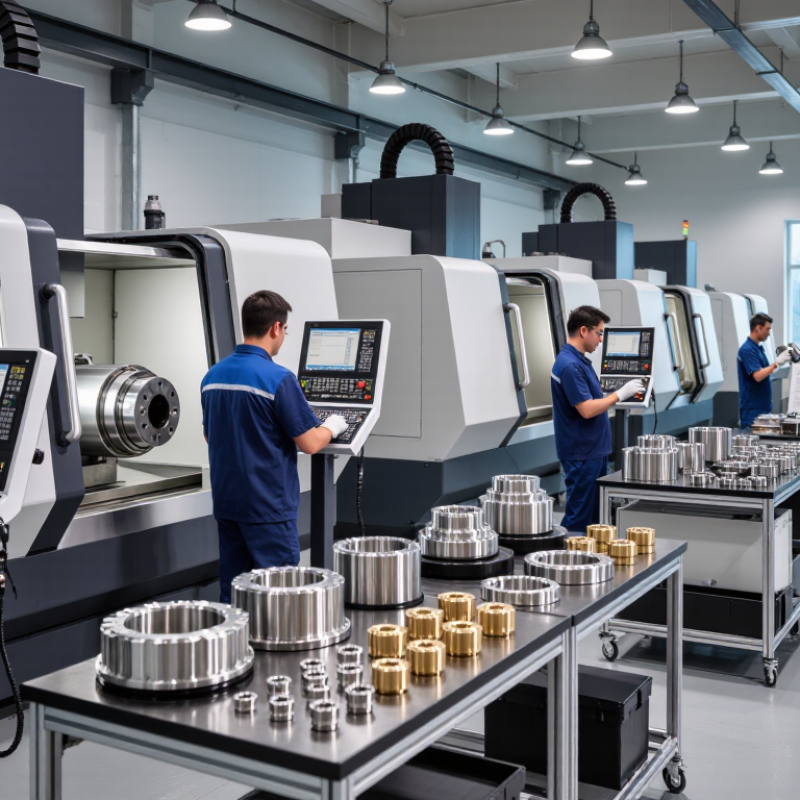
Metal CNC machining suppliers in China turn engineering drawings into finished parts through milling, turning, drilling, and secondary operations. They may source aluminum, stainless steel, brass, or tool steel, then advise on wall thickness, tool access, and tolerances before production. A capable supplier checks critical dimensions with calibrated gauges or a coordinate-measuring machine, and shares inspection results—not just a delivery date. Small details matter. A 0.2 mm burr around a tapped hole can disrupt assembly.

Suppliers also manage sampling, batch production, deburring, surface finishing, and export packaging. Grand View Research estimated the global CNC machine market at US$101.22 billion in 2023, with projected annual growth of 9.3% from 2024 to 2030. This points to rising demand for precision manufacturing, but market growth does not prove that any individual supplier has strong process control. Ask how it handles drawing revisions, material certificates, and nonconforming parts. Request a sample with measured results for the features that matter most. A low unit price can still hide setup fees or inconsistent finishes. Not always. Even a careful first run may reveal a design issue that needs another review.

What Metal CNC Machining Suppliers in China Do

CNC suppliers commonly mill, turn, and drill metal stock to produce custom parts. This chart compares the approximate room-temperature densities of several metals often used for machined components.

Density values are approximate and can vary by alloy grade and composition. Brass density varies particularly with its copper-zinc ratio.

Which Metals and CNC Processes Do Chinese Suppliers Offer?

Chinese CNC machining suppliers commonly offer aluminum, stainless steel, carbon steel, brass, copper, and titanium. Available grades vary with stock and order size. Aluminum is lightweight and machines quickly, making it suitable for housings and brackets. Stainless steel resists corrosion, but cutting it can produce more heat and tool wear. Brass machines cleanly for fittings, while copper needs care to limit burrs. Titanium is possible, though it may require slower cutting and closer process control. Not every supplier handles every alloy well. I would verify material grades and request traceability documents when specifications require them.

Common services include CNC milling, turning, drilling, tapping, and multi-axis machining. Some suppliers also offer wire EDM, grinding, or finishing such as anodizing and passivation through in-house teams or partners. Ask who performs each step. A milled aluminum pocket with a small internal radius, for example, may need a different tool path from a turned steel shaft. Tolerances depend on geometry, material, machine setup, and inspection methods; avoid assuming one quoted tolerance applies to every feature. That detail is easy to miss.

Tips: Send a clear 2D drawing and 3D model. Mark critical dimensions, surface finish, and material grade. Ask for an inspection report on key features. Compare samples when practical. A low quote can still be useful, but only if its process assumptions are clear.

How to Assess Supplier Quality and Production Capabilities

Best Metal CNC Machining Suppliers in China?

Assess a supplier with evidence, not a polished factory tour. Ask for material certificates, inspection records, and a sample part made to your drawing. Check how the shop measures critical features, such as a 0.02 mm bore or a flat sealing face. Request recent CMM reports and first-article inspection results. That matters. The ISO Survey 2023 recorded 1,265,216 ISO 9001 certificates worldwide. Certification shows a documented quality system, but it does not prove that every process is controlled well.

Review production capability in practical terms. Ask which machines will make your parts, how often they are maintained, and what capacity remains during busy periods. Check whether the supplier tracks scrap, rework, and on-time delivery. Compare quoted lead times with recent order records. A low price means little if a fixture change delays the job. A tidy audit folder can still hide inconsistent measurements; I would verify the process on a real sample.

Tips: Send a drawing with critical dimensions clearly marked. Ask for the measurement method and calibration status. Request a small trial order before scaling up. Keep one question open: can the supplier repeat the result next month?

How to Compare Pricing, Lead Times, and Export Support

When comparing metal CNC machining suppliers in China, request identical RFQs. Specify alloy grade, drawing revision, tolerances, surface finish, quantity, inspection, and packaging. Otherwise, a lower quote may simply exclude deburring or inspection. Compare landed cost, not unit price alone: include tooling, sample fees, export packaging, freight, and payment terms. A low quote can still be the wrong quote.

Ask suppliers to separate sample, production, and shipping lead times. Request a dated production schedule and confirm what happens if material arrives late. The World Bank’s 2023 Logistics Performance Index ranked China 19th, with a score of 3.7; country-level performance, however, cannot predict one shipment. UNCTAD’s Review of Maritime Transport 2024 describes route disruptions that increased voyage times and costs. Ask for recent shipment records, document support, and a realistic buffer. I would still verify the details.

Tips: Send one drawing pack to three suppliers. Compare their written assumptions line by line. Ask who handles commercial invoices, packing lists, and export bookings. Confirm carton dimensions and gross weight before approving the order. Keep a little schedule slack. Better safe than sorry.

Best Metal CNC Machining Suppliers in China? — How to Compare Pricing, Lead Times, and Export Support

Use this planning benchmark to compare supplier quotations, not as a guarantee of any supplier’s performance. Lead times and costs vary with material availability, part geometry, tolerances, quantity, finishing, inspection, and shipping terms. Request written confirmation for every project.

Comparison Dimension What to Request Useful Comparison Data How to Evaluate It Common Warning Sign
Part and material scope Written confirmation of alloy, material condition, stock size, machining process, and any included finishing. Compare the same drawing revision, material grade, quantity, and finish across every quotation. Check that the quoted material matches the specification—for example, the requested aluminum or stainless-steel grade—not just a broad material family. The quotation says only “aluminum” or “stainless steel” when the drawing specifies a particular grade.
Price and quote basis Unit price by quantity, setup or programming charges, tooling, finishing, inspection, packaging, and freight as separate line items. Compare at identical order quantities, such as 1, 10, 100, and 1,000 pieces where relevant. Confirm currency, quote validity, and Incoterm. Calculate the landed cost using the same delivery term and shipping scope. Separate one-time charges from recurring part costs. A low unit price omits finishing, inspection, packaging, export costs, or other charges needed to deliver conforming parts.
Lead time Separate dates for engineering review, sample production, approval, batch production, and dispatch. Record the quoted number of working days for each stage and the event that starts the clock, such as drawing approval or deposit receipt. Compare like-for-like schedules and ask whether material procurement, weekends, holidays, and sample approval are included. One overall delivery estimate is given without a schedule, start condition, or explanation of production capacity.
Tolerance and quality control Confirmation of critical dimensions, inspection method, sampling plan, and report format. Identify drawing dimensions with special tolerances; request sample inspection results and the proposed final inspection records. Confirm the supplier can measure the specified features with suitable equipment and will document results against the drawing. “Standard tolerance” is offered without a stated basis, or critical dimensions are not addressed.
Surface finish and secondary operations Finish specification, appearance standard, masking requirements, and acceptance criteria. Compare finish type, color or texture requirements, coverage, and whether finishing is performed in-house or by a subcontractor. Use an approved sample or clearly written acceptance standard for visible surfaces and cosmetic features. The quote lists a finish name but does not clarify appearance, coverage, or inspection expectations.
Export and shipping support Available Incoterms, export packing details, shipping options, documentation, and responsibility for customs-related tasks. Compare quoted shipping scope, package dimensions and weight, dispatch location, and the documents included for the destination market. Ask for a written shipping quotation and clarify who arranges freight, insurance, export clearance, and import clearance. “Shipping included” is stated without an Incoterm, destination scope, or allocation of customs responsibilities.
Communication and engineering support Named project contact, drawing-question process, revision control, and response expectations. Track response time during the RFQ, whether questions are consolidated, and whether revised drawings are acknowledged. Use the RFQ stage to assess clarity, technical understanding, and the supplier’s ability to keep specifications and revisions aligned. Conflicting answers, unrecorded drawing changes, or verbal commitments that are not added to the quotation.
Payment and commercial terms Deposit and balance terms, payment methods, cancellation conditions, and remedy for nonconforming parts. Compare payment milestones and the written process for handling defects, rework, replacement, or credit. Ensure commercial terms are documented before production and align with the buyer’s purchasing requirements. Payment terms or quality remedies are left undefined until after an order is placed.

How to Choose a Supplier for Your Project Needs

Choosing a metal CNC machining supplier in China starts with your part, not a price list. Define the alloy, critical dimensions, tolerances, finish, annual volume, and inspection needs. Then ask for a drawing review and a sample made on the proposed production process. A supplier’s ability to explain tool access, setup risks, and measurement methods is more useful than a broad promise of precision. For context, Deloitte and MAPI’s 2019 Smart Factory Study found that 86% of surveyed manufacturers expected smart factory initiatives to drive competitiveness within five years. Ask how the supplier uses digital production records to trace material batches, revisions, and inspection results. Check the details.

Tips: Request a first-article inspection report with actual measurements, not only a pass/fail statement. Confirm who supplies material certificates and how nonconforming parts are handled. A polished website proves little; clear records and direct technical answers matter more.

Before placing a large order, compare sample parts against your drawing and agree on acceptance criteria in writing. Check response times across time zones, packaging for long-distance shipping, and plans for repeat orders. A low quote can hide extra finishing, inspection, or setup costs. I would not treat one successful sample as proof of consistent production; ask how the supplier will control the next batch.