What Are the Top 10 Industrial 3D Printers?
Industrial 3D printing is a production decision, not just a machine purchase. A printer may look impressive in a showroom, yet struggle with overnight runs, difficult materials, or consistent part quality. Choosing a 3d printer industrial teams can rely on means looking beyond headline speed. Build volume, dimensional accuracy, repeatability, material compatibility, software, maintenance, and technical support all matter. So does the factory floor: a large machine needs space, trained operators, and a realistic service plan.
This guide introduces ten industrial 3D printers across different technologies and use cases. It considers systems for polymer parts, metal components, prototypes, and production tooling, rather than treating every printer as interchangeable. A heated chamber, for example, can help manage demanding engineering plastics; a metal system may require careful attention to powder handling and post-processing. Small details count. Buyers should compare published specifications with independent testing where available, and confirm current capabilities directly with manufacturers. Product data changes, and advertised performance may not match every material or part geometry.
There is no perfect shortlist. Some excellent machines suit only a narrow workflow, while a versatile system may cost more or need extra setup. That trade-off deserves a hard look. Use the comparisons that follow to identify promising options, then test representative parts and calculate total operating costs before committing.
How Industrial 3D Printers Differ from Desktop Systems
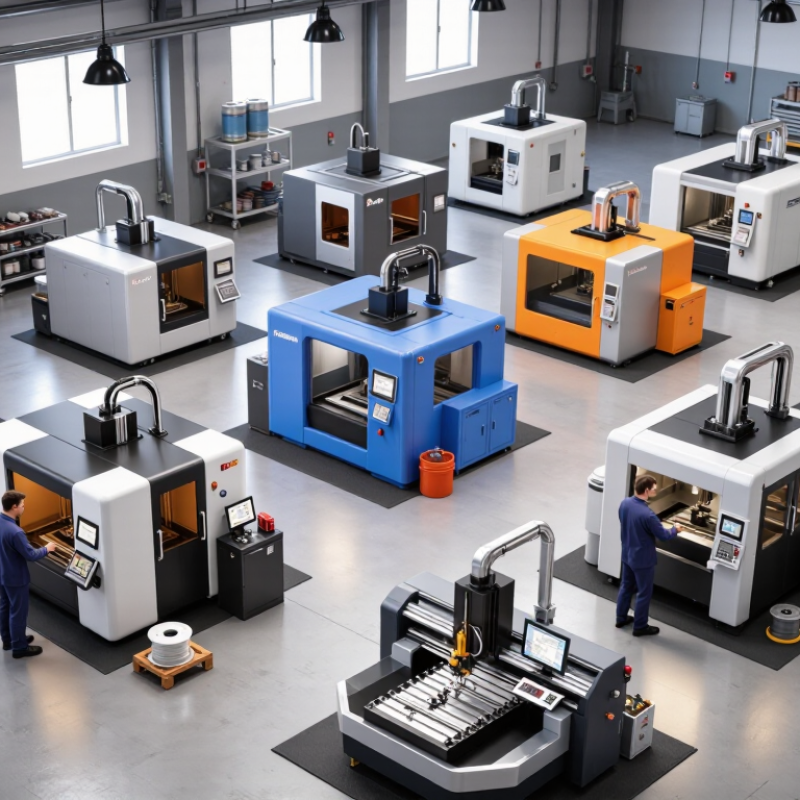
Industrial 3D printers differ from desktop systems in more than size.
A desktop unit may sit beside a laptop and run in an open office. An industrial system is designed for repeatable production, often with a sealed build chamber, controlled temperature, and monitored process settings. Operators also plan for powder or resin handling, maintenance access, and post-processing.
The room matters.
Build volume is only one difference.
Industrial machines may support higher-strength materials, tighter process controls, and documented quality checks. Those features help when parts must perform consistently across production runs.
ISO/ASTM 52920:2023
sets qualification requirements for industrial additive manufacturing processes and production sites. But a standard cannot make every part suitable for printing.
The Wohlers Report 2024 estimated global additive manufacturing industry revenue at $20.0 billion in 2023, an 11.1% increase from 2022.
That figure includes services and materials, not just printers; it signals a growing production ecosystem, rather than proving every factory needs a large machine. A practical comparison should include usable build space, material costs, uptime, inspection needs, and operator training.
A larger machine is not automatically better.
Small parts still matter. Sometimes, the industrial advantage is simply fewer surprises between the first build and the hundredth.
Criteria for Comparing Industrial 3D Printers
Comparing industrial 3D printers starts with the part, not the brochure. Check build volume against the components you actually make, then ask how much of that volume remains usable after supports and process limits. A large chamber is not automatically productive. Measure dimensional accuracy and repeatability on representative parts, including thin walls, holes, and long production runs. Not just speed. Record rejected parts, too.
Material range matters only when the machine can process the materials your specifications require. Compare cycle time, labor, post-processing, energy use, and maintenance alongside purchase price. A printer that finishes a build quickly may still create a bottleneck at support removal or inspection. Wohlers Report 2024 estimated the global additive manufacturing industry reached $20.035 billion in 2023, an 11.1% increase over 2022. That broad market figure is useful context, not proof that any particular machine will pay back.
For a fair comparison, request documented test results, uptime records, service response times, and the cost per accepted part. Check whether results come from the same material, geometry, and measurement method. ISO/ASTM 52900 provides shared terminology, but terminology alone cannot verify a supplier’s performance claims. Run a pilot using your own design and acceptance limits. I would still treat one successful build cautiously; production reliability takes repeated evidence.
Industrial 3D Printer Evaluation: 10 Comparison Criteria
Suggested evaluation weights (%) for comparing industrial 3D printers.
These weights are an illustrative decision framework, not measured product ratings or market statistics. Adjust them for your application, and compare printers within compatible technology and material categories.
Ten Leading Industrial 3D Printers by Platform and Application
Industrial 3D printers are best compared by platform and intended job, not by a universal ranking.
Polymer powder-bed fusion suits lightweight housings and ductwork, while metal powder-bed fusion produces dense parts for demanding thermal or mechanical service. Binder jetting can build many metal or sand components in one run, though post-processing affects final properties. Directed energy deposition repairs or adds material to large metal parts. Filament-based extrusion remains practical for fixtures and production aids. Pellet extrusion can make larger parts faster, but surface detail is usually less refined.
Other platforms fill more specialized roles.
Vat photopolymerization captures fine features for tooling and fit checks, while material jetting can combine colors or material properties in small components. Sheet lamination creates layered panels with relatively low material waste. Ceramic extrusion supports complex forms, but firing can cause shrinkage and distortion.
That detail matters.
A ten-machine shortlist should include these different approaches, yet the right choice depends on part size, material qualification, throughput, and inspection needs. A polished sample part can be persuasive; repeatability across a full production shift is harder to judge. Even experienced teams may underestimate support removal, powder handling, or operator training.
The machine is only one part of the process.
Materials, Build Capacity, and Production Performance
What Are the Top 10 Industrial 3D Printers?
Materials, Build Capacity, and Production Performance
A useful top-ten comparison starts with the parts a factory actually needs to make. Check material compatibility, including whether a machine supports production-grade polymers, metals, or both. Then compare usable build capacity, not just the headline chamber dimensions. Supports, thermal control, and part orientation can shrink the space available for real components. Small details matter: a build that fits on paper may need to be split into several pieces.
Production performance is more than print speed. Compare repeatability across builds, machine uptime, material changeover time, and post-processing needs. A fast system can still slow a line if parts require extensive finishing.
Wohlers Report 2024 estimated that the global additive manufacturing industry reached $20.035 billion in 2023, growing 11.1% year over year. That signals a broader shift toward industrial use, but it does not prove that any single printer is production-ready.
ASTM International’s 2023 additive manufacturing roadmap also highlights qualification and process consistency as persistent industry needs. A caveat: rankings often lack comparable factory-floor data. Treat published throughput figures cautiously, and ask whether they reflect validated production conditions. Not just ideal settings.
Choosing an Industrial 3D Printer for a Specific Workflow
An industrial 3D printer should be chosen around the job it must repeat, not a headline speed or maximum build size.
Map the workflow first: part dimensions, monthly demand, material requirements, and acceptable variation. A machine for durable production fixtures may need different capabilities from one making detailed prototypes.
Fit matters most.
Check how parts move through the whole process. A large build volume helps only when parts fit efficiently and can be removed without damage. For powder-based processes, include powder handling and finishing time in the schedule. For resin-based workflows, account for washing and curing. These steps need space, trained operators, and consistent procedures.
They are easy to underestimate.
Material compatibility is only one measure. Ask for sample parts made with your geometry, then inspect critical surfaces and dimensions. Track failed builds, maintenance intervals, and operator hours during a realistic trial. A fast machine may still slow production if calibration is frequent or post-processing creates a queue.
That trade-off is real.
Also consider whether the printer can fit through the workshop doorway and connect to available power and ventilation. Specifications rarely capture every daily inconvenience. No selection is perfect; workflows change, and early estimates can be wrong.
Start with the parts you make most often, while leaving room for new materials and demand.