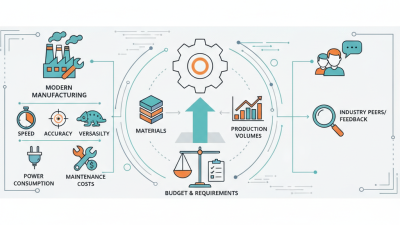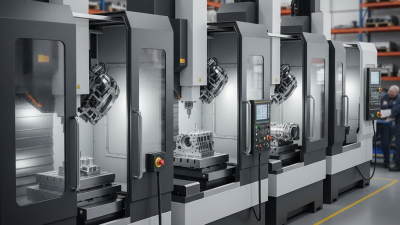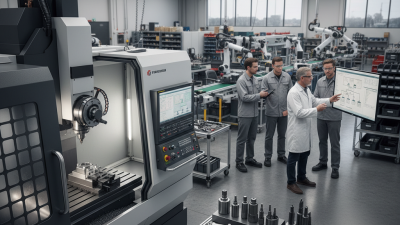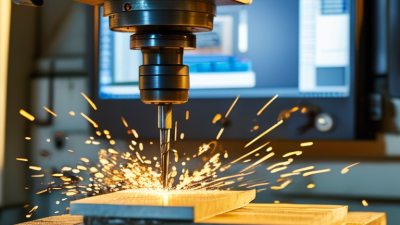
Choosing the best CNC industry supplier in China requires more than comparing machine prices. Buyers must examine accuracy, spindle stability, service response, software compatibility, and documented production experience. A polished website proves very little. A factory tour can reveal more: calibrated inspection equipment, clean assembly areas, and operators checking parts under controlled conditions.
Industry data shows why this decision matters. The International Federation of Robotics reported 541,302 industrial robots installed worldwide in 2023, confirming the continuing expansion of automated production. Deloitte’s 2024 Global Manufacturing Industry Outlook also highlights smart manufacturing, workforce shortages, and supply-chain resilience as major priorities. These trends affect CNC purchasing directly. A supplier should support automation, provide traceable quality records, and maintain spare-parts availability after delivery.
Professor Yoram Koren, a leading manufacturing-systems researcher, wrote, “The manufacturing system of the future must be able to respond quickly to market changes.” This principle is useful when evaluating Chinese CNC manufacturers. The strongest supplier may not be the cheapest. It may be the company that adjusts fixtures, verifies tolerances, and explains limitations honestly. That detail matters.
There is no universal winner.
A suitable supplier depends on material, batch size, tolerance, export destination, and production risk. ISO 9001 certification helps, but it cannot replace independent sample testing. Buyers should request inspection reports, customer references, factory video evidence, and a clear warranty process. Some suppliers still present impressive specifications without showing long-term field performance. That weakness deserves careful review before signing any purchase agreement.
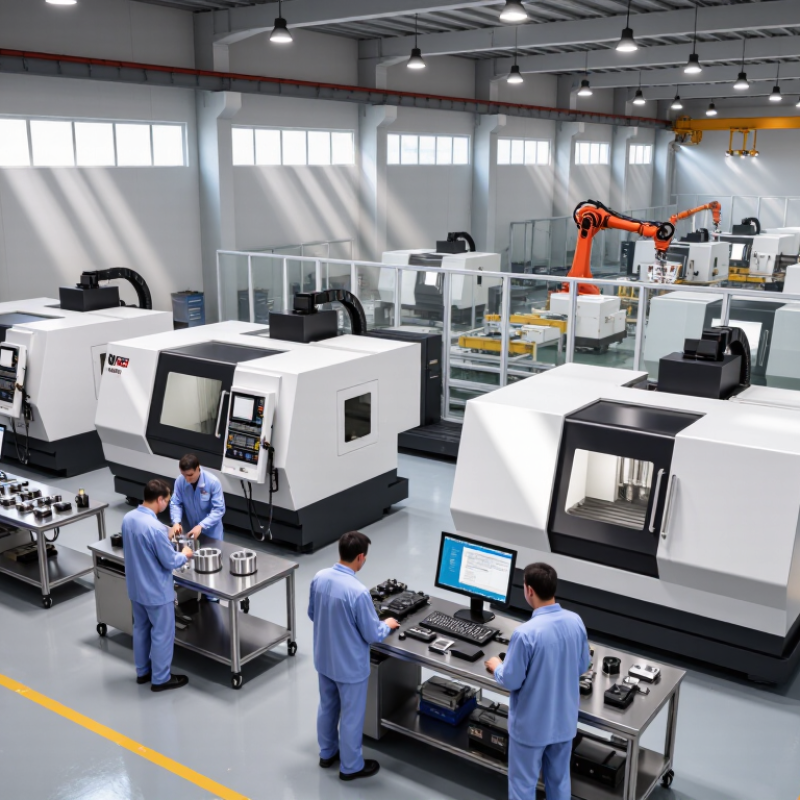
The best CNC supplier is not defined by price alone. It is defined by repeatable results, clear communication, and verified production control. Experienced buyers should ask which materials the supplier machines regularly. Aluminum 6061, stainless steel 304, brass, engineering plastics, and tool steel require different tools and cutting strategies. A supplier may accept any material, but acceptance does not always mean expertise.
Tolerance claims need practical evidence. A drawing requiring ±0.02 mm should be supported by calibrated micrometers, height gauges, and coordinate measuring machines. Ask for inspection reports from similar parts. Surface finish matters too. A smooth housing may require different processing from a functional bracket. Small details often expose weak process control.
Capacity also needs careful checking. A workshop might produce ten prototypes well but struggle with 10,000 identical components. Confirm machine types, working envelopes, shift arrangements, and subcontracting policies. ISO 9001 shows that a quality management system exists, but it does not guarantee perfect parts. This point is easy to overlook. Review material certificates, first-article procedures, and corrective-action records. I have seen attractive samples hide inconsistent later batches. That experience makes honest production data more valuable than polished sales language.
No supplier is perfect. The reliable one admits limits, documents risks, and improves after mistakes.
China’s CNC supply network is not one market. It is a set of manufacturing clusters, each with a different working rhythm. Guangdong is strong in rapid prototyping, electronics housings, and export-oriented machining. Shops there often coordinate milling, turning, surface treatment, and assembly nearby. That shortens handoffs. It can also encourage rushed quoting.
Jiangsu often appeals to buyers needing stable industrial production, automotive components, and repeatable process control. Its supplier base commonly combines CNC machining with tooling and engineering support.
Zhejiang is known for hardware, pumps, valves, and mechanical parts. Smaller workshops may offer flexible quantities and direct communication. However, capability varies sharply between neighboring factories.
A polished website proves little. Audit machines, inspection records, material traceability, and corrective-action procedures.
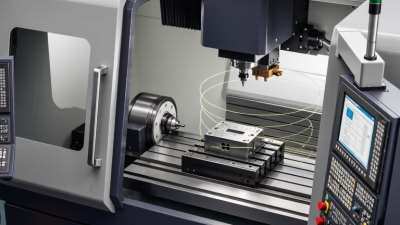
Five-axis access deserves separate checking. Some suppliers advertise five-axis capacity but subcontract complex work. Ask whether programming, setup, probing, and final inspection happen in-house. Review a sample toolpath, tolerance report, and machine maintenance history.
For impellers, medical housings, aerospace-style contours, or deep undercuts, genuine five-axis control can reduce fixtures and alignment errors. Yet five-axis is not automatically better. A well-managed three-axis or four-axis process may deliver lower cost and steadier output.
I have seen buyers overpay for unused capability. That mistake remains common. Choose the cluster around material, tolerance, volume, logistics, and engineering response—not location alone.
What Is the Best CNC Industry Supplier in China?
Comparing CNC Capabilities: 3-, 4-, and 5-Axis Machining at ±0.01 mm
A reliable CNC supplier should match machine capability with part geometry. Three-axis machining handles flat faces, pockets, and drilled patterns efficiently. It suits many brackets and plates. However, deep side features may require multiple setups. Each setup can introduce alignment errors. Setup still matters.
Four-axis machining adds a rotary axis around the workpiece. This allows machining several sides with fewer repositioning steps. It can improve consistency for cylindrical parts, housings, and indexed holes. Yet, it does not equal continuous five-axis movement. A supplier should explain whether the rotary axis works simultaneously or only between cuts.
Five-axis machining reaches angled surfaces and complex contours in one controlled process. It can reduce fixtures, tool interference, and visible marks on medical, aerospace, and industrial components. Reaching ±0.01 mm is possible in suitable conditions, but it is not automatic. Material movement, machine temperature, tool wear, and workpiece size all affect results. A careful supplier verifies dimensions with calibrated inspection equipment and shares measurement records.
I would question any quotation that treats ±0.01 mm as a universal promise. The real test is repeatability across a production batch. Ask for sample reports, tolerance assumptions, surface-finish data, and inspection methods. A technically strong supplier should also admit limitations. That honesty is useful. Sometimes, a simpler three-axis process delivers better value than five-axis machining, especially when the design does not need complex access.
What Is the Best CNC Industry Supplier in China?
Auditing Quality Systems: Cpk ≥1.33, ISO 9001, and Full Traceability
A reliable CNC supplier should prove quality with records, not confident promises. During an audit, request recent Cpk studies for critical dimensions. A Cpk of 1.33 or higher suggests capable performance, but only under stable conditions. Ask for the sample size, tolerance range, measurement method, and production date.
Numbers can mislead.
ISO 9001 certification shows that documented processes exist. It does not automatically prove excellent machining. Walk through incoming inspection, tool management, calibration, and final checks. Look for visible control plans beside machines. Check whether operators record actual measurements, rather than copying target values. Small details often reveal process discipline.
Full traceability should connect each part to its material lot, machine, operator, program revision, inspection report, and shipment date. For example, a supplier should identify which gauge inspected a bore and when that gauge was calibrated. Corrective action records also matter. They show whether recurring defects receive a real root-cause investigation.
An experienced audit should include uncomfortable questions. What happens when Cpk falls below 1.33? Who stops production? How are suspect parts isolated? I have seen polished procedures fail on busy shop floors. Therefore, verify records against physical labels, machine logs, and stored samples. A supplier may meet ISO requirements while still needing stronger process control. That gap deserves attention before approval.
A strong CNC industry supplier should demonstrate a process capability index of at least Cpk 1.33, maintain a valid ISO 9001 quality management system within the audited scope, and provide complete lot-to-lot traceability for materials, processes, inspections, and shipment records.
The chart presents recognized audit acceptance benchmarks rather than company-specific performance data. Cpk is shown as an index; ISO 9001 and traceability are shown as required evidence coverage percentages.
Choosing the best CNC industry supplier in China requires more than comparing unit prices. Lead time should include programming, material sourcing, machining, inspection, and ocean or air freight. The World Bank’s Logistics Performance Index 2023 ranked China 19th globally, with a score of 3.7 out of 5. That supports strong logistics capability, but factory-level performance still varies. Ask for a written schedule, a sample inspection date, and a response plan for delayed material. A 20-day promise means little without milestones.
MOQ directly affects cost and risk. A smaller batch may carry higher setup charges, but it can protect cash flow during prototype validation. Request separate pricing for prototypes, pilot production, and repeat orders. Compare machining hours, tooling, finishing, inspection, packaging, and freight. UNCTAD reports that maritime shipping carries over 80% of global merchandise trade, so freight changes can affect the final price sharply. Cheap quotes can become expensive.
Export compliance deserves practical attention. Confirm the HS code, commercial invoice, packing list, country-of-origin marking, and applicable export controls before production. The supplier should provide material certificates and inspection records for each lot. Check whether the product, software, or technical drawings require additional authorization in the destination market. No scorecard is perfect. I would also test one real order, because polished audits cannot reveal every communication failure. Expect friction. That is where reliability becomes visible.

© Copyrights Levil Technology Corp 2022