Choosing an industrial cnc machine is a serious investment for manufacturers serving global markets. The right model must match production volume, material type, tolerance requirements, and available floor space. A machine that performs well in an aerospace workshop may be inefficient for a small automotive supplier.
This guide examines ten leading industrial CNC machines for international buyers. It considers machining capacity, spindle speed, axis configuration, control systems, automation options, and maintenance access. Practical ownership costs also matter. Installation, tooling, operator training, energy use, and spare parts can change the final budget significantly.
Specifications alone are not enough. Real performance depends on programming quality, operator experience, material consistency, and service response. Buyer reviews can help, but they may reflect different workloads or factory conditions. That limitation matters. We compare machines using clear, evidence-based criteria, while recognizing that no ranking fits every facility.
Look beyond the brochure. Inspect sample parts, request cycle-time data, and confirm regional technical support before purchasing. Ask whether the supplier can provide training and replacement components within a reasonable timeframe. Safety certification and electrical compatibility should also be verified for the destination market.
Some recommendations may be debatable. A higher price does not always guarantee better productivity. Likewise, a compact machine may outperform a larger model in a carefully planned workshop. The strongest choice balances accuracy, reliability, flexibility, and long-term operating value.
Choosing among the 10 Best Industrial CNC Machines for Global Buyers requires more than comparing prices. Understand the machine’s working behavior first. CNC axes describe movement directions, such as X, Y, and Z. Additional rotary axes can reach angled surfaces without repeated setups. That saves alignment time, but it also increases programming and maintenance demands.
Accuracy includes positioning precision, repeatability, and real cutting performance. A machine may show excellent specifications in a brochure. However, temperature, vibration, tool wear, and operator setup can change results. In practical evaluations, I check test cuts after the spindle reaches a stable temperature. I also inspect circular interpolation and hole spacing with calibrated instruments. Small errors become expensive across hundreds of parts. Be careful here.
Spindle speed must match the material, tool diameter, and cutting depth. High speed is not automatically better. A small carbide tool may need fast rotation, while a large cutter can require a slower setting. Listen for chatter. It often signals incorrect speed, feed, or tool engagement. I once underestimated fixture vibration during a trial, and the surface finish suffered. That mistake changed my inspection checklist.
The work envelope defines the usable space, not merely the advertised travel. Measure the part, fixture, tool holder, and required clearance together. A long component may fit on paper but collide with the enclosure or rotary unit. Buyers should also confirm electrical standards, training support, spare-part access, and measurement documentation before ordering. These details influence reliable production far more than impressive specifications alone.
| No. | Industrial CNC Machine Type | Typical Axes | Typical Work Envelope | Typical Positioning Accuracy | Typical Spindle or Cutting Speed | Common Materials | Best Application | Key Buying Consideration |
|---|---|---|---|---|---|---|---|---|
| 1 | 3-Axis Vertical Machining Center | 3 linear axes: X, Y, Z | 600–1,200 × 400–600 × 500–700 mm | ±0.005–0.010 mm | 8,000–15,000 rpm; 10–30 kW | Aluminum, steel, stainless steel, brass, engineering plastics | General-purpose milling, drilling, tapping, and mold components | A practical entry point for manufacturers needing broad capability, simple programming, and moderate investment. |
| 2 | 5-Axis Vertical Machining Center | 3 linear axes plus 2 rotary axes | 400–800 mm table diameter; 300–600 mm Z travel | ±0.003–0.008 mm | 10,000–24,000 rpm; 15–40 kW | Aluminum, titanium, stainless steel, tool steel, composites | Complex aerospace parts, impellers, medical components, and contoured molds | Reduces setups and improves access to multiple faces, but requires advanced post-processors and skilled operators. |
| 3 | Horizontal Machining Center | 3–4 linear axes; optional rotary pallet axis | 630–1,000 mm pallet; 600–1,000 mm X travel | ±0.004–0.008 mm | 6,000–15,000 rpm; 18–45 kW | Cast iron, steel, aluminum, stainless steel | High-volume prismatic parts and multi-face production machining | The horizontal layout improves chip evacuation and supports pallet systems for efficient repeat production. |
| 4 | CNC Turning Center | 2 axes: X and Z; live tooling optional | 250–500 mm turning diameter; 400–1,000 mm turning length | ±0.003–0.008 mm | 3,000–6,000 rpm spindle speed | Steel, stainless steel, aluminum, brass, titanium | Shafts, bushings, flanges, threads, tapers, and round components | Check maximum bar capacity, chuck size, turret station count, and tailstock design for the intended parts. |
| 5 | CNC Mill-Turn Center | 4–9 controlled axes, depending on configuration | 250–700 mm turning diameter; 400–1,200 mm part length | ±0.002–0.006 mm | 3,000–5,000 rpm turning spindle; 6,000–15,000 rpm milling spindle | Steel, stainless steel, aluminum, nickel alloys, titanium | Complete machining of complex turned and milled components in one setup | Can reduce handling and setup errors, but tooling, programming, and machine integration are more complex. |
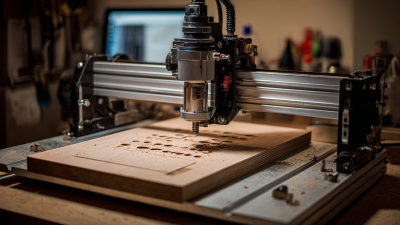
| 6 | CNC Router | 3 axes; 4th axis optional | 1,300–3,000 × 1,300–2,000 × 100–300 mm | ±0.05–0.15 mm | 12,000–24,000 rpm; 3–15 kW | Wood, MDF, plastics, aluminum, composite panels | Sheet processing, signage, cabinetry, furniture, and lightweight fabrication | Prioritize vacuum-table design, dust extraction, gantry rigidity, and suitable tooling for non-ferrous materials. |
| 7 | CNC Gantry Machining Center | 3–5 axes | 2,000–12,000 × 1,500–5,000 × 800–2,500 mm | ±0.010–0.030 mm | 4,000–12,000 rpm; 20–80 kW | Aluminum, steel, cast iron, composites, large molds | Large dies, aerospace structures, construction components, and heavy fabrication | Floor space, foundation requirements, thermal control, and workpiece loading equipment are critical selection factors. |
| 8 | Wire Electrical Discharge Machine | 4–5 controlled axes | 300–800 × 200–600 × 100–400 mm workpiece capacity | ±0.002–0.005 mm | Wire diameter typically 0.10–0.30 mm | Hardened tool steel, carbide, copper alloys, conductive superalloys | Precision punches, dies, narrow slots, intricate profiles, and hardened parts | It cuts electrically conductive materials without conventional cutting force; dielectric filtration and wire consumption affect operating cost. |
| 9 | Sinker Electrical Discharge Machine | 3–5 axes; electrode rotation optional | 300–800 × 200–600 × 200–500 mm tank capacity | ±0.005–0.010 mm | Pulse current commonly 10–80 A | Hardened steels, carbide, conductive tool materials | Deep cavities, mold details, sharp internal corners, and fine surface textures | Electrode material, flushing performance, dielectric management, and desired surface finish strongly influence cycle time. |
| 10 | Swiss-Type CNC Lathe | 5–13 controlled axes | Typically 3–32 mm bar diameter; 100–300 mm machining length | ±0.002–0.005 mm | 5,000–12,000 rpm spindle speed | Stainless steel, brass, titanium, cobalt alloys, plastics | Small precision medical, electronic, watch, and instrumentation components | The guide-bushing system supports slender parts; verify bar feeder compatibility, tooling capacity, and chip-control capability. |