Choosing the right 5 axis cnc mill is rarely a simple comparison of spindle speed and price. A machine that looks impressive in a catalog may struggle with your actual parts, materials, or production rhythm. In practical workshops, small differences in rotary-axis stiffness, tool access, and control response can affect surface finish and setup time. The best choice begins with your work, not the machine’s promotional headline.
This guide examines the details that experienced machinists usually verify before ordering. Consider the required work envelope, simultaneous five-axis performance, spindle torque, tool capacity, probing options, and post-processor compatibility. A titanium impeller demands different capabilities than an aluminum fixture or a medical component. Ask for verified cutting examples, service records, installation requirements, and realistic accuracy data. Manufacturer specifications matter, but independent test cuts can reveal more. Sometimes, a less expensive machine offers stronger value when its maintenance network is dependable and its control software is familiar to your operators.
Be honest about limitations.
No machine is perfect.
A reliable evaluation should include training, workholding, coolant management, chip evacuation, and long-term support. These factors are easy to overlook during a showroom demonstration, especially when the machine is cutting a clean sample part under ideal conditions. Total ownership cost also includes tooling, calibration, software updates, electricity, and downtime. By weighing measurable performance against practical shop experience, buyers can narrow the field with greater confidence and avoid choosing a 5 axis cnc mill that exceeds expectations on paper but disappoints on the factory floor.
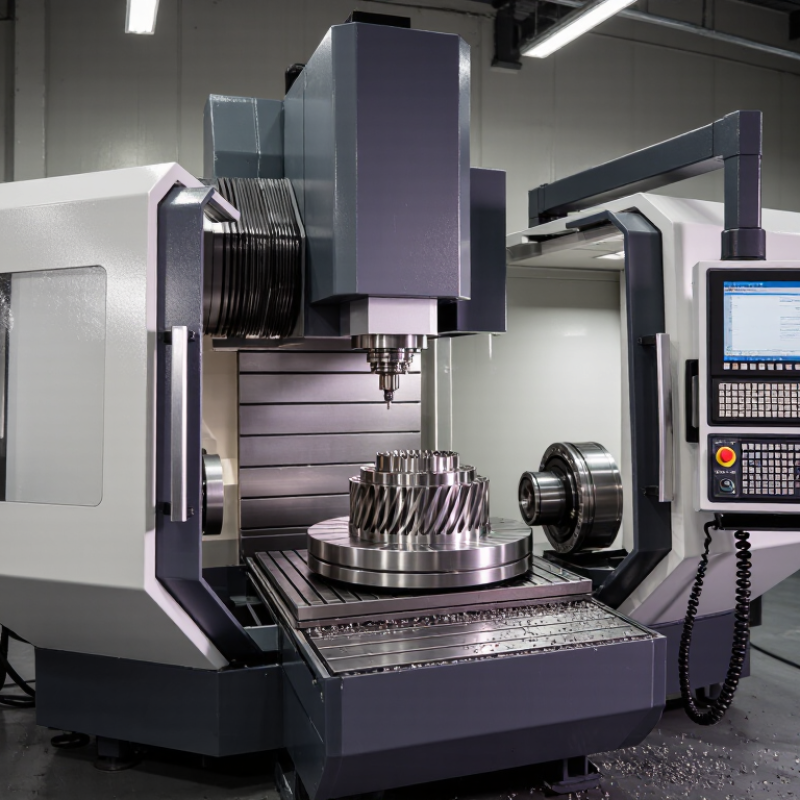
Define the Machining Goals and Part Requirements
Choosing a 5-axis CNC mill should begin with the part, not the machine catalog. Define the component’s shape, material, dimensions, and expected production quantity. A turbine-style housing needs different capabilities than a flat aluminum bracket with angled holes. Record critical features, including deep cavities, compound surfaces, and areas requiring one continuous setup. This information reveals whether simultaneous five-axis motion is necessary or only occasional positioning is useful.
Tolerance targets must be practical and measurable. For example, a 0.02 mm hole position tolerance demands stable fixturing, thermal control, and reliable inspection. Surface-finish requirements may also influence spindle speed, tool reach, and cutting strategy. Measure the largest workpiece, then allow room for fixtures and tool changes. A machine may accept the part on paper but leave little clearance around a rotary table. Small errors compound.
Think about daily production conditions. Confirm the required spindle torque, tool capacity, coolant method, probing options, and access for maintenance. Heavy steel cuts need different power than small, high-speed finishing operations. I once focused too heavily on axis count and overlooked workholding flexibility. That mistake increased setup time. It also made inspection awkward. Ask machinists to review the part drawings before purchase. Their practical feedback may expose risks that specifications alone cannot show.
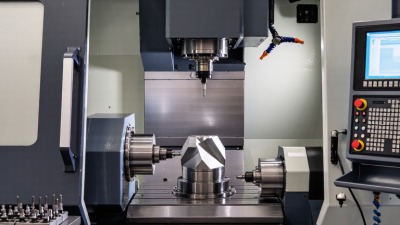
Choosing the best 5 Axis CNC Mill starts with the material, not the machine’s axis count. Aluminum needs efficient chip removal and higher spindle speed. Hardened steel demands rigidity, torque, and controlled cutting forces. Titanium requires stable fixturing, steady coolant delivery, and conservative tool engagement. A high-speed spindle can look impressive, but it may struggle with heavy cuts. Do not confuse speed with capability.
Match the work envelope to the largest real component, including fixtures and tool clearance. A trunnion-style configuration suits compact parts with frequent rotary positioning. A swivel-head configuration may handle taller parts and angled surfaces more naturally. Check rotary travel, table load, spindle reach, and collision zones before comparing specifications. One overlooked detail can force several setups.
Complex parts need more than additional axes. Tight internal features may benefit from a head that reaches deep pockets without excessive tool extension. Long tools increase vibration and reduce surface quality. Probing, simulation, and reliable post-processing also affect practical accuracy. I once underestimated fixture height during a machine evaluation, and the available Z travel became nearly useless. That mistake changed how I review machine layouts. No configuration is perfect. Leave room for awkward parts, future materials, and the occasional design that refuses to cooperate.
| Machine configuration | Typical motion arrangement | Best suited workpieces | Material considerations | Size and access considerations | Complexity and production fit | Key trade-off to check |
|---|---|---|---|---|---|---|
| Table-table (trunnion-style) | The workpiece sits on a tilting and rotating table; the spindle generally remains vertical. | Small to medium parts that benefit from access to several sides, such as impellers, housings, and precision components. | Suitable for aluminum, steels, and other machinable metals when the table, tooling, and cutting parameters match the material. | Table rotation can make deep or tall parts collide with the table, spindle, or enclosure. Check the usable envelope at tilted angles, not just the quoted XYZ travels. | Useful for indexed 3+2 machining and simultaneous five-axis work, including parts with multiple angled features. | Verify table load capacity, rotary-axis torque, available tilt range, and clearance with the intended fixture and workpiece. |
| Head-table | One rotary axis is in the spindle head and another is in the worktable. | Medium-sized parts requiring a mix of workpiece rotation and tool-angle adjustment. | Can accommodate a broad range of metals; cutting performance depends on spindle power, rigidity, tool overhang, and the machine’s rotary-axis design. | May provide more flexibility for taller parts than some table-table layouts, but tilted-head and fixture clearances still limit access. | A versatile option for varied jobs, especially when both tool orientation and workpiece positioning need to change. | Compare the head’s angular range and stiffness with the table’s load and rotary speed; motion layout varies by machine. |
| Head-head | Both rotary axes are in the spindle head; the workpiece remains fixed on the table. | Large, heavy, or awkward-to-fixture parts, including components that are difficult to rotate safely. | Can be applied to metals and other materials when the spindle and structure are specified for the required cutting forces and heat management. | Often avoids rotating a heavy workpiece, but reach, head articulation, and tool length affect access to deep or obstructed features. | Appropriate for complex surfaces and large parts where keeping the workpiece stationary is beneficial. | Assess head rigidity, rotary-axis accuracy, working reach, and potential loss of stiffness at extreme angles. |
| Five-axis indexing (3+2) | The rotary axes position the part or tool at a fixed angle; cutting then proceeds with the three linear axes. | Parts with features on multiple faces, angled holes, or sloped surfaces that do not require continuous tool-orientation changes during cutting. | Often effective for metals and plastics when the selected setup provides stable support and suitable cutting conditions. | Workpiece size and fixture height determine whether all indexed positions remain within reach and clear of the machine structure. | Can reduce setups and improve access while being simpler to program than continuous five-axis toolpaths for suitable geometry. | Confirm that the part’s geometry can be machined at discrete orientations; indexing alone does not provide continuous five-axis motion. |
| Simultaneous five-axis | Three linear axes and two rotary axes move together while cutting. | Freeform surfaces, turbine-style blades, impellers, molds, and parts with continuously changing tool orientation. | Material choice is less important than matching spindle capability, machine rigidity, tool strategy, and thermal control to the cutting task. | Requires adequate rotary-axis travel and collision-free tool access throughout the complete toolpath. | Best when geometry or surface requirements need continuous orientation changes; CAM programming and verification requirements are higher. | Evaluate control capability, postprocessor support, simulation, operator skills, and the cost of programming and proving out toolpaths. |
| Large-format five-axis mill | May use a large rotary table, rotary head, or a combination; configuration depends on the machine and work envelope. | Large structural, energy, aerospace, or industrial components that exceed the practical capacity of compact machines. | For difficult-to-machine alloys, prioritize appropriate spindle torque, rigidity, chip evacuation, and thermal management. | Check the complete usable envelope, table loading, part access, lifting requirements, and clearance for fixtures and long tools. | Suited to large or complex parts when fewer setups and multi-face access justify the machine footprint and investment. | Nominal travel alone is not enough: confirm part mass, center of gravity, rotary-axis capacity, and access at required orientations. |
Choosing the best 5 axis CNC mill starts with accuracy, not advertised speed. Check positioning accuracy and repeatability under real cutting conditions. A machine may hold tight tolerances during a short test, then drift after hours of spindle heat. Measure finished parts with calibrated inspection equipment, and record results at different temperatures. Small errors become visible on curved aerospace-style surfaces.
Rigidity controls how confidently the mill removes material. Inspect the casting, spindle support, table structure, and rotary-axis bearings. A rigid machine produces cleaner walls and reduces chatter during heavy cuts. However, rigidity alone is not enough. The control system must coordinate five-axis motion smoothly, especially during simultaneous cutting. Look for reliable tool-center-point control, accurate rotary positioning, and minimal backlash. Motion should feel continuous, not like five separate movements.
Speed matters in rapid positioning, spindle performance, and tool changes. Yet extreme speed can reduce surface quality if acceleration is poorly managed. Ask for cutting demonstrations using materials and tools similar to your production work. Watch the machine closely. Listen for vibration, sudden axis corrections, and uneven chips. I once valued cycle time too highly and overlooked thermal drift, which created inconsistent dimensions. That mistake changed my evaluation process. Review maintenance records, calibration procedures, operator training, and service response before purchasing. A technically impressive mill still becomes a poor choice when measurement routines are weak or operators cannot use its five-axis functions correctly.
How to Choose the Best 5 Axis CNC Mill?
A capable 5 axis CNC mill starts with control quality, not maximum travel. During shop evaluations, I check cycle simulation, collision protection, recovery after power loss, and operator access. A clear interface matters when a machinist adjusts a tool at 2 a.m. It reduces hesitation. The controller should support smooth five-axis motion, probing routines, traceable offsets, and secure program transfer. Deloitte’s 2024 Smart Manufacturing and Operations Survey found that 86% of manufacturing leaders expect smart manufacturing to improve competitiveness within five years. That expectation is reasonable, but integration still fails when software is treated as an afterthought.
Software should connect design, simulation, toolpath creation, inspection, and production records. Ask whether it supports verified post-processing for your machine configuration. A small mismatch can leave marks on a curved aerospace-style surface. Tooling deserves equal attention: rigid holders, balanced assemblies, coolant delivery, and short gauge lengths often improve results more than another software feature. The 2023 U.S. Department of Energy Industrial Decarbonization Roadmap identifies energy efficiency and digital controls as important manufacturing levers, making spindle loading and idle-time monitoring practical selection criteria. Automation can add pallet changing, robotic loading, tool measurement, and in-process inspection. Yet automation is not always better. For low-volume work, a flexible fixture and quick setup may outperform a complex cell. I have seen impressive systems lose productivity through difficult maintenance. Leave room for doubt. Test the complete workflow with your own parts, operators, tools, and failure scenarios.
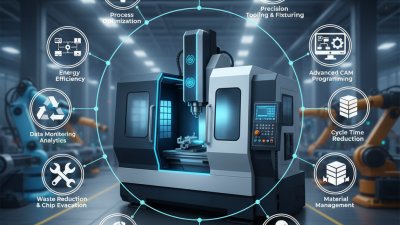
This practical evaluation model assigns the greatest weight to CAM and post-processing compatibility because reliable toolpaths, simulation, and collision avoidance are essential for simultaneous 5-axis machining. Controls, tooling, and automation each receive substantial weight because they affect machine usability, cutting performance, setup time, and production consistency. Machine kinematics remains important for reach, rotary-axis accuracy, and accessibility.
The purchase price is only the visible part of a 5-axis mill’s cost. Calculate tooling, fixtures, CAM software, training, energy, coolant, calibration, and financing. A machine priced 15% lower may need expensive rotary-table service or custom post-processing. The U.S. Department of Energy reports that predictive maintenance can reduce maintenance costs by 8–12% compared with preventive maintenance. Ask for service intervals, calibration procedures, spare-part availability, and typical technician response times. A missed production day can cost more than a yearly service contract.
Support must be measurable.
Request acceptance-test records, volumetric accuracy data, training hours, and escalation contacts. During a factory visit, inspect the control cabinet, coolant area, probing system, and chip evacuation path. Small details matter. A clogged coolant filter can damage surface finish quickly. Support quality varies by region, which is easy to underestimate.
Future expansion deserves equal attention.
Check available control options, electrical capacity, software licensing, automation interfaces, pallet systems, and extra probing channels. A 2024 Deloitte manufacturing survey found that many manufacturers still struggle to scale smart-factory investments beyond pilot projects. This suggests a practical lesson: buy a flexible platform, not unused complexity. Leave physical space around the mill. Verify that later automation will not block maintenance access. My imperfect rule is simple: if the supplier cannot explain the five-year upgrade path clearly, the machine may become a costly island.

© Copyrights Levil Technology Corp 2022