How to Choose the Best Home CNC Machine?
Choosing a home CNC machine is less about chasing the largest spindle or the lowest price. It is about matching the machine to your workspace, materials, and tolerance for setup. A desktop router cutting plywood has different needs from a compact mill machining aluminum. Measure the bench, check the machine’s working envelope, and consider where chips, dust, and noise will go. Small details matter.
The market context is encouraging, but it needs careful interpretation. Grand View Research estimated the global CNC machine market at US$101.22 billion in 2023 and projected a 6.3% compound annual growth rate from 2024 to 2030. That figure covers industrial CNC equipment broadly; it does not measure home machines alone. Buyers should therefore compare practical specifications, service access, software compatibility, and total ownership costs—not treat market growth as proof that any particular model is suitable.
A useful guide should also separate verified advice from attractive claims. No source material was supplied to verify a direct quotation from a named home-CNC expert, so attributing one here would risk misleading readers. The right choice depends on real constraints: a 600-by-400-millimeter work area, a laptop that can run the control software, and room for safe material handling. Start with the projects you will actually make. Then compare rigidity, repeatability, support, and upgrade costs. Some compromises are unavoidable. The aim is not a perfect machine, but a dependable home CNC machine that fits your work—and your workshop.
Define Your Projects, Materials, and Required Work Area
Choose a machine around finished projects, not its headline travel numbers. Sketch the largest part on paper, then add room for clamps, cutter access, and edge waste. A 300 × 500 mm sign may need a larger bed once you allow for a spoilboard and hold-downs. Include the Z-axis clearance too: a flat panel and a tall carved box are very different jobs. List your likely materials separately. Wood, plastics, and aluminum place different demands on rigidity, spindle power, tooling, and dust control.
Work area includes the machine’s footprint and the space needed to use it safely. Measure your bench, doorway, and the path for long stock. Allied Market Research estimated the global CNC machine market at $83.99 billion in 2021, with a forecast of $140.5 billion by 2031. That broad industrial-market figure shows sector growth, but it does not tell you which home machine fits your work. A small model can be precise yet frustrating when a project barely fits. A large bed can also waste precious floor space. The sensible choice may be less impressive on paper. Recheck your measurements; a tidy plan can still miss cable clearance or dust collection.
Compare CNC Machine Types and Their Capabilities
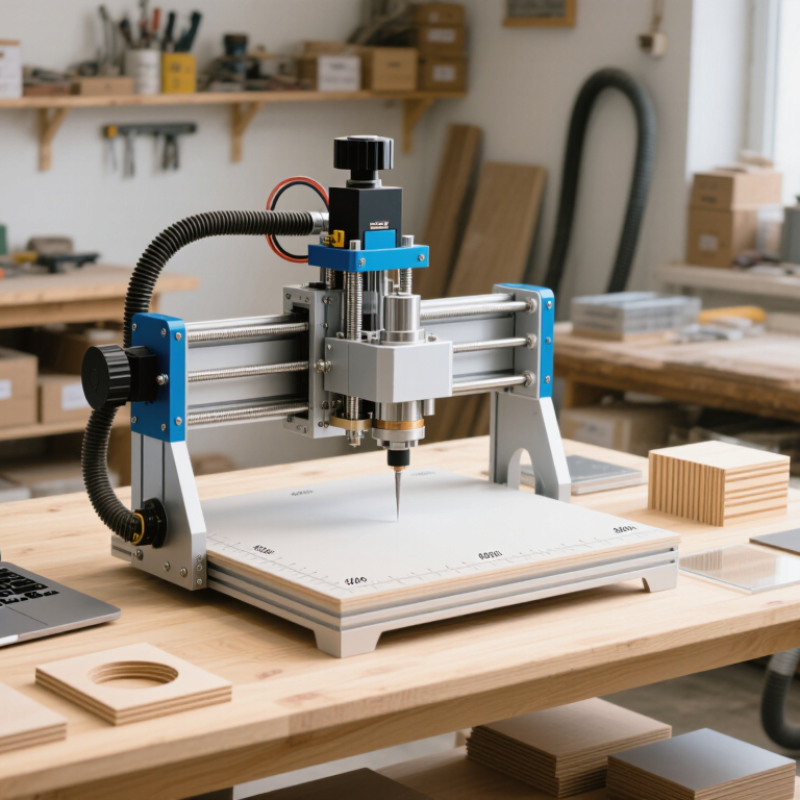
Home CNC machines are easier to compare by cutting action than by axis count. A router suits plywood, MDF, and plastics; a rigid frame and shallow passes can also handle some aluminum. A desktop mill trades a smaller work envelope for better rigidity when cutting metals. A laser can engrave or cut suitable thin sheets, but it cannot mill pockets or drill deep holes. That distinction matters.
Grand View Research valued the global CNC machine market at US$101.22 billion in 2023. Its report projected an 8.4% compound annual growth rate for 2024–2030. That figure covers the wider industry, not home machines, so it is context rather than a buying guide.
Compare usable travel, frame stiffness, spindle runout, dust or chip control, and tool-change needs. An advertised work area shrinks once clamps and stock are in place. Match the machine to the material and thickness you will cut repeatedly, not a one-time demonstration. Published accuracy deserves caution: setup, tool wear, and vibration all affect the result. I would still leave room for some disappointment; compact machines rarely excel at every material.
Check Software, Safety, and Space Requirements
Before comparing cutting area or spindle power, confirm the software can run your workflow. Check that its CAD/CAM tools accept common file formats and provide a post-processor for the machine’s controller. Test a sample toolpath in simulation; a visually clean design can still produce a poor cut. Confirm computer requirements, update access, and whether setup help is available. These details are easy to overlook.
Treat safety and space as purchase requirements, not afterthoughts. NIOSH’s 1998 Criteria for a Recommended Standard: Occupational Noise Exposure sets an exposure limit of 85 dBA over an eight-hour workday. That is an occupational benchmark, not a guarantee of safe noise in a home shop. Plan hearing protection and consider an enclosure. Check for a reachable emergency stop, secure workholding, and suitable dust extraction. Measure the machine, table, stock length, and dust collector together. Leave clear access to controls and room to load a long board. A corner that fits the machine may not fit the work. I would measure twice; it is an unglamorous step, but a cramped setup can make routine jobs awkward.
Compare Total Costs, Support, and Upgrade Options
How to Choose the Best Home CNC Machine?
A low purchase price can hide the real cost. Add cutters, collets, workholding, dust extraction, software, and electrical setup. A small machine may also need a sturdier bench. Price replacement parts before buying, and ask how quickly support answers technical questions. Downtime costs time, even in a home workshop.
The 2023 Smart Manufacturing Survey, based on 600 manufacturing executives, found that 86% expected smart-factory solutions to be key drivers of competitiveness within five years. That is an industrial finding, not a promise about hobby machines, but it highlights why service and upgrade paths matter.
Tips: Request a written list of included parts, common wear items, and warranty limits. Check whether the controller accepts standard toolpaths and whether the spindle, electronics, or work area can be upgraded. Keep a little budget aside for the unexpected; I still underestimate small accessories.
Compare support in practical terms: clear setup guides, reachable technicians, and spare parts with known lead times. A machine that fits your current projects may feel cramped when you try larger stock. Yet buying far beyond your needs ties up money. Make a simple three-year estimate, including consumables and likely upgrades. It will not be perfect. That is useful: the missing numbers show what to ask before ordering.