China’s CNC milling machine market deserves careful attention, not simple ranking. Buyers often compare spindle speed, axis travel, controller brands, and advertised accuracy. Yet those numbers can hide important differences. A machine may look impressive in a brochure but struggle with aluminum chips, vibration, or overnight production.
Shigeo Shingo, a respected manufacturing engineer and lean-production expert, said, “The most dangerous kind of waste is the waste we do not recognize.” His warning applies directly to CNC purchasing. Hidden waste can come from long setup times, unstable software, poor operator training, or delayed spare parts. A lower purchase price may become expensive after months of production.
This guide examines ten leading Chinese CNC milling machine manufacturers through practical criteria. These include machining accuracy, build quality, control-system compatibility, service response, customization, and export experience. It also considers real workshop details, such as coolant management, tool-changing reliability, and surface finish on steel components.
No manufacturer is perfect.
That matters.
Some companies excel at large gantry machines, while others focus on compact vertical machining centers. Certain brands provide strong technical support in Asia but limited assistance elsewhere. Buyer expectations also differ. A prototype workshop may value flexibility, while an automotive supplier may prioritize cycle time and repeatability.
The following overview aims to support informed comparisons. It does not replace factory visits, sample machining, or documented performance tests. Readers should verify certifications, references, warranty terms, and after-sales commitments before selecting a CNC milling machine for serious production.
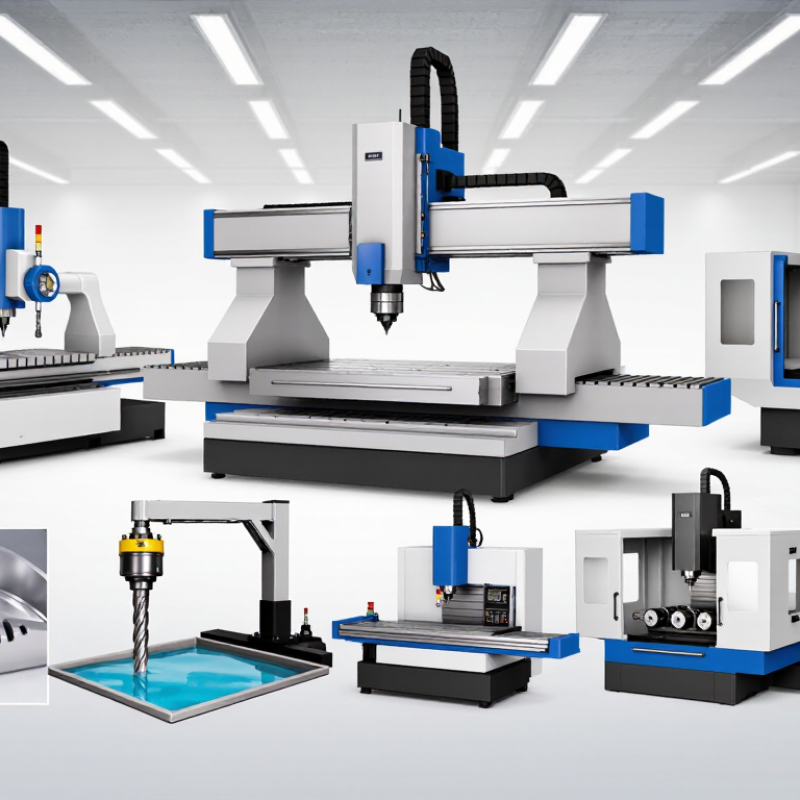
A leading CNC milling machine manufacturer in China is defined by more than production capacity or an attractive catalog. In real workshops, reliability appears in small details: stable spindle temperature, repeatable tool changes, and cleanly machined test parts. Experienced buyers should inspect cutting samples, not only watch factory demonstrations. A useful test includes aluminum pockets, steel contours, and long unattended cycles.
Engineering depth matters just as much. Strong manufacturers provide clear machine specifications, thermal compensation data, accuracy reports, and traceable calibration records. They explain spindle torque, axis acceleration, controller compatibility, and maintenance intervals without hiding limitations. This transparency shows professional knowledge. It also helps users choose equipment for actual workloads rather than impressive but unsuitable features.
After-sales support separates dependable suppliers from ordinary ones. Response time, spare-parts availability, remote diagnosis, and technician training can affect production for weeks. Ask whether service engineers understand fixture alignment, tool wear, coolant control, and vibration problems. Documentation should be practical. Clear.
Certification can support credibility, but it does not replace factory evidence. A manufacturer may meet quality standards and still deliver inconsistent assembly between batches. That is an uncomfortable point. Buyers should review inspection procedures, final testing records, customer references, and warranty conditions. Visiting the production floor can reveal cable routing, operator discipline, and storage habits. These details are easy to overlook, yet they often shape long-term machine performance.
| No. | Evaluation Dimension | Representative Industry Benchmark | Why It Defines a Leading Manufacturer | Recommended Verification Evidence |
|---|---|---|---|---|
| 1 | Machine Accuracy and Repeatability | Positioning accuracy and repeatability should be tested according to ISO 230-2 or an equivalent national standard. High-quality production machines normally publish test results rather than only nominal specifications. | Stable accuracy directly affects part tolerance, fixture consistency, tool life, and the frequency of manual rework. | Factory acceptance test, laser interferometer report, ball-bar or circular interpolation report, and dimensional inspection results from sample parts. |
| 2 | Structural Rigidity | A production vertical machining center commonly uses a rigid cast-iron or engineered structural frame, supported guideways, and a short tool-load path. The design should control vibration during roughing and heavy cutting. | Rigidity influences surface finish, tool deflection, cutting stability, spindle life, and the machine’s ability to remove material efficiently. | Structural design drawings, casting specifications, machine weight, guideway configuration, cutting-test videos, and measured surface-finish samples. |
| 3 | Spindle Capability | Typical production-class 3-axis machining centers may offer approximately 8,000–15,000 rpm with BT40 or comparable tooling; high-speed models may use higher-speed spindles and HSK interfaces. The correct choice depends on material and tooling. | Spindle power, torque, speed range, and thermal stability determine whether the machine is suitable for steel, aluminum, molds, or high-speed finishing. | Spindle power and torque curves, continuous-duty rating, runout measurement, thermal-growth data, tool-holder standard, and machining test results. |
| 4 | Travel, Work Envelope, and Load Capacity | A compact 3-axis vertical machining center often provides approximately 500–800 mm of X-axis travel, 350–500 mm of Y-axis travel, and 400–600 mm of Z-axis travel. Actual usable capacity depends on table size, fixtures, and tool clearance. | Correct envelope selection prevents overloading, collision risk, inefficient fixturing, and the need to split a component into multiple setups. | Official dimensional drawings, maximum workpiece dimensions, table load rating, fixture clearance diagram, and sample workpiece validation. |
| 5 | Thermal Stability | Leading machines address heat from the spindle, ballscrews, motors, hydraulics, and coolant. Typical solutions include spindle cooling, ballscrew cooling, temperature compensation, and warm-up procedures. | Thermal control helps maintain dimensional consistency during long cycles, seasonal temperature changes, and high-speed operation. | Thermal-displacement test, temperature-compensation description, spindle cooling specification, warm-up cycle, and dimensional results from extended machining. |
| 6 | Control System and Automation Readiness | The machine should support common CNC functions, tool management, probing integration, Ethernet or USB data transfer, remote diagnostics, and standardized program formats such as ISO G-code. | Reliable controls reduce setup time, simplify operator training, improve data management, and support future automation. | Control-system specification, supported communication interfaces, probing options, tool-management functions, backup procedure, and operator training materials. |
| 7 | Automation and Production Efficiency | Relevant functions include automatic tool changers, chip conveyors, coolant filtration, automatic lubrication, pallet systems, robotic loading interfaces, and spindle-load monitoring. | Efficient peripheral systems reduce non-cutting time, operator intervention, unplanned stoppages, and labor cost per part. | Tool-change time, chip-removal capacity, coolant-flow data, automation interface specifications, cycle-time study, and continuous-production demonstration. |
| 8 | Quality Management and Traceability | A mature manufacturer should operate a documented quality system, commonly including ISO 9001 certification, incoming inspection, in-process inspection, final assembly checks, and serial-number traceability. | Process traceability makes machine quality more consistent and allows technical problems to be identified and corrected systematically. | Valid certification, inspection-plan samples, calibration records, component traceability process, nonconformance procedure, and final inspection report. |
| 9 | Safety and Regulatory Compliance | The machine should address applicable requirements for risk reduction, guarding, emergency stops, electrical safety, interlocks, and documentation. Common references include ISO 12100, ISO 13849-1, and IEC 60204-1. | Proper safety engineering protects operators, supports legal compliance, and reduces the risk of costly modifications after installation. | Risk-assessment file, electrical schematic, safety-circuit documentation, conformity declaration where applicable, guard-interlock test, and user manual. |
| 10 | After-Sales Service and Total Cost of Ownership | A competitive supplier should provide installation, commissioning, operator training, spare-parts support, troubleshooting response, preventive-maintenance guidance, and clearly defined warranty terms. | Purchase price alone does not determine value. Availability, downtime, energy use, tooling compatibility, maintenance cost, and spare-parts lead time affect long-term operating cost. | Written warranty, service-level agreement, spare-parts list, recommended maintenance schedule, technician coverage, installation plan, and references from comparable users. |