For global buyers, 2026 may become a defining year for the CNC industry. Machine selection will involve more than spindle speed, axis count, or purchase price. Buyers are examining automation, digital connectivity, energy consumption, cybersecurity, and long-term service support. These concerns are increasingly connected.
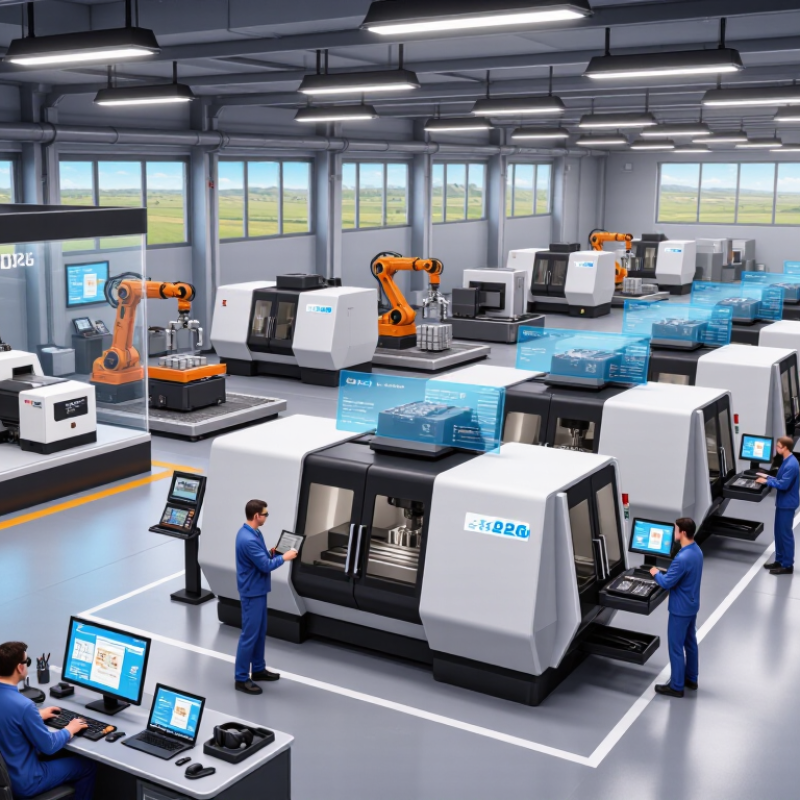
Artificial intelligence is improving toolpath optimization, predictive maintenance, and inspection workflows. Digital twins can help factories test production changes before cutting expensive material. Robotic loading is also becoming more accessible for smaller manufacturers. However, these technologies are not automatically profitable. Integration quality matters. Operator training still matters more than many brochures admit.
David A. Dornfeld, a respected manufacturing researcher, stated, “Sustainable manufacturing is the creation of manufactured products through economically-sound processes that minimize negative environmental impacts while conserving energy and natural resources.” His principle remains relevant as buyers compare machine efficiency, recyclable materials, and factory-wide emissions. A modern machine may consume less power, yet poor programming can erase that advantage.
This guide examines the leading CNC industry trends shaping global purchasing decisions in 2026. It considers smart machining, automation, sustainable production, flexible equipment, and regional supply strategies. It also looks at practical risks, including software compatibility, spare-parts access, data protection, and uncertain return on investment. The outlook is promising, but not perfectly clear. Some predictions will age badly. Buyers should therefore test claims against sample parts, cycle-time records, service agreements, and verified supplier references before committing capital.
The 2026 CNC market outlook points to an 8.5% compound annual growth rate through 2030. This forecast reflects stronger demand for automated, flexible production. Buyers are examining more than machine prices now. They compare spindle accuracy, control systems, service response, and lifecycle costs.
In practical terms, a five-axis machine can reduce repositioning during complex aerospace or medical-part production. Faster setup also helps smaller factories handle short production runs. However, automation does not remove every problem. Poor tooling data can still create burrs, scrap, and unexpected downtime. Precision still matters. Energy use deserves attention too, especially where machines run across several shifts.
Global buyers should verify local technician access before signing a purchase agreement. Spare-part delivery times can influence production more than a small discount. Training is another measurable requirement, not a decorative promise. Operators need hands-on practice with workholding, probing, tool offsets, and preventive maintenance. Cybersecurity should enter the discussion when machines connect with factory networks. That sounds simple. It is often overlooked.
The 8.5% projection offers useful direction, but forecasts are not contracts. Demand may shift with interest rates, construction cycles, labor shortages, and regional manufacturing policies. Buyers should test sample parts, inspect calibration records, and request realistic cycle-time data. One concern remains: some purchasing teams still prioritize impressive specifications over daily reliability. A slightly slower machine may deliver better results when support is nearby and operators understand its limits.
AI-enabled automation is reshaping CNC production for global buyers. The International Federation of Robotics reported 541,302 industrial robots installed worldwide in 2023. This figure shows strong demand for automated handling, machine tending, inspection, and material movement. In a modern CNC cell, a robot can load a blank, remove a finished part, and signal when tools need attention. Less idle time matters.
Artificial intelligence adds another layer. Vision systems can detect surface defects, while machine-learning software can identify unusual vibration or cutting behavior. The International Federation of Robotics also recorded more than four million industrial robots operating globally in 2023. For CNC buyers, this growing installed base suggests better integration support and more available technical expertise. However, AI is not magic. Poor sensor data can produce poor decisions.
Deloitte’s 2024 smart manufacturing research found that many manufacturers expect connected production to become essential within five years. Yet smaller workshops may struggle with integration costs, cybersecurity, and worker training. A practical purchasing review should examine cycle-time evidence, data ownership, maintenance skills, and offline programming capability. Ask for measured results, not attractive demonstrations. That is where many projects become less impressive. The technology can still fail when operators cannot adjust it confidently, or when legacy machines provide limited data. Real progress depends on reliable processes, clean data, and people who understand both machining and automation.
For global CNC buyers in 2026, digital twins are moving from impressive demonstrations toward measurable production tools. ISO 23247 provides a useful four-part architecture for this shift: observable manufacturing elements, digital twins, digital-twin applications, and user entities. Sensors observe spindle load, tool temperature, vibration, and workpiece status. The digital twin organizes that information into a consistent virtual representation. Applications then support monitoring, simulation, maintenance planning, or quality analysis. Users may include operators, engineers, suppliers, and managers.
The structure matters during equipment selection. A buyer should ask how machine data is collected, time-stamped, secured, and exchanged. For example, a twin should reveal rising vibration before a cutting error damages a batch. It should also connect that signal with tool life, program history, and inspection results. ISO 23247 does not magically guarantee accurate decisions. Poor sensors create poor twins. That part is easy to forget.
Reliable deployment needs clear ownership. Who validates the data? Who approves an automated recommendation? Can technicians understand the alert beside the machine? These questions expose weaknesses earlier than a polished software demonstration. Buyers should request a small pilot using real production data, not only simulated dashboards. The outcome should include response time, false alarms, integration effort, and measurable downtime changes. Perfection is unlikely. A useful digital twin is still better than an impressive, unused model.
| Architecture Dimension | ISO 23247 Reference | Core Function | Typical CNC Data Inputs | Buyer-Relevant 2026 Application | Evaluation Criteria |
|---|---|---|---|---|---|
| General Principles and Scope | ISO 23247-1:2021 | Defines the concepts, terminology, scope and general principles for digital twins in manufacturing. | Asset identity, process context, operating state, time references and relationship metadata. | Creates a common language for procurement, engineering, operations and information-technology teams. | Check whether the supplier documents data ownership, lifecycle management, synchronization rules and system boundaries. |
| Reference Architecture | ISO 23247-2:2021 | Provides the high-level reference architecture and identifies the main entities and information flows used by a manufacturing digital twin. | Entity identifiers, event records, status values, relationships, timestamps and contextual information. | Supports comparison of solutions without requiring one specific software platform or communication technology. | Look for open interfaces, documented data models, traceable identifiers and clear separation between physical and digital entities. |
| Production-System Architecture | ISO 23247-3:2021 | Describes the reference architecture for production systems, including observable manufacturing entities and their digital representations. | Machine states, tool condition, workpiece status, program selection, alarms, offsets, cycle events and inspection results. | Enables a digital twin to represent CNC machines, tools, workpieces, fixtures, cells and related production resources. | Verify coverage of machine, process, material, tooling, quality and maintenance objects within the proposed model. |
| Information-Exchange Requirements | ISO 23247-4:2021 | Specifies information-exchange considerations for implementing digital-twin functions in manufacturing environments. | Measurements, commands, notifications, configuration data, historical records and derived analytics. | Helps buyers define required data exchanges between CNC controls, shop-floor systems, quality systems and analytics applications. | Request interface specifications, exchange frequency, data semantics, error handling, time synchronization and security controls. |
| Physical Entity Layer | Architecture implementation layer | Represents real manufacturing objects and their observable conditions. | Axis positions, spindle speed, feed rate, load, temperature, vibration, coolant status and part presence. | Improves visibility into machining performance, equipment utilization and abnormal operating conditions. | Confirm sensor provenance, measurement units, calibration status, timestamp quality and data retention policies. |
| Digital-Twin Entity Layer | Architecture implementation layer | Maintains the digital representation and contextual state of a physical manufacturing entity. | Current state, historical state, operating limits, asset hierarchy, maintenance history and process relationships. | Provides a consistent operational view for scheduling, diagnostics, production monitoring and engineering analysis. | Assess state consistency, update latency, version control, identity management and support for historical reconstruction. |
| Data Context and Semantics | Cross-architecture requirement | Ensures that exchanged values have consistent meaning, units, timestamps and relationships. | Variable name, unit of measure, source, timestamp, quality flag, coordinate system and equipment identifier. | Reduces integration errors when machines and production systems use different naming conventions or data structures. | Require a documented data dictionary, unit normalization, quality indicators and mapping rules for legacy equipment. |
| Interoperability and Integration | Related to ISO 23247 information exchange | Connects CNC equipment and manufacturing applications while preserving meaning and traceability of exchanged information. | Machine data, job data, tool data, quality data, maintenance events and production orders. | Supports phased deployment across mixed-age equipment rather than requiring a complete replacement of existing assets. | Evaluate protocol support, gateway requirements, bidirectional communication, offline behavior and integration testing procedures. |
| Digital-Twin Use Cases | Implementation objective | Applies synchronized operational data to monitoring, analysis, prediction, simulation or optimization activities. | Cycle-time records, alarm history, tool-life indicators, energy measurements, inspection results and maintenance events. | Prioritizes measurable outcomes such as reduced unplanned downtime, faster root-cause analysis and improved process repeatability. | Require a use-case baseline, success metrics, data prerequisites, user roles and a defined validation method. |
| Cybersecurity and Governance | Complementary implementation requirement | Protects connected production data, access rights, system integrity and operational continuity. | User identity, access logs, configuration changes, network events, backup records and data-retention status. | Becomes essential as CNC systems exchange information with enterprise, cloud and remote-service environments. | Check role-based access, network segmentation, encryption, patch procedures, audit trails, backup recovery and incident response. |
| Deployment Maturity | Buyer implementation roadmap | Describes a practical progression from data visibility to synchronized digital-twin services. | Machine connectivity, standardized tags, historical data, live state, analytics models and closed-loop recommendations. | Helps global buyers purchase capabilities in stages instead of treating a digital twin as a single all-or-nothing project. | Stage 1 Connect and identify assets Stage 2 Contextualize and visualize Stage 3 Analyze and predict Stage 4 Optimize with controlled feedback |
| Recommended Procurement Evidence | Practical buyer checklist | Provides objective evidence that a proposed CNC digital-twin solution can operate within an ISO 23247-oriented architecture. | Architecture diagram, sample data schema, interface specification, event model, security design and validation results. | Improves comparability among suppliers and reduces the risk of purchasing an isolated visualization tool. | Request a live data demonstration, interoperability test, data-lineage example, failure-recovery scenario and lifecycle-support commitment. |
For global CNC buyers in 2026, energy performance deserves the same attention as accuracy and speed. ISO 14955 provides a structured method for measuring machine-tool energy use. It examines operating states, measurement conditions, and energy consumption during defined tasks. Buyers can compare equipment more fairly when suppliers use consistent data.
Ask for readings during cutting, tool changes, coolant circulation, standby, and shutdown. A machine may consume modest power while cutting, yet waste energy during long idle periods. Compressed air can also become an overlooked load. Request results in kilowatt-hours per part or per defined machining cycle. Check the test material, spindle speed, feed rate, and auxiliary systems used. Small differences can change the result.
Numbers need careful interpretation. ISO 14955 measurements describe the machine under stated conditions, not your entire factory. In practical evaluations, I would compare the test profile with real production schedules. A short demonstration may hide lengthy warm-up periods. It happens.
Energy savings may also reduce heat, noise, and operating costs, but not every efficient machine suits every process. A slower cycle could increase total energy per finished part. Buyers should review both power demand and productivity. I would leave room for doubt, especially when supplier data lacks idle-time details. A site trial, recorded with a calibrated meter, can reveal gaps between specification sheets and daily operation.
Cybersecure CNC procurement now requires more than checking spindle accuracy and delivery dates. The 2024 NIST Cybersecurity Framework 2.0 defines six functions: Govern, Identify, Protect, Detect, Respond, and Recover. For global buyers, these functions should shape supplier questionnaires, factory audits, and contract controls.
Governance begins with named security owners and clear escalation paths. Identify every CNC controller, engineering workstation, remote-access account, and connected sensor. A 2024 global threat intelligence report found that manufacturing represented 25.7% of observed attacks in 2023. That figure deserves attention. Protect critical systems with multi-factor authentication, network separation, tested backups, and controlled USB access. Ask suppliers how they patch controllers without interrupting production.
Detection needs practical evidence, not polished promises. Request sample alert records, log-retention periods, and monitoring coverage for remote maintenance sessions. Respond with a written playbook covering isolation, customer notification, and forensic preservation. Recover through offline backups and restoration drills. The 2024 Data Breach Investigations Report recorded human involvement in 68% of breaches, showing why training still matters beside technical safeguards.
A useful procurement test is simple: ask the supplier to demonstrate one control live. Many assessments look complete on paper, but fail during a night-shift incident. NIST CSF 2.0 also places stronger emphasis on governance and supply-chain risk. Buyers should review subcontractors, software updates, and end-of-life controller plans. Perfection is unrealistic. Unverified confidence is worse.
How global CNC buyers can use this chart: NIST CSF 2.0 organizes cybersecurity procurement requirements into six core functions. The values show the number of framework categories assigned to each function, helping buyers structure supplier questionnaires, security clauses, and audit requirements.
Source: NIST Cybersecurity Framework 2.0, NIST CSWP 29, 2024. Category counts describe the framework structure and do not represent supplier performance or risk rankings.

© Copyrights Levil Technology Corp 2022