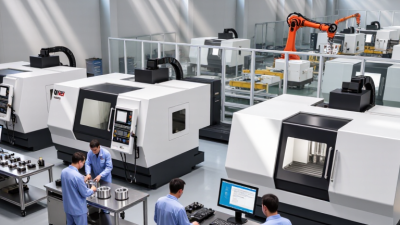
China Top 10 Industrial CNC Manufacturers for Global Buyers

China has become a major source of industrial CNC equipment for factories worldwide. Buyers can find machining centers, turning machines, routers, and customized production systems at different price levels. Yet a polished catalog does not prove reliable performance. Real evaluation requires closer attention.

This guide, “China Top 10 Industrial CNC Manufacturers for Global Buyers,” introduces companies that serve international markets and deserve careful comparison. It considers machine structure, control systems, spindle options, work envelope, positioning accuracy, and production experience. It also examines practical issues, including installation support, operator training, spare-parts availability, and response times after delivery. A machine may cut steel accurately in a demonstration, but daily factory use can reveal vibration, heat, or maintenance problems.

The selection should not be treated as an absolute ranking. No list is perfect. Supplier capabilities change, and product quality can vary between models. That limitation matters. Global buyers should request current specifications, factory videos, sample machining results, inspection records, and clear warranty terms. They should also verify certifications and import requirements for the destination country. A serious supplier will explain tolerances, recommended tooling, electrical standards, and service boundaries without avoiding difficult questions.

This overview aims to support informed decisions, not quick purchases. Each featured manufacturer should be judged against the buyer’s materials, batch size, floor space, budget, and technical team. Reliable industrial CNC sourcing depends on evidence, communication, and disciplined verification. The cheapest quotation may not deliver the lowest operating cost. Sometimes, the overlooked details matter most.
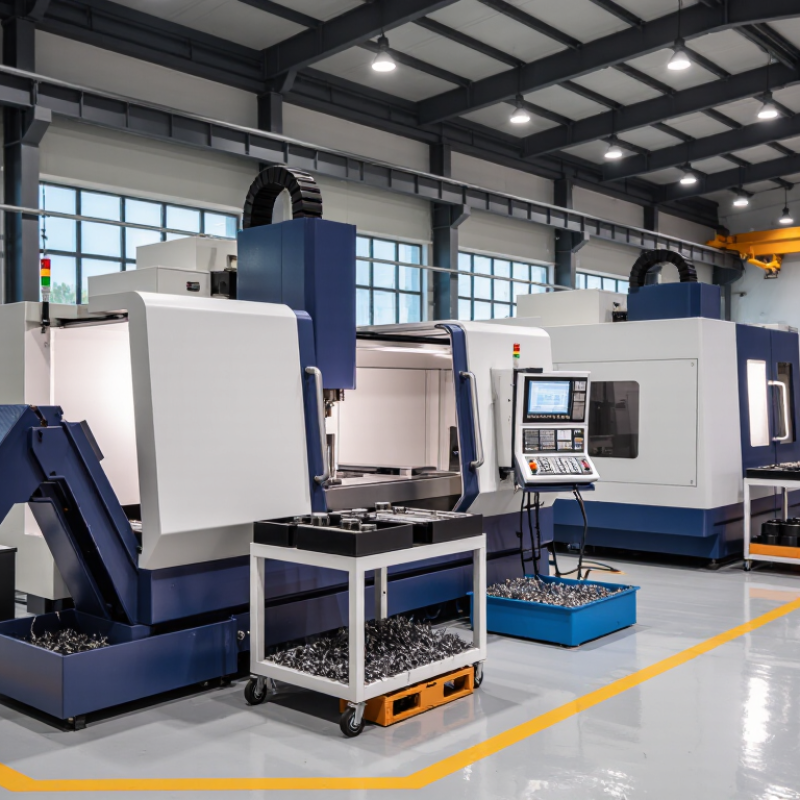
China Top 10 Industrial CNC Manufacturers for Global Buyers

China’s Industrial CNC Manufacturing Landscape

China’s industrial CNC manufacturing landscape has developed into a dense network of machine builders, component suppliers, software teams, and contract factories. This structure gives global buyers broad access to turning centers, machining centers, grinding equipment, and custom automation. Production clusters often provide faster sourcing for motors, controllers, tooling, and replacement parts. However, a large supplier base does not guarantee consistent quality. Capability varies between factories, even when their brochures appear similar.

Experienced buyers usually examine process evidence rather than marketing claims. Ask for tolerance records, material certificates, inspection reports, and sample parts from comparable projects. A serious manufacturer should explain spindle performance, axis accuracy, thermal control, maintenance intervals, and operator training. Factory audits also reveal practical details, such as calibration habits, coolant management, and spare-parts storage. These details matter during long production runs. Some suppliers communicate well before payment but respond slowly after installation. That risk deserves attention.

Tips: Compare three suppliers using the same technical specification. Request a video inspection of the actual production floor. Confirm installation support, manuals, warranty terms, and service response times in writing. Do not judge reliability from price alone. A cheaper machine may create higher costs through downtime, rejected parts, or difficult maintenance. Buyers should also review local voltage requirements and import documentation. The landscape is competitive, but it is not perfectly transparent. Careful verification remains essential.

How the Top 10 Chinese CNC Manufacturers Are Selected

Selecting the top ten Chinese CNC manufacturers requires more than checking search rankings. The process begins with production evidence, not polished websites. We review years of operation, factory capacity, machine lists, and export markets. We also examine whether a supplier can explain tolerances, materials, and surface finishes clearly. Vague answers reduce confidence. They often signal weak process control.

Each candidate is assessed through a practical scorecard. Technical capability covers multi-axis machining, repeatability, inspection equipment, and complex part handling. Quality evidence includes documented procedures, calibration records, first-article checks, and traceability from raw material to shipment. Independent certifications matter, but certificates alone are not enough. A factory audit, sample drawing review, and small trial order reveal more. Lead-time promises are compared with real production schedules. Communication speed and quotation accuracy are recorded too.

Commercial reliability also shapes the ranking. We check contract clarity, packaging standards, after-sales response, and experience with international documentation. References from comparable industries add useful context, especially when they describe defect rates and corrective actions. No scoring model is perfect. Production data can change after an audit, and a strong sample may not represent every shift. For that reason, the final ten are selected through repeated evidence, not a single impressive visit. That distinction deserves attention.

China Top 10 Industrial CNC Manufacturers for Global Buyers - How the Top 10 Chinese CNC Manufacturers Are Selected

An objective, evidence-based evaluation framework for comparing industrial CNC manufacturers without publishing company names or brand-specific data.

No. Selection Dimension Weight Evidence Used by Buyers Why It Matters for Global Buyers Relevant Standard or Verification Method
1 Machine Accuracy and Repeatability 18% Published positioning accuracy, repeatability data, inspection reports, and sample machining results. Determines whether the machine can maintain dimensional consistency during precision production. ISO 230-2 positioning accuracy and repeatability testing.
2 Product Range and Technical Coverage 14% Availability of vertical and horizontal machining centers, turning centers, 5-axis machines, gantry systems, and production-specific configurations. Shows whether one supplier can support different workpieces, materials, and production volumes. Verified product catalogs, technical drawings, machine specifications, and application records.
3 Spindle and Motion-System Performance 12% Spindle speed, rated power, torque, rapid-traverse rate, axis stroke, and acceleration specifications. Influences cutting productivity, surface finish, cycle time, and the ability to process difficult materials. Factory datasheets, acceptance testing, and machine-tool performance demonstrations.
4 Quality Management System 12% Current quality certificates, documented inspection procedures, traceability records, and corrective-action processes. A controlled quality system reduces variation between machines and improves long-term supply reliability. ISO 9001 certification verified through an accredited certification body.
5 Customization and Engineering Capability 10% Evidence of customized fixtures, automation integration, special enclosures, probing systems, and application engineering support. Important when standard machine configurations do not meet a buyer’s workholding, workflow, or compliance requirements. Approved technical drawings, engineering change records, and completed custom-project references.
6 After-Sales Service and Spare-Parts Support 10% Service response process, remote diagnostic capability, training resources, spare-parts procedures, and maintenance documentation. Fast technical support can reduce downtime and protect production schedules after installation. Service-level commitments, support records, spare-parts lists, and customer reference checks.
7 Export Experience and Documentation 8% Export packaging procedures, installation manuals, electrical diagrams, commercial documentation, and international logistics experience. Complete documentation helps buyers manage customs clearance, installation, operator training, and safe commissioning. Document review, export references, packaging inspection, and destination-country requirements.
8 Safety and Regulatory Compliance 6% Risk assessments, guarding design, emergency-stop functions, electrical documentation, and conformity files. Compliance reduces operational risk and supports legal deployment in overseas markets. Applicable machinery-safety requirements, electrical tests, and conformity documentation such as CE-related files where required.
9 Factory and Production-Control Capability 5% Assembly facilities, component inspection, calibration equipment, production scheduling, and final machine testing. A controlled manufacturing process improves delivery consistency and machine-to-machine uniformity. Factory audit, process records, calibration certificates, and final acceptance-test reports.
10 Total Cost of Ownership and Delivery Reliability 5% Machine price, tooling and installation costs, energy consumption, warranty terms, lead-time performance, and maintenance requirements. The lowest purchase price does not always provide the lowest operating cost or the best production return. Comparable quotations, warranty documents, delivery records, energy data, and lifecycle-cost analysis.

Recommended selection rule: compare at least three qualified suppliers, verify published specifications with factory documentation, inspect a representative machine where possible, and evaluate both technical performance and total cost of ownership before final ranking.

Profiles of China’s Top 10 Industrial CNC Manufacturers

China’s top ten industrial CNC manufacturers show a broad manufacturing spectrum, not one identical model. The profiles cover heavy-duty turning specialists, five-axis machining experts, compact vertical machining producers, and automation-focused integrators. Several manufacturers support aerospace, automotive, medical, and mold applications. Others target smaller workshops with simpler controls and lower entry costs.

China installed 276,288 industrial robots in 2023, representing 51% of global installations, according to the International Federation of Robotics. This strengthens local demand for connected CNC cells. Fortune Business Insights also identifies automation, multi-axis machining, and digital monitoring as major CNC market trends. In practical factory visits, buyers should inspect spindle vibration, thermal stability, chip evacuation, and service response. Catalog claims are not enough.

Tips: Request a sample-cut test using your actual material. Check dimensional results after continuous operation, not only after warm-up. Compare controller access, spare-part availability, training, and remote diagnostics. The ten profiles should be judged differently: a large gantry producer may suit steel structures, while a high-speed five-axis builder may fit complex aluminum parts. A budget-focused maker can appear attractive, yet hidden tooling and downtime costs may change the calculation. My assessment remains imperfect because published performance data is rarely standardized across suppliers. That limitation deserves attention.

Comparing CNC Machines, Technologies, and Production Capabilities

China’s leading industrial CNC manufacturers differ less by appearance than by engineering depth. A three-axis milling center may suit aluminum housings, while five-axis equipment reduces repositioning errors on aerospace-shaped parts. Turning centers handle shafts efficiently, but mill-turn machines can complete complex components in one setup. That matters.

Technology choices should match the buyer’s material, tolerance, and production rhythm. High-speed spindles improve aluminum cutting, while high-torque spindles perform better on steel and titanium. Linear scales can support tighter positioning control, but they also require cleaner installation and regular calibration. Automatic tool changers reduce idle time. Robotic loading helps repeatable batch production, although poor programming can create expensive downtime.

Production capability needs evidence beyond a polished catalog. Buyers should request sample parts, inspection reports, machine test cuts, and records of thermal testing. A claimed tolerance of 0.01 mm may apply only under controlled conditions, not during a long factory shift. Check casting quality, guideway design, control-system compatibility, and spare-parts access. Ask how technicians respond after installation, across different time zones.

The uncomfortable detail is often service. A lower machine price can become costly when training is weak or diagnostic support is slow. Factory visits reveal practical habits: chip management, coolant filtration, operator safety, and inspection discipline. These details are easy to overlook. They should not be.

China CNC Manufacturing Capability Benchmarks

This benchmark compares common CNC machine categories used by leading industrial suppliers. Values represent realistic market reference points rather than individual company specifications; actual capabilities vary by model, tooling, material, and configuration.

Typical spindle-speed figures are shown in thousands of revolutions per minute. Axis counts indicate the number of machine axes commonly used for coordinated machining.

Key Factors for Global Buyers Choosing a Chinese CNC Manufacturer

Global buyers choosing a Chinese CNC manufacturer should look beyond price and machine lists. A reliable supplier can explain tolerances, material behavior, surface finish, and inspection methods clearly. During supplier audits, ask for recent sample parts made from similar alloys and dimensions. Measure them independently with a coordinate measuring machine, not only with supplier reports. Small details matter, such as tool wear records, calibration dates, and temperature control near the machining area.

Production capacity also needs careful verification. A factory may own modern five-axis equipment, yet lack enough skilled operators for complex work. Review process sheets, first-article inspection records, and corrective-action reports. Ask how the team handles a failed batch. Honest answers often reveal more than polished presentations. Communication deserves equal attention. Confirm drawing formats, revision control, packaging standards, and response times before signing an agreement. Misunderstood units or outdated drawings can cause expensive delays.

Quality consistency should be tested over time, not judged from one impressive sample. Request a small pilot order with agreed acceptance criteria. Check dimensions, burr removal, labeling, packing, and delivery performance. It is also wise to review material certificates and traceability documents for every production lot. No audit is perfect. Even experienced buyers can overlook subcontracted processes or overloaded schedules. A written quality agreement, realistic lead time, and regular video inspections can reduce those risks. The best choice is not always the cheapest factory; it is the supplier whose process remains visible when problems appear.